


Trump’s Triumphal Arch: American Taxpayers to Fund Presidential Monument
A Monument Built With Public Money
In a move that has sparked considerable debate across the political spectrum, the Trump administration has revealed plans to use millions of dollars in federal funds to help construct a massive triumphal arch in Arlington, Virginia. According to spending documents released by the National Endowment for the Humanities this week and approved by the Office of Management and Budget back in September, American taxpayers will be contributing $15 million toward this ambitious project. The breakdown includes $2 million allocated from special initiative funds and an additional $13 million designated as matching funds specifically reserved for the arch’s construction. This funding structure is typical for the National Endowment for the Humanities, an independent federal agency that frequently supports projects through a combination of government dollars and private contributions from donors. While the use of taxpayer money for the project is now confirmed, many details remain unclear, including what private funds might be directed toward what President Trump has dubbed “Independence Arch” and what the total price tag for this monumental structure will ultimately be.
The Vision Behind Independence Arch
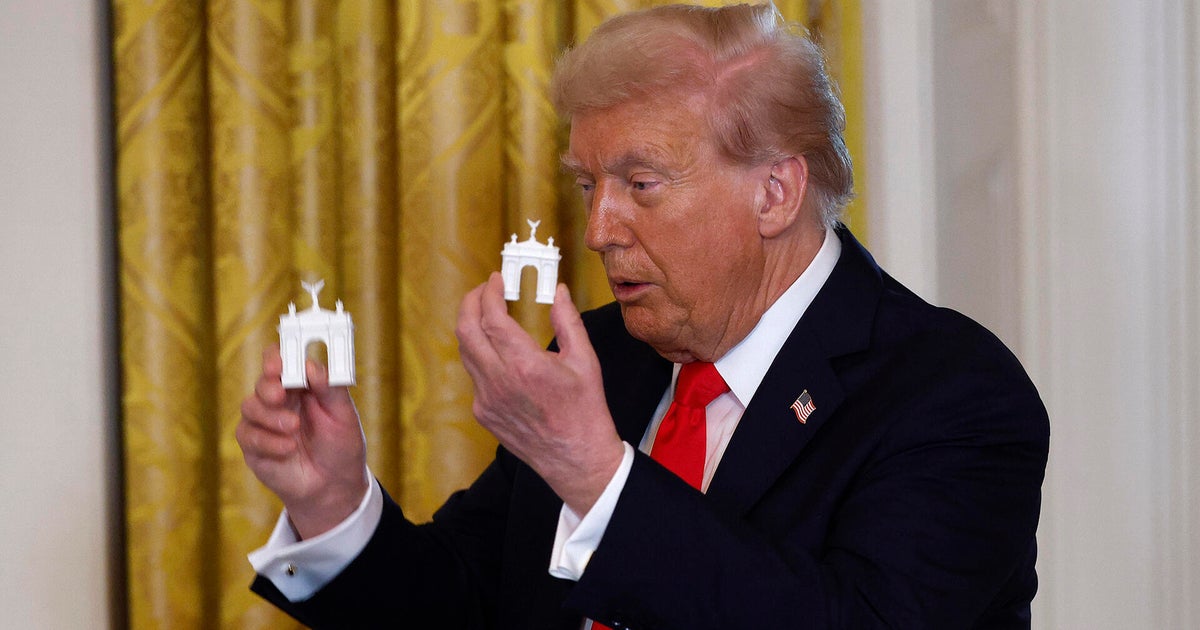
President Trump has positioned this architectural endeavor as a celebration of America’s upcoming 250th anniversary, framing it as a patriotic monument that will stand as a testament to the nation’s greatness. The president has been enthusiastic about showcasing his vision, even displaying a detailed model of the proposed structure in the Oval Office for visitors and media alike. The renderings and scale models reveal an imposing structure that bears a striking resemblance to France’s iconic Arc de Triomphe, though Trump insists his version will surpass all existing triumphal arches worldwide. The proposed location for this grand monument is directly across from the Lincoln Memorial, positioned on the Virginia side of the Potomac River near Washington, D.C. This placement would make it a prominent feature of the nation’s capital skyline, visible from many of the city’s most significant landmarks. However, the chosen site presents some logistical challenges, as it sits along a flight path for nearby Reagan National Airport, raising questions about aviation safety and height restrictions that typically govern construction in such areas.
Presidential Ambitions and Comparisons
The president has been remarkably candid about his ambitions for this project, declaring his intention to create “the biggest one of all” triumphal arches in the world. In a December statement, Trump made the bold claim that Washington is “the only city in the world that’s of great importance that doesn’t have a triumphal arc,” positioning his proposed monument as filling a crucial gap in the capital’s architectural landscape. He went on to express confidence that his arch would dwarf all competitors, stating, “The one that people know mostly is the Arc de Triomphe in Paris, France. And we’re going to top it by I think a lot.” Perhaps most revealing was an exchange with CBS News correspondent Ed O’Keefe in October, when the president was asked directly whom the arch was intended to honor. Without hesitation, Trump responded, “Me. Going to be beautiful.” This remarkably frank admission led critics and commentators to dub the structure the “Arc de Trump,” a nickname that has stuck in public discourse and encapsulates the concerns of those who view the project as more about presidential legacy-building than national commemoration.
Funding Questions and the Ballroom Connection
The financial arrangements surrounding Independence Arch remain somewhat murky, though the president has drawn connections between this project and another of his ambitious construction endeavors. Trump has previously indicated that leftover private donations from his $300 million to $400 million White House ballroom addition might be redirected toward the arch’s construction. The president has been emphatic that the massive ballroom being built at the White House will be funded entirely through private contributions rather than taxpayer dollars, presenting it as a contrast to how other presidential building projects have been financed. However, the revelation that $15 million in federal funds from the National Endowment for the Humanities will support the arch complicates this narrative of purely private financing. The White House has not yet disclosed a comprehensive cost estimate for Independence Arch, leaving taxpayers and congressional oversight committees without clear information about the full scope of the financial commitment. Neither the Office of Management and Budget nor the National Endowment for the Humanities responded to requests for comment about the funding arrangements, the matching fund requirements, or what accountability measures might be in place to track the project’s expenses.
Historical Context and Architectural Significance
Triumphal arches have a long and storied history, dating back to ancient Rome, where they were erected to commemorate military victories and celebrate the achievements of emperors and generals. Throughout history, these monumental structures have served as powerful symbols of national pride, military prowess, and political authority. The most famous example in modern times is indeed Paris’s Arc de Triomphe, commissioned by Napoleon Bonaparte in 1806 to honor those who fought for France, particularly during the Napoleonic Wars. Other notable triumphal arches exist around the world, from the Arch of Constantine in Rome to India’s Gateway of India and North Korea’s Arch of Triumph, which was deliberately built to be slightly taller than the Parisian original. The tradition of such monuments in American architecture is less pronounced, though the nation has created its own iconic memorials and monuments, such as the Washington Monument, the Lincoln Memorial, and the various memorials on the National Mall. Trump’s proposal represents a departure from recent American monument-building, which has typically focused on commemorating specific historical events, wars, or national values rather than serving as general symbols of triumph or individual presidential legacies.
Public Reaction and Moving Forward
The announcement that taxpayer funds will help finance what many have termed a vanity project has generated significant controversy and raised important questions about the appropriate use of federal resources. Critics argue that using National Endowment for the Humanities funds for such a project stretches the agency’s mission, which traditionally supports scholarship, education, and cultural programs in the humanities. Supporters of the president counter that commemorating America’s semiquincentennial with a bold architectural statement is entirely appropriate and that the monument will serve as an inspiring landmark for generations to come. The debate touches on broader questions about presidential power, the allocation of federal resources, and what kinds of projects merit government support. As the project moves forward, it will likely face scrutiny from Congress, where budget allocations can be challenged and oversight hearings can demand greater transparency about costs and decision-making processes. Environmental reviews, aviation safety assessments, and local zoning considerations will also play roles in determining whether and how this ambitious structure can be built. Regardless of one’s political perspective, Independence Arch represents a significant statement about how this administration wishes to be remembered and what it considers an appropriate use of both public funds and the symbolic landscape of the nation’s capital. The coming months will reveal whether this vision can overcome the practical, financial, and political obstacles that stand between an Oval Office model and a towering monument on the Potomac.