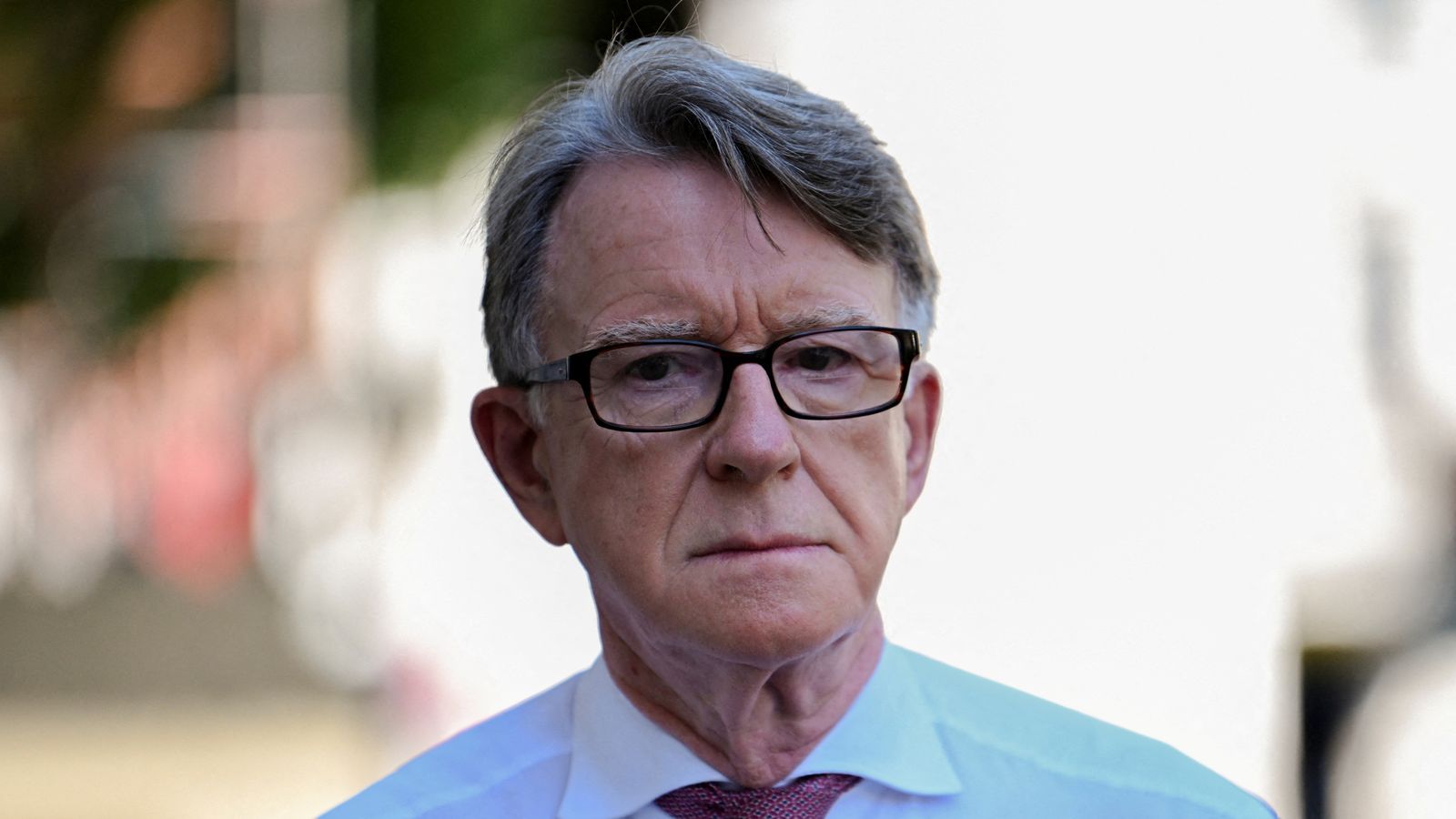

KKR Becomes Latest Major Corporation to Cut Ties with Lord Mandelson’s Lobbying Firm
The Unraveling of Global Counsel’s Corporate Network
In what has become a growing exodus from one of Britain’s most prominent lobbying firms, KKR, the American investment powerhouse, has quietly ended its relationship with Global Counsel, the public affairs company established by Lord Peter Mandelson. This development marks yet another significant blow to the embattled firm, as major corporations continue to distance themselves from the controversial former British politician in the wake of damaging revelations about his connections to convicted sex offender Jeffrey Epstein. The decision by KKR, which manages billions in assets and owns significant stakes in well-known British companies including infrastructure investor John Laing and Flora Food Group, the consumer goods company previously owned by Unilever, underscores how the scandal surrounding Lord Mandelson has sent shockwaves through the corporate world. According to sources familiar with the matter, KKR had maintained a working relationship with Global Counsel for a considerable period before making the decision to sever ties, suggesting that the recent revelations proved too damaging for the investment firm to continue the association.
A Domino Effect in the Corporate World
KKR’s departure from Global Counsel’s client roster follows a pattern that has been accelerating in recent days, with several high-profile organizations making similar decisions. Just days before KKR’s exit became known, the Financial Times reported that Barclays, one of Britain’s largest banking institutions, had already terminated its relationship with the lobbying firm. Additionally, the Premier League, England’s elite football competition and one of the most valuable sports properties in the world, has also ceased to be a client of Global Counsel. This domino effect of client departures represents a devastating blow to a firm that built its reputation on its founder’s extensive political connections and insider knowledge of government operations. The speed and breadth of these corporate defections illustrate how seriously major organizations are taking the reputational risks associated with Lord Mandelson’s personal conduct and the subsequent scandal that has engulfed him. For companies like KKR, Barclays, and the Premier League, maintaining relationships with a firm so closely associated with scandal would potentially expose them to criticism from shareholders, customers, and the general public at a time when corporate social responsibility and ethical conduct have never been under greater scrutiny.
Leadership Changes and Desperate Damage Control
In an apparent attempt to salvage what remains of Global Counsel’s business, the firm underwent dramatic leadership changes late last week. Benjamin Wegg-Prosser, who had served as the company’s chief executive, resigned from his position on Friday, marking the end of his tenure at the helm of the organization during one of the most turbulent periods in its history. Simultaneously, Lord Mandelson’s ownership stake in Global Counsel was sold to Rebecca Park, who has assumed the role of chief executive in succession to Wegg-Prosser. These changes appear designed to create distance between the firm and its scandal-plagued founder, though whether this strategy will prove sufficient to retain existing clients or attract new ones remains highly uncertain. The restructuring represents an acknowledgment by those involved with Global Counsel that Lord Mandelson’s continued association with the firm, even in an ownership capacity, had become untenable from a business perspective. However, the timing of these changes—coming after rather than before the exodus of major clients—may limit their effectiveness in stemming further departures or repairing the firm’s damaged reputation in the competitive world of political consulting and lobbying.
The Fall from Grace of a Political Heavyweight
Lord Mandelson’s spectacular fall from grace represents one of the most dramatic reversals of fortune in recent British political history. Once considered one of the most influential figures in British politics, serving in multiple cabinet positions and playing a crucial role in modernizing the Labour Party during the Tony Blair era, Mandelson’s career came crashing down last autumn when he was dismissed from his position as Britain’s ambassador to the United States. The sacking came as mounting evidence emerged about his relationship with Jeffrey Epstein, the disgraced financier who died in prison while awaiting trial on sex trafficking charges. The subsequent publication last week of millions of documents containing correspondence involving Epstein brought fresh and damaging revelations about the extent of Lord Mandelson’s connections to the convicted paedophile, leading to consequences that extended far beyond his diplomatic role. The Labour Party, which Mandelson had helped reshape into an electoral powerhouse in the 1990s, was forced to expel him from its ranks, a humiliating end to a political association spanning decades. Furthermore, he resigned from his membership in the House of Lords, the upper chamber of the British Parliament, effectively ending his formal role in British political life after years of influence and power.
Police Investigation Intensifies Scrutiny
Adding to the severity of Lord Mandelson’s legal and political troubles, authorities conducted searches of two of his residential properties on Friday as part of an ongoing investigation into potential criminal offenses. The police operation focuses specifically on possible misconduct in public office, a serious charge that suggests investigators believe Lord Mandelson may have abused his position of authority during his time in government service. The searches represent a significant escalation in the legal jeopardy facing the former minister, transforming what began as a scandal about questionable associations into a formal criminal investigation with potentially severe consequences. For someone who once wielded considerable power within British government circles and maintained extensive international connections through his diplomatic and business activities, the sight of police searching his homes marks a stunning reversal of fortune. The investigation into misconduct in public office typically examines whether officials used their positions improperly for personal benefit or engaged in behavior that betrayed the trust placed in them by the public. While the specific allegations against Lord Mandelson have not been fully detailed in public documents, the seriousness of the investigation is evident from the resources being devoted to it and the high-profile nature of the searches conducted at his properties.
Broader Implications for Corporate Reputation Management
The rapid unraveling of Global Counsel’s client base in response to the Mandelson scandal offers important lessons about corporate reputation management in an era of heightened sensitivity to ethical concerns. For companies like KKR, Barclays, and the Premier League, the decision to terminate relationships with Global Counsel, despite whatever value those relationships may have provided in terms of political insight and lobbying effectiveness, demonstrates that reputational considerations now often outweigh purely commercial calculations. In today’s business environment, where social media can amplify controversies instantly and stakeholders ranging from employees to customers to investors scrutinize corporate partnerships closely, maintaining associations with scandal-tainted individuals or organizations carries risks that many corporations simply cannot afford to take. The speed with which these major organizations moved to distance themselves from Global Counsel suggests that their internal risk assessment processes identified the Mandelson connection as an unacceptable liability, regardless of the firm’s technical capabilities or the quality of its advisory services. This episode also highlights how personal conduct by founders or senior figures can devastate organizations they create, even when those individuals attempt to step back or reduce their visible involvement. For Global Counsel, the question now becomes whether the firm can survive and rebuild under new ownership and leadership, or whether the damage to its reputation proves irreparable. KKR’s decision to decline comment on its departure, like similar silence from other exiting clients, suggests that these corporations view even discussing their former relationship with Global Counsel as potentially problematic from a public relations perspective, further illustrating the toxic nature of the scandal’s impact on the lobbying firm’s business prospects.