
Global Markets in Turmoil: Oil Prices Surge Amid Middle East Conflict
Historic Oil Price Spike Rocks Global Markets
The world’s financial markets are experiencing significant turbulence as oil prices posted their most dramatic single-day increase in six years. Brent crude, the international benchmark for oil prices, skyrocketed by an eye-watering 18% to reach $108 per barrel, equivalent to roughly £81. This extraordinary jump comes on the heels of an already substantial 28% increase the previous week, creating a perfect storm of economic uncertainty that’s sending shockwaves through global markets. The catalyst for this upheaval is the escalating military conflict in Iran, which has investors worldwide on edge and deeply concerned about the potential for a protracted war that could engulf the entire Middle East region. What makes this situation particularly alarming is that it’s not just oil markets feeling the pressure – stock exchanges across multiple continents are experiencing significant sell-offs, with Asian markets taking an especially hard hit as trading began on Monday morning.
Asian Markets Plunge as Investor Panic Spreads
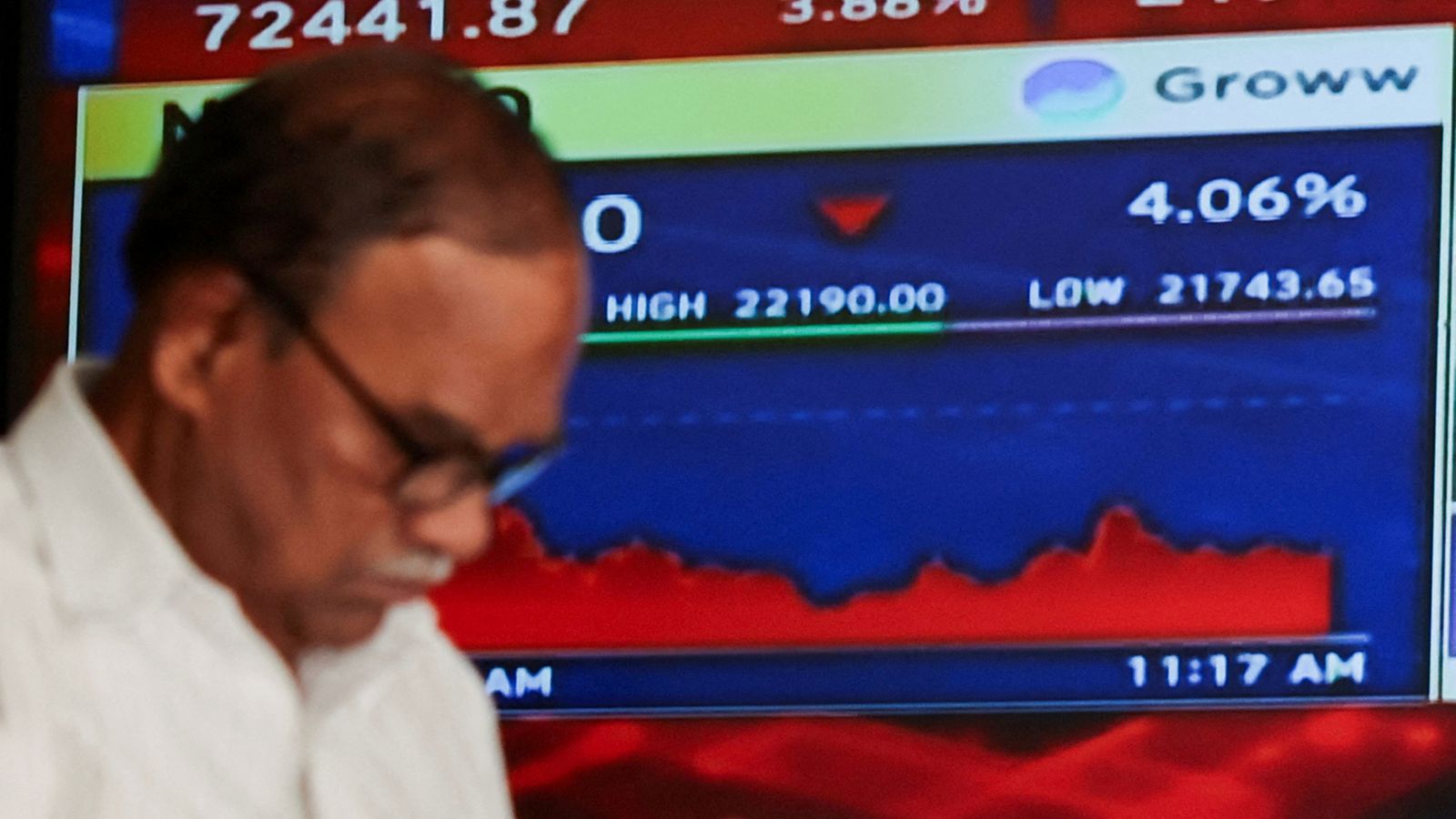
The ripple effects of the Middle Eastern conflict became immediately apparent as Asian stock markets opened for trading on Monday, with South Korea’s KOSPI index experiencing a catastrophic drop of more than 6% in early trading. The decline was so severe and sudden that it triggered an emergency circuit breaker mechanism – a safety feature designed to prevent market crashes by temporarily halting trading when prices fall too rapidly. Trading on the KOSPI was suspended for 20 minutes to allow investors time to reassess the situation and prevent panic selling from spiraling out of control. This dramatic market reaction wasn’t isolated to South Korea; exchanges across the Asian region registered significant losses as investors scrambled to adjust their portfolios in response to the rapidly evolving geopolitical crisis. The situation looks set to worsen as the trading day progresses westward, with futures contracts tracking major European and American indices also showing substantial declines, suggesting that when markets open in London, Frankfurt, Paris, and New York, they too will face significant downward pressure and potential sell-offs.
The Strait of Hormuz Crisis and Its Global Impact
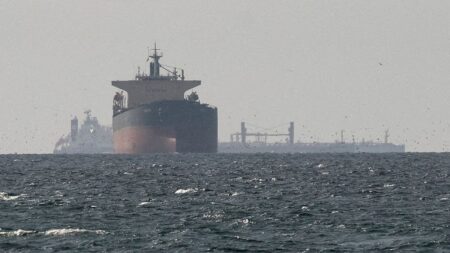
At the heart of the current crisis lies a critical chokepoint in global energy supply: the Strait of Hormuz. This narrow waterway, which connects the Persian Gulf to the Gulf of Oman and the Arabian Sea, has effectively become impassable following threats from Iranian officials who have vowed to “attack and set ablaze any ship attempting to cross.” This is no minor shipping lane – approximately 20% of the world’s entire oil supply passes through this strategic channel, making its closure a nightmare scenario for global energy markets. Maritime traffic has ground to a virtual standstill, creating immediate concerns about oil supply disruptions that could last for weeks or even months depending on how the conflict unfolds. JPMorgan’s chief economist, Bruce Kasman, didn’t mince words about the severity of the situation, stating plainly that “the global economy remains dependent on the concentrated flow of Mideast oil and natural gas through the Strait of Hormuz.” He’s warning that Brent crude prices could climb even higher in the near term, potentially reaching $120 per barrel (approximately £90), though he does offer a glimmer of hope by suggesting prices should eventually stabilize if and when the military conflict subsides and normal shipping operations can resume.
Inflationary Pressures and Economic Consequences
The dramatic surge in oil prices carries profound implications that extend far beyond the energy sector, threatening to reignite inflationary pressures that central banks around the world have spent years trying to tame. Higher oil prices inevitably translate into increased costs for transportation, manufacturing, and heating, which ultimately get passed along to consumers in the form of higher prices for virtually everything from groceries to airline tickets. This couldn’t come at a worse time for households that have only recently begun to see some relief from the inflation that plagued economies worldwide in recent years. The prospect of renewed inflation is already affecting central bank policy expectations, with the Bank of England facing a particularly difficult dilemma. Before the conflict erupted, financial markets had been anticipating that the Bank would implement two interest rate cuts, providing much-needed relief to mortgage holders and businesses struggling with high borrowing costs. Now, however, the probability of even a single rate reduction has plummeted to just 40%, as policymakers may feel compelled to keep rates higher to combat potential inflation. Bruce Kasman’s analysis paints a sobering picture of the potential economic fallout, projecting that without a “clear and decisive political resolution,” global economic growth could suffer a 0.6% contraction in the first half of 2026, while consumer prices could rise at an annual rate of 1% – a significant setback for economies that were beginning to show signs of stable recovery.
Political Response and Presidential Perspective
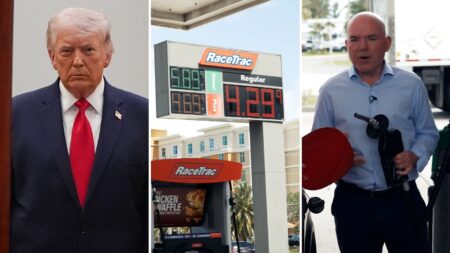
Amid the market chaos and economic uncertainty, US President Donald Trump took to his Truth Social platform to offer reassurance and his perspective on the crisis. In characteristic fashion, Trump downplayed concerns about the oil price spike, characterizing it as a temporary phenomenon that Americans and the world should be willing to endure. “Short term oil prices, which will drop rapidly when the destruction of the Iran nuclear threat is over, is a very small price to pay for U.S.A., and World, Safety and Peace,” he wrote, adding emphatically, “ONLY FOOLS WOULD THINK DIFFERENTLY!” His statement reflects the administration’s position that the military action against Iran, despite its immediate economic consequences, serves a larger strategic purpose in eliminating what they view as a nuclear threat. Whether this optimistic assessment of a quick resolution proves accurate remains to be seen, and financial markets clearly aren’t convinced, given their continued volatility. The President’s comments also highlight the fundamental tension between short-term economic pain and long-term security objectives – a balancing act that will likely define policy discussions in the weeks and months ahead as the situation continues to develop.
Currency Markets and the Road Ahead
The turbulence isn’t limited to stocks and commodities; currency markets are also experiencing significant movements as investors seek safe havens for their capital. The US dollar has been strengthening against both the British pound and the euro, reflecting a flight to what’s traditionally considered the world’s safest currency during times of international crisis. This dollar strength, while beneficial for American travelers and importers, creates additional challenges for European and British exporters whose goods become relatively more expensive in dollar terms. The interconnected nature of modern financial markets means that disruption in one area inevitably spreads to others, creating a complex web of economic consequences that policymakers must navigate. Looking forward, the critical question isn’t just how high oil prices might climb in the immediate term, but how long the disruption might last and what lasting impact it could have on global economic growth and inflation trajectories. Analysts are watching developments in the Middle East with intense focus, knowing that each escalation or de-escalation could swing markets dramatically in either direction. For ordinary citizens around the world, the practical implications are clear: expect to see higher prices at the gas pump, potentially increased costs for goods and services, and a more uncertain economic environment that could affect everything from job security to retirement savings, making this not just a financial market story, but one that touches virtually every aspect of daily economic life.