
What Happens When Gulf States Can’t Ship Oil?
The Lifeblood of Global Energy Under Threat
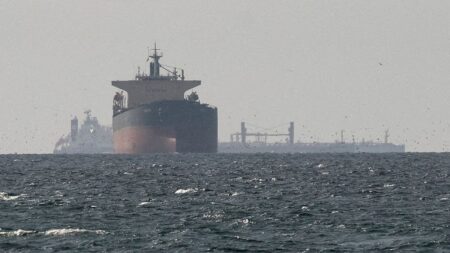
The Persian Gulf represents one of the most critical chokepoints in the global energy supply chain, serving as the primary export route for nearly one-third of the world’s seaborne oil trade. When we talk about Gulf states being unable to ship oil, we’re discussing a scenario that would send shockwaves through the international economy unlike almost any other disruption imaginable. Countries like Saudi Arabia, the United Arab Emirates, Kuwait, Iraq, Iran, Qatar, and Bahrain depend on the narrow Strait of Hormuz—just 21 miles wide at its narrowest point—to transport their crude oil to energy-hungry markets across Asia, Europe, and beyond. This vulnerability isn’t merely theoretical; throughout history, conflicts, political tensions, and regional disputes have repeatedly threatened to close or restrict these vital shipping lanes. The consequences of such a disruption extend far beyond the immediate region, affecting everything from gas prices in suburban America to manufacturing costs in China, food prices in Europe, and economic stability in developing nations. Understanding what happens when this oil flow stops requires examining the immediate economic impacts, the geopolitical ramifications, the scramble for alternative routes and supplies, the effect on global markets, and the long-term strategic shifts that would inevitably follow such a crisis.
Immediate Economic Chaos and Market Panic
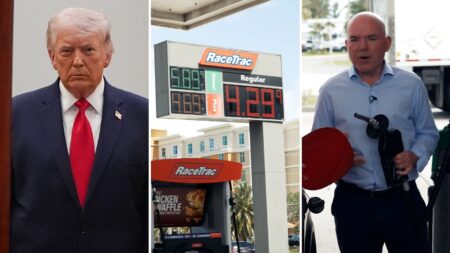
The moment news breaks that Gulf oil shipments have been significantly disrupted or halted, global financial markets would react with immediate and severe volatility. Oil prices would likely spike dramatically within hours, potentially doubling or even tripling depending on the perceived severity and duration of the disruption. This isn’t speculation—we’ve seen similar patterns during previous Gulf crises, including the Iran-Iraq War in the 1980s, the First Gulf War in 1990-91, and during various periods of heightened tension with Iran. Stock markets worldwide would tumble as investors flee to safer assets, particularly concerned about energy-intensive industries, airlines, shipping companies, and manufacturing sectors. The economic impact would be felt almost immediately by ordinary people at gas stations, where prices would surge, creating both financial hardship and public anxiety. For the Gulf states themselves, the inability to ship oil represents an existential economic threat. These nations have built their entire modern economies, infrastructure, and social welfare systems on oil revenues. Saudi Arabia derives approximately 70% of its export earnings from oil, while smaller states like Kuwait and Qatar are even more dependent. Without the ability to sell and ship their primary commodity, these governments would face immediate budget crises, potentially threatening their ability to pay public sector salaries, maintain subsidies, fund public services, and finance the ambitious development projects that keep their populations employed and satisfied. The social contract in many Gulf states—wherein citizens accept limited political freedoms in exchange for economic prosperity and cradle-to-grave welfare—would come under immediate strain, potentially destabilizing these traditionally stable authoritarian regimes.
Geopolitical Scrambling and International Response
A disruption to Gulf oil shipments would immediately activate a complex international response involving diplomatic efforts, military posturing, and emergency energy coordination. The United States, despite being less dependent on Middle Eastern oil than in previous decades thanks to domestic shale production, would likely take a leading role in any effort to restore shipping access, given its security commitments to Saudi Arabia and other Gulf allies, its naval presence in the region through the Fifth Fleet, and its broader strategic interests in maintaining global economic stability. China and India, which together import millions of barrels daily from the Gulf, would face even more pressing concerns, potentially deploying diplomatic resources and even considering military options to protect their energy security. The International Energy Agency, established after the 1973 oil crisis specifically to coordinate responses to supply disruptions, would convene emergency meetings and likely authorize the release of strategic petroleum reserves from member countries—massive underground storage facilities in the United States, Europe, Japan, and other nations that collectively hold hundreds of millions of barrels for exactly this type of emergency. These releases would provide temporary relief but couldn’t sustain global demand for long. Diplomatically, there would be intense pressure on all parties involved in the disruption—whether the cause was military conflict, political blockade, or infrastructure sabotage—to resolve the crisis quickly. However, if the disruption stemmed from a determined actor willing to weaponize the Strait of Hormuz, as Iran has occasionally threatened, resolution might require either significant concessions or military intervention to forcibly reopen the waterway, either of which would carry enormous risks and costs.
The Desperate Search for Alternatives
When Gulf oil can’t flow through its traditional routes, the global energy system would immediately begin seeking alternatives, though none could fully compensate for the loss. Other oil-producing nations would attempt to increase production, with countries like the United States, Russia, Canada, Brazil, and West African producers ramping up output to help fill the gap. However, the global oil market operates near capacity during normal times, and even significant increases from these sources couldn’t replace 20-30% of seaborne oil trade overnight. Gulf states themselves would desperately pursue alternative export routes. Saudi Arabia has previously invested in pipelines that bypass the Strait of Hormuz, including the East-West Pipeline that can transport several million barrels daily from eastern oil fields to Red Sea ports, allowing exports that avoid the Persian Gulf entirely. The UAE has similar infrastructure with the Abu Dhabi Crude Oil Pipeline. These alternatives would become invaluable lifelines, operating at maximum capacity, though their combined capacity still falls well short of what normally flows through the Strait. Countries heavily dependent on Gulf oil would be forced to make difficult choices: paying premium prices for alternative supplies, drawing down strategic reserves, implementing fuel rationing, or accepting economic slowdown. Industries would prioritize essential transportation and critical manufacturing, potentially curtailing less essential uses. We might see the return of measures from previous energy crises—odd-even day fuel purchasing based on license plates, reduced highway speed limits, encouragement of carpooling, and restrictions on recreational fuel use. Airlines would face particular hardship, potentially grounding routes, consolidating flights, and dramatically raising ticket prices, effectively reducing global air travel and further impacting the interconnected global economy.
Long-Term Strategic Realignments and Energy Transition
A prolonged disruption to Gulf oil shipments—lasting months rather than weeks—would accelerate fundamental shifts in global energy strategy and geopolitics that are already underway but would receive urgent new impetus. Countries would dramatically reassess their energy security strategies, reducing dependence on any single region or chokepoint. This would likely accelerate investment in domestic energy production of all types, including not just oil and gas but also nuclear power and renewable energy. The crisis would provide unprecedented political momentum for green energy transitions that have sometimes struggled against fossil fuel interests. Governments could justify massive clean energy investments and infrastructure spending as matters of national security rather than merely environmental policy. Electric vehicle adoption, which has been growing steadily, would likely surge as consumers seek independence from volatile oil markets and governments offer enhanced incentives. For Gulf states that survived the crisis, the experience would be a stark reminder of their vulnerability and would likely accelerate their own economic diversification efforts—initiatives like Saudi Arabia’s Vision 2030 would receive renewed urgency and investment. These nations might also invest heavily in alternative export infrastructure, additional pipelines to non-Gulf ports, and even explore formerly uneconomical options like liquefying crude oil for transport by means other than conventional tankers. The geopolitical landscape would shift as well, with energy-importing nations reconsidering their relationships and alliances based on energy security factors. Countries with alternative energy supplies might gain leverage, while the strategic importance of the Gulf region, while still significant, might begin a long-term decline relative to its peak in the late 20th century.
The Path Forward: Resilience and Reality
Ultimately, a major disruption to Gulf oil shipments would serve as a painful reminder of the fragility underlying our global energy system and the interconnected world economy. While the immediate crisis would eventually resolve—through diplomatic means, military intervention, infrastructure repairs, or changing political circumstances—the experience would leave lasting scars and lessons. Energy markets would likely build in a permanent “risk premium” for Gulf oil, reflecting the demonstrated vulnerability of the supply chain. Insurance costs for tankers in the region would skyrocket. Global investment would flow toward reducing this vulnerability through diversification, alternative routes, and ultimately reduced dependence on oil itself. The human cost of such a disruption shouldn’t be overlooked: beyond abstract market movements and geopolitical chess games, millions of people would face real hardship from unaffordable transportation costs, job losses in affected industries, and general economic hardship. For the poorest countries most dependent on imported oil with the least ability to pay premium prices or access alternatives, the impact could be devastating, potentially triggering humanitarian crises. This reality underscores why preventing such disruptions remains a paramount concern for the international community, why the United States and others maintain military presence in the Gulf region despite the costs and complications, and why the transition to more resilient and sustainable energy systems remains not just an environmental imperative but a matter of economic and national security. The question isn’t really whether Gulf states will permanently lose the ability to ship oil—market forces, international pressure, and the stakes involved make long-term disruption unlikely—but rather how quickly the world can reduce its vulnerability to this critical chokepoint before the next crisis tests our preparedness once again.