

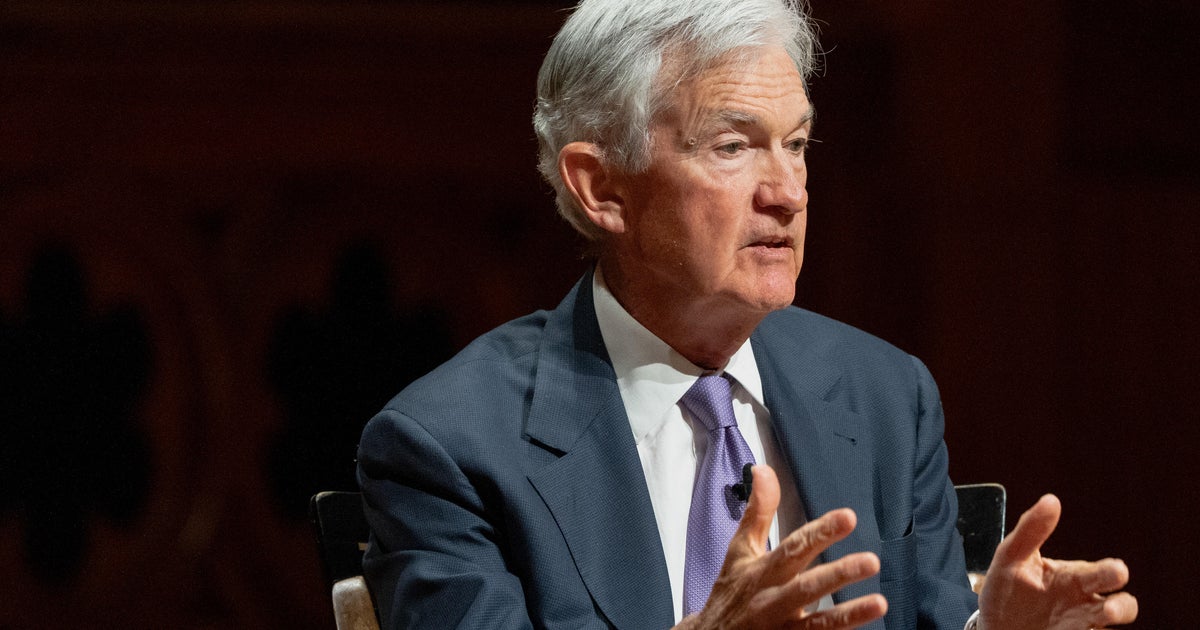

Federal Judge Stands Firm: Justice Department’s Attempt to Investigate Fed Chairman Powell Denied Again
Court Rejects Government’s Push to Revive Controversial Subpoenas
In a significant legal showdown between the judiciary and the executive branch, Chief Judge James Boasberg of the District of Columbia has firmly rejected the Justice Department’s attempts to resurrect two subpoenas targeting Federal Reserve Chairman Jerome Powell. The case, which has been unfolding largely behind closed doors, centers on what the judge determined were questionable investigative tactics that appeared to lack genuine criminal basis. Judge Boasberg’s Friday ruling delivered a clear message to federal prosecutors, stating unequivocally that “The Government’s arguments do not come close to convincing the Court that a different outcome is warranted.” This definitive language suggests the judge found the Justice Department’s reasoning fundamentally flawed and insufficient to overturn his earlier decision to quash the subpoenas.
The controversy first came to public attention in January when Chairman Powell took the unusual step of revealing that the Federal Reserve had been served with grand jury subpoenas from the Justice Department. These weren’t ordinary requests for information—they were part of what was characterized as a criminal investigation directly targeting Powell himself. The timing and nature of this investigation raised eyebrows throughout Washington, particularly given the ongoing tension between Powell and President Trump over monetary policy decisions. The Federal Reserve, which operates as an independent agency specifically designed to make economic decisions free from political pressure, found itself in the crosshairs of a Justice Department investigation that many observers viewed with suspicion from the outset.
The Building Renovation Controversy at the Heart of the Investigation
According to Powell’s own statements, the criminal probe wasn’t focused on monetary policy decisions or financial impropriety in the traditional sense. Instead, the investigation centered on testimony Powell had given before the Senate Banking Committee in June 2025 regarding a long-running renovation project at Federal Reserve office buildings. On its face, this seems like an extraordinarily narrow basis for a criminal investigation of the nation’s central bank chairman. The subpoenas reportedly threatened the possibility of criminal indictment related to Powell’s congressional testimony about these construction projects, which had been ongoing for years as part of routine maintenance and modernization efforts at the Fed’s facilities. The fact that such administrative matters became the focus of a criminal investigation struck many legal observers as highly unusual, particularly given that no charges have materialized despite months of investigation.
The political context surrounding this investigation cannot be ignored when trying to understand its significance. Chairman Powell has been a frequent target of President Trump’s public criticism, with the President repeatedly expressing frustration over the Federal Reserve’s reluctance to aggressively cut interest rates. Central bank independence is considered a cornerstone of economic stability in democratic nations, with the Fed specifically designed to make decisions based on economic data and long-term financial stability rather than short-term political considerations. When the Justice Department—a component of the executive branch—launches a criminal investigation into the Fed chairman during a period of vocal presidential criticism of that same chairman, questions naturally arise about whether the investigation is genuinely about criminal conduct or whether it represents an attempt to pressure or intimidate an independent official into changing policy positions.
Judge Boasberg’s Initial Ruling and Its Implications
When Federal Reserve lawyers initially moved to quash the subpoenas through sealed court proceedings, Judge Boasberg carefully reviewed the government’s justifications for the investigation. His conclusion, which he eventually unsealed last month, was that the subpoenas were “pretextual and not based on evidence of a crime.” This is significant legal language. A pretextual investigation is one that uses a stated reason as cover for a different, often improper, actual purpose. By finding the subpoenas pretextual, Judge Boasberg essentially determined that the Justice Department wasn’t conducting a good-faith criminal investigation based on evidence of wrongdoing, but rather was using the criminal investigation process for some other purpose. This is a serious judicial rebuke of prosecutorial conduct, suggesting the judge believed the investigation was a misuse of the grand jury process.
The unsealing of Judge Boasberg’s decision triggered an immediate and heated response from U.S. Attorney Jeanine Pirro, who launched a public attack on the judge himself. Pirro characterized Boasberg as an “activist judge” whose decision was “untethered to the law”—strong language that represents a significant escalation in the traditional relationship between prosecutors and the judiciary. Such public criticism of a sitting federal judge by a government attorney is relatively unusual and suggests the high stakes involved in this case. The Justice Department’s response has been two-pronged: filing a formal appeal of Judge Boasberg’s ruling to a higher court while simultaneously asking Boasberg himself to reconsider his decision. This dual-track approach is somewhat unusual but demonstrates the government’s determination to pursue the investigation despite the judge’s clear skepticism about its legitimacy.
The Broader Context: Judicial Independence vs. Executive Power
This case represents more than just a dispute about building renovations or congressional testimony—it touches on fundamental questions about the separation of powers and the independence of both the judiciary and federal regulatory agencies. Judge Boasberg’s willingness to stand by his initial ruling, despite public criticism from the U.S. Attorney and pressure from the Justice Department, demonstrates the judiciary’s role as a check on executive power. Federal judges, who serve lifetime appointments specifically to insulate them from political pressure, are uniquely positioned to resist overreach by other branches of government. Boasberg’s firm language in rejecting the government’s reconsideration motion suggests he views this case as an important line to hold against what he perceives as prosecutorial overreach.
The implications extend beyond this specific case to broader questions about how criminal investigative tools can be used—or potentially misused—in politically sensitive contexts. Grand jury subpoenas are powerful instruments that can compel testimony and the production of documents under threat of criminal penalties. When directed at independent officials like the Federal Reserve Chairman, particularly during periods of political tension over that official’s policy decisions, such subpoenas can function as intimidation tactics even if they never result in charges. Judge Boasberg’s ruling suggests the courts will scrutinize such investigations carefully to ensure they’re based on genuine evidence of criminal conduct rather than serving as vehicles for political pressure. As this case moves forward through the appeals process, it will likely generate important precedents about the limits of prosecutorial power and the protections afforded to independent regulatory officials. For now, Judge Boasberg’s message to the Justice Department is clear: simply restating arguments that failed to persuade the court initially won’t be enough to change the outcome, and extraordinary investigative powers require extraordinary justification based on actual evidence of criminal wrongdoing.