



The Raleigh Mass Shooting: A Community Forever Changed by Unimaginable Violence
A Devastating Day That Shattered Lives
On October 13, 2022, a quiet Raleigh neighborhood became the scene of unthinkable tragedy when 15-year-old Austin David Thompson went on a shooting rampage that left five people dead and a community traumatized. The violence began in his own home, where he shot and repeatedly stabbed his 16-year-old brother James. Then, dressed in camouflage and armed with multiple firearms, Austin moved through the Hedingham subdivision and along a nearby greenway, methodically taking the lives of four more innocent people. Among the victims were Nicole Connors, 52; off-duty Raleigh police Officer Gabriel Torres, 29; Mary Marshall, 34; and Susan Karnatz, 49. Two others were wounded during the attack, including another police officer who was part of the search team trying to locate the shooter. The rampage finally ended when Austin was found hiding in a shed, suffering from a self-inflicted gunshot wound to his head. Now 18 years old, Austin faced sentencing after pleading guilty to five counts of first-degree murder and five additional charges, avoiding a trial that had been scheduled to begin just two weeks later.
Life Without Parole: A Judge’s Difficult Decision
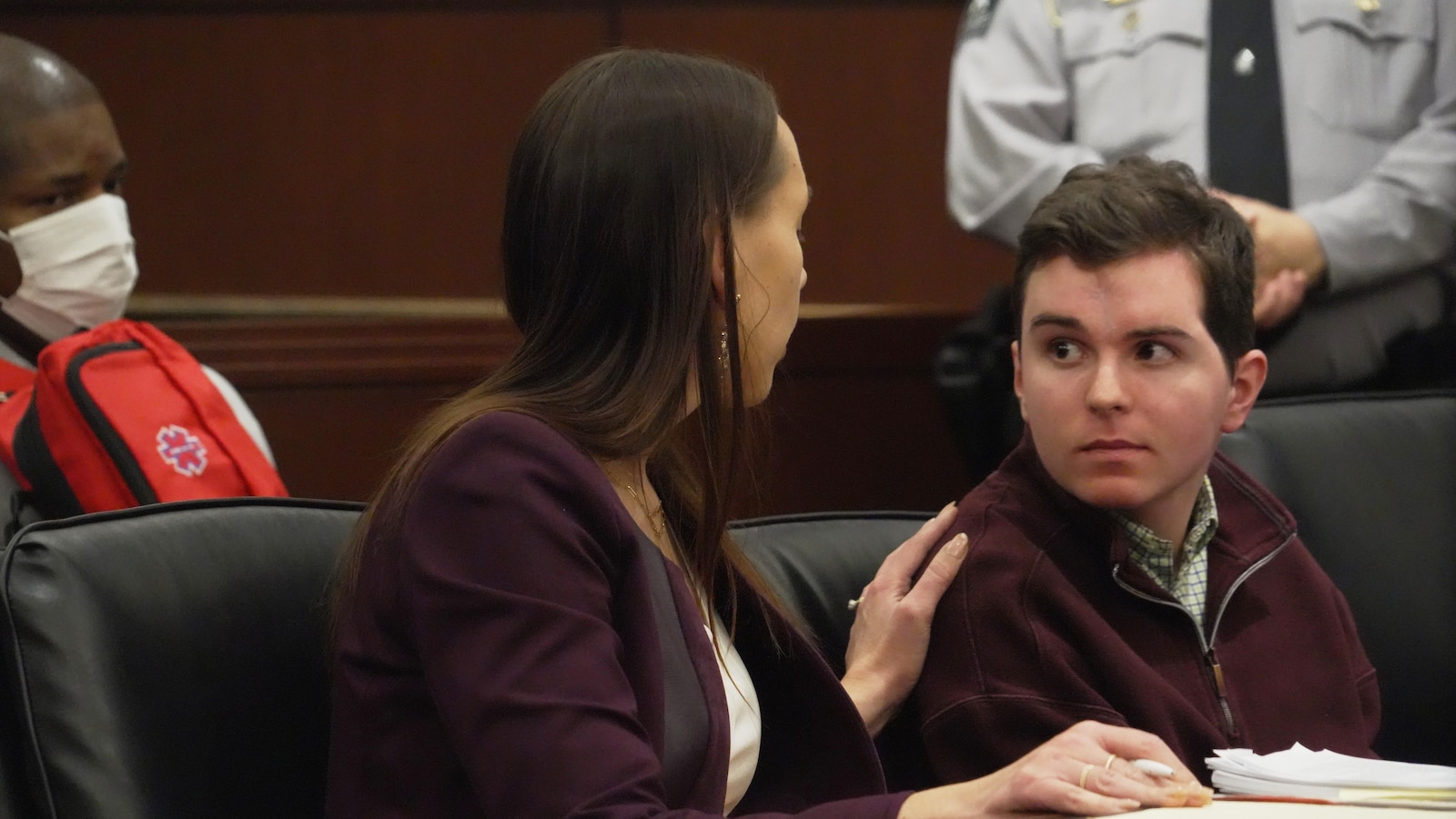
Superior Court Judge Paul Ridgeway faced an extraordinarily difficult decision when determining Austin Thompson’s fate. While the death penalty was off the table due to Austin’s age at the time of the crimes, the judge had to choose between life in prison without parole or life with the possibility of parole after at least 25 years. After carefully considering all the evidence presented during the sentencing hearing, Judge Ridgeway chose the harsher sentence: life without the possibility of parole. In explaining his reasoning, the judge stated that it was “hard to conceive of a greater display of malice,” pointing to the months of planning and fantasizing that Austin had engaged in before carrying out the attack. The judge concluded that Austin represented the rare type of juvenile offender “whose crimes reflect irreparable corruption.” As the sentence was announced, family members of the victims wept in the courtroom, while Austin, who never spoke during the proceedings, was led away in handcuffs. His defense attorneys immediately announced their intention to appeal the sentence, setting the stage for continued legal battles in the years ahead.
A Chilling Note and Disturbing Search History
During the sentencing hearing, prosecutors revealed disturbing details about Austin’s state of mind and planning in the months leading up to the massacre. A handwritten note found at the Thompson family home, previously kept confidential, provided a glimpse into the teenager’s motivation. The note, bearing Austin’s name and the date of the shooting, stated: “the reason I did this is because I hate humans they are destroying the planet/earth.” Even more heartbreakingly, it explained that he killed his brother James “because he would get in my way.” Beyond this note, prosecutors presented evidence from Austin’s internet search history on his phone and computer, which painted a picture of someone researching and preparing for violence. His searches included information about school shootings, guns, assaults, and even bomb-making materials. This digital trail suggested careful planning rather than a spontaneous act of violence. Assistant prosecutor Patrick Latour emphasized these points when urging the judge to impose the harshest sentence, arguing that “the thing that made it change was not some acne medication. It was the defendant’s knowing, researched, well thought out, planned, decisive actions.”
The Defense’s Medical Explanation
Austin’s defense team attempted to explain the inexplicable by presenting a theory centered on medication and mental state. Defense lawyer Deonte’ Thomas argued that the rampage occurred during a behavioral episode caused by medicine Austin regularly took for acne, which allegedly dissociated him from reality. To support this explanation, the defense brought in expert witnesses, including a psychiatrist who had interviewed Austin and a geneticist who testified about potential genetic factors. Thomas emphasized that Austin had no history of ecological-based anger, despite what the note suggested, and that “he cannot tell you why he wrote that note the way that he did” or “why he ran down the streets of Hedingham terrorizing people that day.” The defense attorney pleaded with the judge to recognize that Austin “is not unredeemable, he is not incorrigible,” arguing that he deserved the chance to one day prove to parole commissioners that he could “still be a productive person in society.” However, Judge Ridgeway ultimately found this argument unconvincing, determining that the evidence did not support the conclusion that Austin’s actions happened while in an altered mental state induced by medication and genetic abnormalities.
Victims’ Families Speak Their Truth
The sentencing hearing gave voice to those most devastated by Austin’s actions, and their testimonies painted a powerful picture of lives irreversibly shattered. Jasmin Torres, the widow of fallen Officer Gabriel Torres and mother to their 5-year-old daughter, delivered particularly emotional testimony. She referred to Austin as a “monster” and pleaded with Judge Ridgeway to ensure that “not one of us surviving victims, our families, our friends, our community should ever have to worry about a future where his barbaric self is set free.” The courtroom heard from multiple family members who described the void left by their loved ones and the ongoing trauma they continue to experience. These weren’t just statistics or names in a news report—they were beloved family members, community servants, and friends whose lives were cut short in the blink of an eye. Their testimonies served as powerful reminders that while Austin was young when he committed these crimes, his victims and their families would live with the consequences forever. The emotional weight of their words hung heavy in the courtroom as they advocated for justice and the protection of their community from any possibility of Austin’s future release.
A Family’s Incomprehensible Loss and Lingering Questions
Perhaps among the most tragic aspects of this case are Austin’s own parents, who lost both of their sons on that terrible day—one to murder and one to the criminal justice system. During the hearing, both parents testified, describing Austin as a normal, happy child who excelled in school and showed no warning signs of the violence to come. They confessed their complete inability to explain why their son committed such horrific acts. Austin’s mother, Elise Thompson, addressed the victims’ families directly, saying she will “forever be sorry for the pain that this has caused you” and acknowledging that “we both lost our children, one at the hand of the other. We never saw this coming and still cannot make sense of it.” Adding another layer to the family’s tragedy, Austin’s father pleaded guilty to improperly storing the handgun that authorities said was found when his son was arrested, receiving a suspended sentence and probation. This entire case raises haunting questions that may never be fully answered: How does a seemingly normal teenager transform into someone capable of such violence? Were there warning signs that were missed, or could this tragedy have been prevented? As Austin begins serving his life sentence without the possibility of parole, a community continues to heal, families continue to mourn, and parents continue to search for answers that may never come. The Hedingham neighborhood will forever be marked by October 13, 2022—a day that reminds us how quickly lives can change and how violence ripples outward, destroying not just the lives taken but the lives of everyone left behind.