
Minnesota Leaders Face Congressional Grilling Over Fraud and Immigration Enforcement
A Political Showdown in Washington
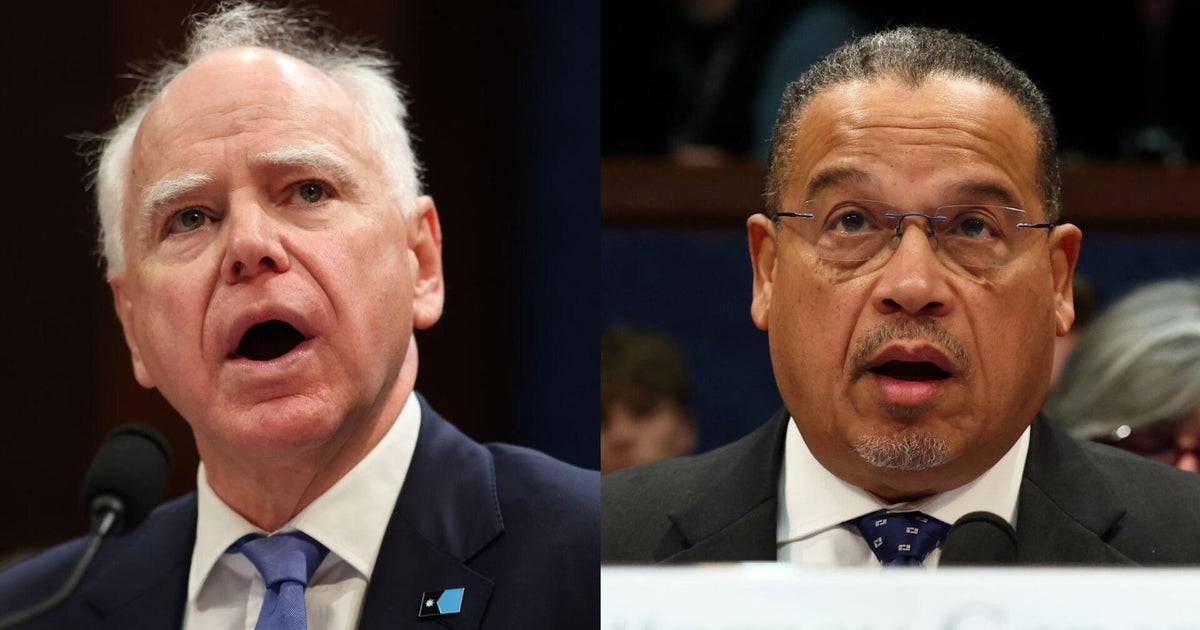
Minnesota Governor Tim Walz and Attorney General Keith Ellison found themselves in the hot seat Wednesday during a contentious House Oversight Committee hearing that laid bare the deep partisan divisions gripping American politics. The hearing, which stretched for hours, centered on two explosive issues: a massive fraud scandal that has rocked Minnesota’s social service programs and the Trump administration’s controversial immigration crackdown in the state. What unfolded was less a fact-finding mission and more a political battleground, with Republicans hammering the Democratic leaders over alleged fraud cover-ups while Democrats turned the tables to criticize what they characterized as federal government overreach and political retaliation. The committee had released a damning report beforehand accusing Walz and Ellison of deliberately concealing evidence of fraud, setting an antagonistic tone before the officials even took their seats.
Republican Committee Chairman James Comer of Kentucky didn’t mince words, declaring that testimony and documents demonstrated that both Walz and Ellison had “lied about their knowledge of the fraud, and retaliated against employees who dared to raise concerns.” At the heart of the controversy is the Feeding Our Future nonprofit, which allegedly orchestrated a staggering $250 million fraud scheme. According to the committee’s findings, the Minnesota Department of Education continued funneling money to the organization despite having identified “serious program deficiencies.” Walz acknowledged the gravity of the situation, accepting that the fraud “happened on my watch, whether it predated me or not,” while simultaneously defending how his administration handled the allegations and cooperated with federal investigators. Throughout the hearing, both men faced relentless questioning about the timeline of their knowledge—specifically when they first learned about fraudulent activities and what actions they took in response.
Minnesota Officials Fight Back Against Federal “Retribution”
Rather than simply playing defense, Walz and Ellison launched a counteroffensive, arguing that the Trump administration had weaponized fraud concerns as a pretext for political payback against a Democratic-led state. In his opening statement, Walz accused the federal government of singling out Minnesota “for political retribution at an unparalleled scale.” He painted a picture of chaos, describing how “masked, untrained and unaccountable agents” had flooded into Minnesota communities under the banner of fighting fraud but instead created havoc. Walz made a compelling argument that this federal surge actually undermined legitimate fraud investigations rather than strengthening them, pointing to mass resignations at the local U.S. Attorney’s Office that occurred amid the influx of federal agents—resignations that potentially jeopardized ongoing prosecutions of fraud cases.
In a bold moment that highlighted the political theater of the hearing, Walz challenged Chairman Comer directly, urging him to “call the president and tell him it’s time to put some U.S. attorneys over there to prosecute fraud. I’ll sign on with you.” Attorney General Ellison reinforced Walz’s criticism, stating bluntly that “Operation Metro Surge did nothing to address fraud in our state. It harmed our economy.” Despite the Republican attacks, Walz stood by Minnesota’s social programs, acknowledging that while they had “overwhelmingly achieved their intended purposes, they are not immune from fraud.” Joining the two officials at the witness table was Reverend Mariah Tollgaard, a senior pastor from St. Paul who had become a prominent critic of ICE operations in Minnesota. Called as the Democratic minority’s witness, Tollgaard delivered emotionally powerful testimony about the human cost of the immigration enforcement surge, revealing that children in Minnesota schools were now practicing two types of emergency drills—one for active shooters and one to protect themselves from federal agents. “That is not security. That is a nation failing its children,” she declared.
Republicans Demand Accountability and Sworn Testimony
Republican committee members came prepared with specific allegations and demands, frequently clashing with both Walz and Ellison over what they characterized as evasive answers and lack of accountability. Chairman Comer framed the fraud as a “failure of leadership, plain and simple,” and multiple Republicans insisted that both officials should be compelled to give sworn depositions. “One wonders whether either of you should bear some personal responsibility for the billions of dollars siphoned off by fraudsters under your noses,” Comer stated pointedly. Majority Whip Tom Emmer took direct aim at Ellison regarding a December 2021 meeting with Feeding Our Future staff, demanding to know exactly when Ellison became aware of the FBI investigation. Before the Attorney General could fully respond, Emmer interrupted to demand sworn depositions from both officials, making the explosive accusation that Ellison had “actively obstructed this investigation in exchange for campaign donations, a quid pro quo.”
The questioning repeatedly circled back to two fundamental questions that Emmer crystallized: “What did Gov. Walz and Keith Ellison know about the fraud?” and “When did they actually know it?” One of the most confrontational moments came when South Carolina Republican Nancy Mace challenged Walz over dramatic increases in spending on autism programs in Minnesota. She pressed Walz to explain what she mockingly called the “Minnesota math” behind spending that allegedly skyrocketed from $1 million in 2017 to $343 million in 2024. When Walz responded, “I’m not here to be your prop, but go ahead and tell us,” Mace fired back: “Is doing Minnesota math a prop? This is math, we’re talking about fraud.” In another tense exchange, Louisiana Representative Clay Higgins went so far as to call for Ellison’s resignation, declaring, “The attorney general of the state of Minnesota should resign.” Higgins focused his criticism on Ellison’s comments about his office’s limited jurisdiction in combating fraud. Ellison defended his team’s efforts, insisting “we punch above our weight.”
Democrats Shift Focus to Immigration Enforcement and Federal Cuts
Democratic committee members worked to reframe the hearing, portraying the Trump administration’s actions as disingenuous and politically motivated rather than genuinely concerned with rooting out fraud. California Representative Robert Garcia, the committee’s ranking Democrat, set the tone for his colleagues by characterizing Operation Metro Surge as an excuse to terrorize immigrant communities rather than a legitimate fraud investigation. Garcia accused the administration of cutting “food assistance” and healthcare while it “super funded terror on American streets”—a reference to the massive expansion of immigration enforcement operations. Multiple Democrats, including Governor Walz himself, brought up the tragic deaths of Renee Good and Alex Pretti, two individuals killed by federal officers during immigration operations. They criticized Homeland Security Secretary Kristi Noem, who had initially characterized the victims as domestic terrorists—a characterization that sparked outrage. Notably, Noem was testifying before the House Judiciary Committee at the same time in another part of the Capitol building.
Illinois Democratic Representative Raja Krishnamoorthi went on the offensive, moving to subpoena Secretary Noem and alleging that her own agency was riddled with “corruption and waste.” He specifically pointed to an expensive advertising campaign featuring Noem as evidence of misplaced priorities. Missouri Democrat Wesley Bell made a similar motion to subpoena Greg Bovino, the U.S. Border Protection commander who originally led Operation Metro Surge. These procedural moves demonstrated Democrats’ strategy of turning the hearing into an indictment of Trump administration policies rather than simply defending Walz and Ellison. The Democratic arguments resonated with their portrayal of the hearing as political theater designed to damage Minnesota’s Democratic leaders while providing cover for aggressive and potentially unconstitutional federal immigration enforcement actions.
The Bigger Picture: Fraud, Politics, and Federal Power
The hearing exposed fundamental questions about accountability, federal-state relations, and the politicization of government oversight. The Feeding Our Future fraud scandal is undeniably serious—$250 million in allegedly stolen taxpayer funds represents a significant failure of oversight regardless of political affiliation. The nonprofit was supposed to provide meals to children in need, making the alleged fraud particularly egregious. However, the hearing also highlighted how legitimate concerns about fraud can become entangled with partisan political agendas and immigration enforcement priorities that may have little to do with financial accountability. The Trump administration’s decision to flood Minnesota with federal agents—which it justified as fraud-fighting—coincided with the state’s Democratic leadership and diverse immigrant communities, raising questions about whether enforcement decisions were driven by law enforcement needs or political considerations.
The mass resignations at the U.S. Attorney’s Office that Walz referenced are particularly significant because career prosecutors typically don’t abandon ongoing cases without serious reasons. If federal fraud prosecutions are indeed being hampered by the very federal surge that was supposedly designed to combat fraud, it suggests that political messaging may have taken priority over effective law enforcement. At the same time, Walz and Ellison’s defenders must grapple with the timeline questions that Republicans repeatedly raised—if state officials knew about fraud indicators earlier than they’ve acknowledged, that represents a serious breach of public trust regardless of what the federal government did later. The hearing ultimately showcased how difficult it has become to separate legitimate oversight from political warfare, leaving the American public to sort through competing narratives about who’s really working to protect taxpayer dollars and who’s simply scoring political points. As both parties continue to use congressional hearings as stages for political messaging rather than genuine fact-finding, the challenge of addressing real problems like fraud only becomes more difficult.