
The Billionaire Boom: A Record-Breaking Year for Global Wealth
The Elite Club Reaches New Heights
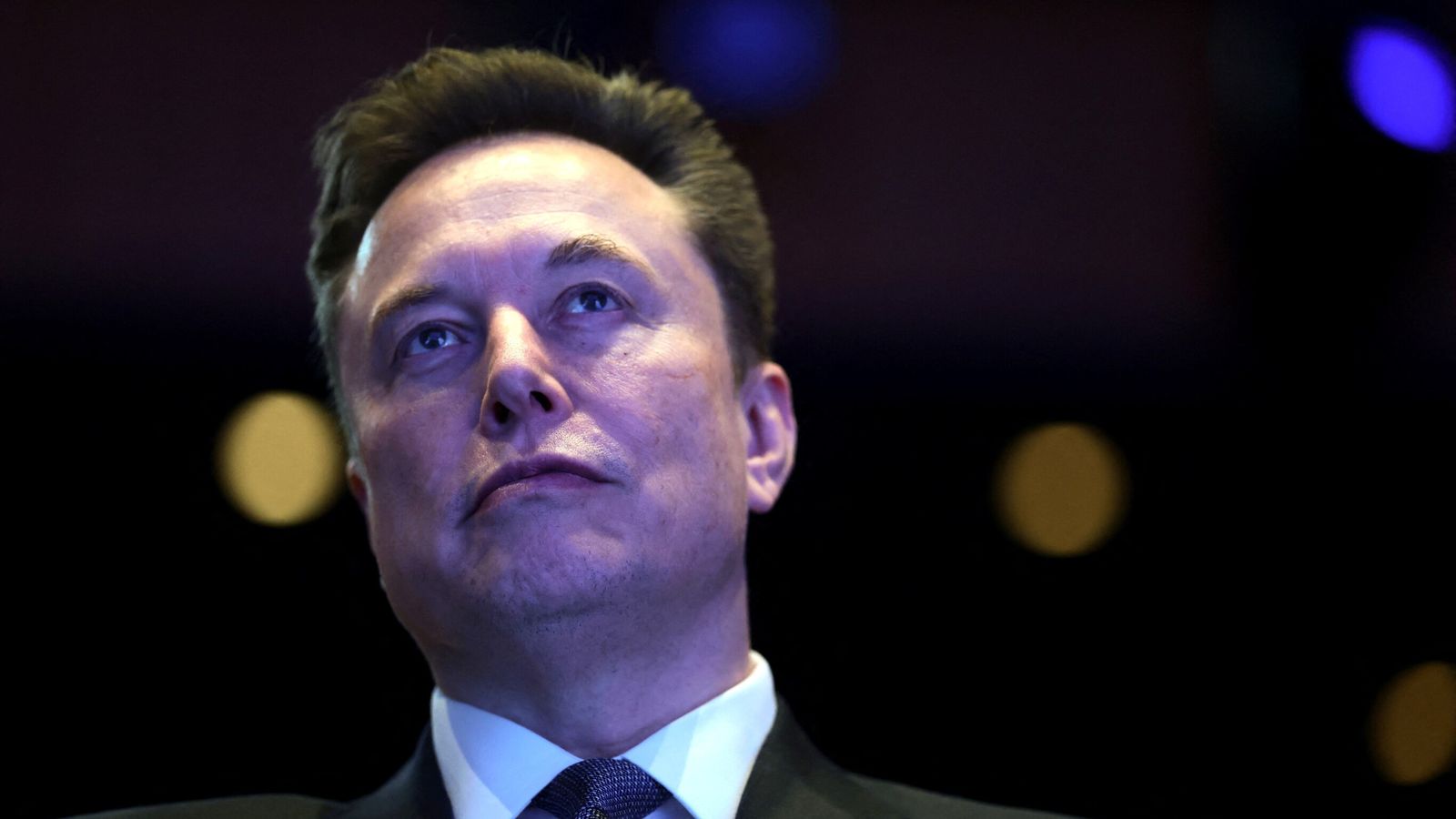
The world’s wealthiest individuals have reached unprecedented numbers, with Forbes reporting a staggering 3,428 billionaires globally in their latest annual rankings—a significant jump from last year’s 3,028. At the pinnacle of this exclusive group stands Elon Musk, who has maintained his position as the world’s richest person with a mind-boggling net worth of $839 billion. This astronomical figure represents an increase of $497 billion to his personal wealth in just one year, marking the biggest dollar gain of any individual on the list. The Tesla and SpaceX entrepreneur’s fortune continues to grow at a pace that seems almost unfathomable to ordinary citizens, highlighting the growing wealth gap between the ultra-rich and everyone else. Following closely behind Musk are Google’s co-founders Larry Page and Sergey Brin, with net worths of $257 billion and $237 billion respectively, demonstrating how the technology sector continues to mint billionaires at an extraordinary rate. Collectively, the individuals on this year’s list control a record-breaking $20.1 trillion in wealth—an increase of $4 trillion since the previous year—underscoring how the fortunes of the world’s richest continue to expand even as many everyday people struggle with the cost of living.
Tech Titans and Political Fortunes
The Forbes billionaires list paints a clear picture: technology remains the dominant force in wealth creation, with American tech entrepreneurs occupying most of the top positions. The six richest people globally are all Americans, with Amazon founder Jeff Bezos holding $224 billion, Meta’s Mark Zuckerberg at $222 billion, and Oracle’s Larry Ellison commanding $190 billion. Even more striking is the emergence of crypto baron Changpeng Zhao, known simply as CZ, whose $110 billion fortune now surpasses that of Microsoft founder Bill Gates, illustrating how cryptocurrency has created an entirely new generation of ultra-wealthy individuals. The technology sector’s influence extends beyond these household names, with Nvidia founder Jensen Huang joining the top ten with $154 billion, reflecting the artificial intelligence boom that has transformed the industry. Interestingly, the political world has also seen wealth accumulation, with US President Donald Trump increasing his net worth by 27% to $6.5 billion, largely attributed to his cryptocurrency dealings and the dismissal of his New York fraud penalty. This elevation places Trump as the world’s 645th richest person, a position that raises questions about the intersection of political power and personal wealth in modern society.
Fresh Faces Among the Ultra-Wealthy
This year’s Forbes list welcomes 390 newcomers to the billionaire ranks, representing a diverse array of industries and backgrounds that reflect changing economic landscapes. Among the most recognizable new entries are entertainment powerhouses Dr. Dre and Beyoncé Knowles-Carter, each crossing the billion-dollar threshold with net worths of $1 billion, proving that the entertainment industry can still produce extraordinary wealth. Retired tennis legend Roger Federer also joined the club with $1.1 billion, demonstrating how modern athletes can leverage their sporting success into massive business empires through endorsements, investments, and entrepreneurial ventures. The newcomers also include significant figures from the business world, such as Greg Abel, who holds $1 billion and is set to succeed legendary investor Warren Buffett as CEO of Berkshire Hathaway. Interestingly, Elon Musk’s brother Kimbal Musk entered the list with $1.4 billion, as did Nicole Shanahan—who is both Sergey Brin’s ex-wife and a former vice-presidential candidate—also with $1.4 billion. These additions illustrate how wealth increasingly circulates within interconnected networks of family, business relationships, and strategic partnerships at the highest economic levels.
The Super-Rich Within the Rich
Within this already exclusive club of billionaires, an even more elite subset has emerged: those with fortunes exceeding $100 billion. The number of individuals in this rarefied category has climbed to 20, up from just 15 the previous year, suggesting that wealth concentration at the very top is accelerating at an even faster rate than among billionaires generally. This ultra-wealthy tier represents the most powerful economic actors on the planet, individuals whose financial resources exceed the GDP of many nations and who wield enormous influence over global markets, technology development, and even political outcomes. The average net worth among all billionaires also increased, rising from $5.3 billion last year to $5.8 billion currently, indicating that wealth growth isn’t limited to just the top few but is occurring throughout the billionaire class. While men continue to dominate the rankings, this year saw 122 self-made women included on the list, collectively controlling $462 billion in wealth—a positive development toward gender diversity among the ultra-wealthy, though still representing a small fraction of the total. The data reveals that becoming extraordinarily wealthy has become somewhat more accessible, though still exceptionally rare, with pathways through technology entrepreneurship, entertainment, sports, and cryptocurrency offering routes to billion-dollar fortunes that didn’t exist a generation ago.
International Wealth and Notable Absences
While American billionaires dominate the upper reaches of the list, international wealth continues to grow and diversify. French luxury goods magnate Bernard Arnault and his family ranked seventh with an estimated $171 billion, demonstrating that traditional luxury industries can still compete with technology in wealth generation. Spanish fashion mogul Amancio Ortega also cracked the top ten with $148 billion, while legendary investor Warren Buffett remained influential at ninth position with $149 billion, proving that value investing remains a viable path to extraordinary wealth even in the age of cryptocurrency and technology startups. However, British representation on the list is relatively sparse, with hedge fund manager Michael Platt being the highest-ranked UK billionaire at 120th position with a $20 billion net worth—a far cry from the American and Asian dominance of the upper rankings. The list also saw 89 individuals fall off entirely, including NASA head Jared Isaacman and real estate developer Charles Cohen, reminding us that even at these elevated wealth levels, fortunes can be lost as well as made. Notably, Lei Jun, founder of Chinese electronics giant Xiaomi, experienced the largest loss, seeing his wealth decline by $15.6 billion, highlighting how market volatility and economic conditions can significantly impact even the most successful entrepreneurs.
The Next Generation of Billionaires
Perhaps most intriguing are the youngest members of this exclusive club, who represent both inherited wealth and remarkable entrepreneurial achievement at extraordinarily young ages. The world’s youngest billionaire is 20-year-old Brazilian heiress Amelie Voigt Trejes, whose $1.1 billion fortune comes from her grandfather’s industrial machinery firm WEG, illustrating how generational wealth transfer creates billionaires before they’ve barely entered adulthood. However, the self-made young billionaires may be even more remarkable, with 22-year-old American Surya Midha, co-founder of AI hiring startup Mercor, representing the youngest person to have built a billion-dollar fortune through their own efforts. Midha is one of 12 self-made billionaires under 30 on the list, a group that predominantly made their fortunes in technology and particularly in emerging fields like artificial intelligence and cryptocurrency. These young billionaires represent a new economic reality where age is becoming less relevant to wealth creation, as digital platforms, global markets, and venture capital funding allow talented entrepreneurs to scale businesses to extraordinary valuations at unprecedented speeds. Their presence on the list raises important questions about wealth inequality, opportunity, and whether such rapid wealth accumulation by so few individuals is beneficial or problematic for society at large. As the billionaire club continues to expand and the wealth controlled by its members grows exponentially, the gap between the ultra-wealthy and ordinary citizens widens, creating economic and social challenges that governments and societies will need to address in the coming years.