

Grammy Winners Stand in Solidarity with Immigrants During 2026 Awards Ceremony
A Night of Musical Excellence and Social Advocacy
The 2026 Grammy Awards transformed into more than just a celebration of musical achievement on Sunday night, as artists from across the globe used their acceptance speeches to address one of the most pressing humanitarian issues facing America today. Against the backdrop of the Trump administration’s intensified immigration policies and widespread deportation campaigns, multiple winners at the prestigious ceremony chose to leverage their platform to speak out in defense of immigrant communities. The evening’s most powerful moments came not just from musical performances, but from heartfelt speeches that reminded audiences of the fundamental humanity underlying the immigration debate. From emerging talents to established superstars, the message was clear: the music industry stands united in recognizing the invaluable contributions immigrants have made to American culture and society. The ceremony at Los Angeles’s Crypto.com Arena became a testament to the industry’s willingness to engage with difficult political realities, even as it celebrated artistic achievement.
Olivia Dean Honors Her Immigrant Heritage
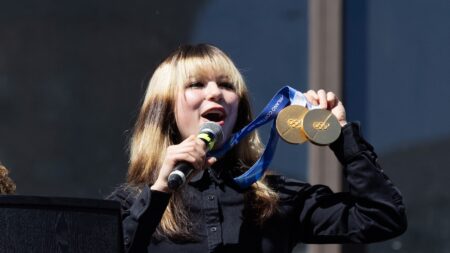
British singer-songwriter Olivia Dean set the tone for the evening’s activism when she accepted the prestigious Best New Artist award. Rather than focusing solely on her musical journey, Dean used her moment in the spotlight to acknowledge the immigrant roots that shaped her identity and made her success possible. With her father being British and her mother of Jamaican and Guyanese heritage, Dean spoke from personal experience when she declared, “I’m up here as a granddaughter of an immigrant. I’m a product of bravery, and I think those people deserve to be celebrated.” Her words resonated throughout the arena, reminding everyone that behind every immigration statistic lies a human story of courage, sacrifice, and hope. Dean’s speech emphasized the interconnectedness of our global society, concluding with the powerful sentiment, “we’re nothing without each other.” This message of unity and mutual dependence would echo throughout the evening, as other artists built upon her foundation of solidarity and compassion.
Bad Bunny’s Powerful Stand Against ICE
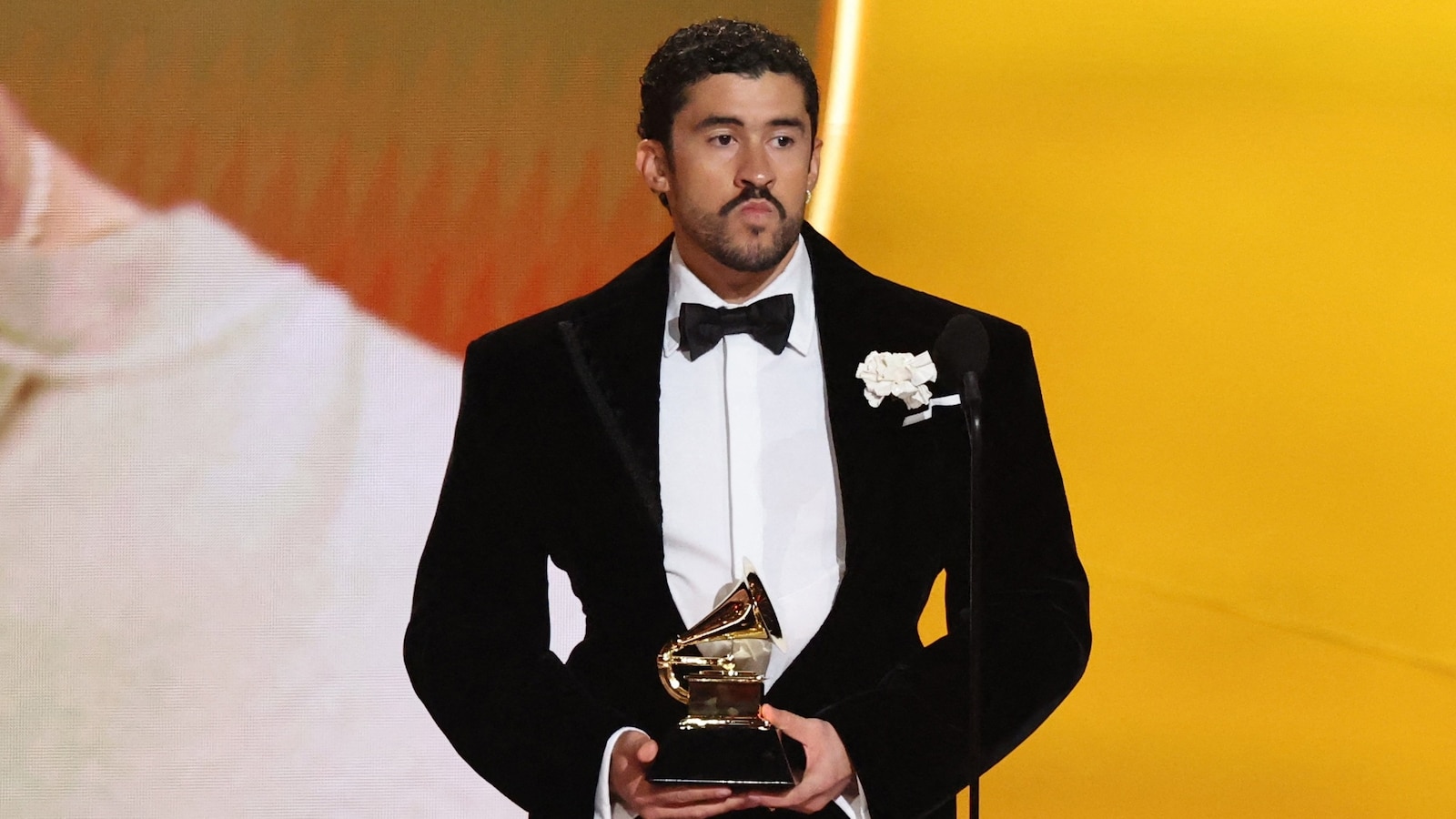
The evening’s most electrifying moment came when Puerto Rican superstar Bad Bunny took the stage to accept his award for Best Música Urbana Album. Before even thanking God, the artist made an unequivocal statement that received a standing ovation from the star-studded audience: “ICE OUT.” His bold declaration challenged the presence and actions of U.S. Immigration and Customs Enforcement in American cities, directly confronting the policies that have torn families apart and created climate of fear in immigrant communities. Bad Bunny’s words carried particular weight as he reminded the audience, “We’re not savages, we’re not animals. We are humans, and we are Americans.” This assertion of dignity and belonging struck at the heart of the dehumanizing rhetoric often used in immigration debates. Later, when accepting the night’s most prestigious honor—Album of the Year—Bad Bunny delivered his speech in Spanish, dedicating the award “to all the people that had to leave their homeland, their country, to follow their dreams.” His message extended beyond simple political protest; he urged his audience to “fight hate with love,” recognizing that “the hate gets more powerful with more hate. The only thing that is more powerful than hate is love.”
Controversy and Courage Leading to the Super Bowl
Bad Bunny’s Grammy speeches take on additional significance given that he is scheduled to perform at the upcoming Super Bowl halftime show, an appointment that has already generated substantial controversy. Critics, particularly from conservative circles, have questioned whether an artist who sings almost exclusively in Spanish and openly supports immigrant rights should be given such a prominent platform in one of America’s most-watched annual events. These objections reveal deeper anxieties about American identity, language, and belonging—precisely the issues Bad Bunny addressed in his Grammy speeches. The controversy intensified following recent tragic events in Minneapolis, where residents Alex Pretti and Renee Good lost their lives at the hands of federal agents during anti-ICE protests. These deaths have galvanized opposition to current immigration enforcement practices and lent additional urgency to the statements made during the Grammy ceremony. Bad Bunny’s willingness to speak out despite knowing he faces heightened scrutiny demonstrates remarkable courage and commitment to using his platform for advocacy rather than merely self-promotion.
Widespread Support Throughout the Music Community
The commitment to immigrant rights extended far beyond individual acceptance speeches, manifesting in both symbolic gestures and additional statements throughout the evening. Several high-profile artists, including power couple Hailey and Justin Bieber, along with Billie Eilish and legendary singer-songwriter Carole King, wore “ICE Out” pins on the red carpet and during the ceremony itself. When Billie Eilish accepted her Song of the Year award for “Wildflower,” she delivered one of the evening’s most pointed statements: “No one is illegal on stolen land.” Though portions of her speech were censored, presumably due to profanity, her message came through clearly. Eilish acknowledged the difficulty of knowing “what to say and what to do right now,” but expressed feeling “really hopeful in this room,” encouraging continued resistance through speaking up and protesting. Harvey Mason Jr., chief executive officer of the Recording Academy which presents the Grammys, contextualized the evening’s activism by speaking about the power of music in times of crisis, declaring that “when words fail, music speaks.” This statement underscored the unique role artists play in giving voice to social movements and humanitarian concerns.
Messages of Hope and Resilience
As the evening drew to a close, additional artists contributed to the tapestry of hope and resistance being woven throughout the ceremony. When SZA accepted the Record of the Year award alongside Kendrick Lamar for their collaboration “Luther,” she stepped to the microphone with a message specifically designed to counter the despair many Americans feel during this tumultuous period. “Please don’t fall into despair. I know that right now is a scary time. I know the algorithms tell us that it’s so scary, and all is lost,” she began, acknowledging the very real fears pervading society. However, she quickly pivoted to a message of historical perspective and hope: “But there’s been world wars, there’s been plagues, and we have gone on. We can go on.” SZA’s words reminded the audience that humanity has faced seemingly insurmountable challenges before and persevered through collective action and mutual support. Her final statement carried profound spiritual and political implications: “We need each other. We need to trust each other and trust ourselves. Trust your heart. We’re not governed by the government. We’re governed by God.” This assertion positioned moral authority above political power, suggesting that regardless of governmental policies, individuals remain accountable to higher principles of compassion, justice, and human dignity. The 2026 Grammy Awards will be remembered not just for the musical talent it celebrated, but for the moral courage displayed by artists who refused to remain silent in the face of injustice, transforming an entertainment event into a powerful statement of solidarity with vulnerable communities.