


Israeli Military Links Michigan Synagogue Attacker to Hezbollah Commander Brother
Family Tragedy Spans Two Continents in Escalating Middle East Conflict
The devastating attack on a Michigan synagogue last week has taken on new international dimensions as Israeli military officials revealed Sunday that the alleged attacker’s brother was a high-ranking Hezbollah commander killed in an Israeli airstrike just days before the synagogue incident. The Israel Defense Forces announced that Ibrahim Muhammad Ghazali, brother of Ayman Mohamad Ghazali who carried out the Michigan attack, was eliminated in a targeted strike on a Hezbollah military position. According to the IDF’s statement shared on social media, Ibrahim Ghazali held a significant operational role within the Lebanese militant organization, specifically managing weapons operations for a unit that Israeli officials claim launched hundreds of rockets toward Israeli civilian areas throughout the ongoing conflict. The strike that killed Ibrahim Ghazali also claimed the lives of several other family members, creating a tragic chain of events that appears to have motivated the subsequent attack thousands of miles away in suburban Detroit.
The Devastating Airstrike That Preceded the Michigan Attack
The Israeli airstrike that killed Ibrahim Ghazali targeted a Hezbollah military structure in southern Lebanon, occurring just after sunset according to Lebanese sources. A Lebanese official, speaking anonymously to the Associated Press due to restrictions on publicly discussing such sensitive military incidents, confirmed Ibrahim Ghazali’s death and revealed the horrifying extent of the family tragedy. The strike didn’t just kill Ibrahim Ghazali—it also killed his children, Ali and Fatima, along with another brother named Kassim, when their family home was hit. A freelance journalist working with CBS News in Lebanon reported that local sources identified both Ayman and Ibrahim Ghazali as members of a Hezbollah rocket unit operating in southern Lebanon, suggesting deeper family involvement in the militant organization than initially known. This information paints a picture of a family caught in the crossfire of the larger Israeli-Hezbollah conflict, with tragic consequences that would soon ripple across the Atlantic Ocean to affect an American Jewish community thousands of miles from the Middle Eastern battlefield.
The Michigan Synagogue Attack: A Deadly Response to Family Loss
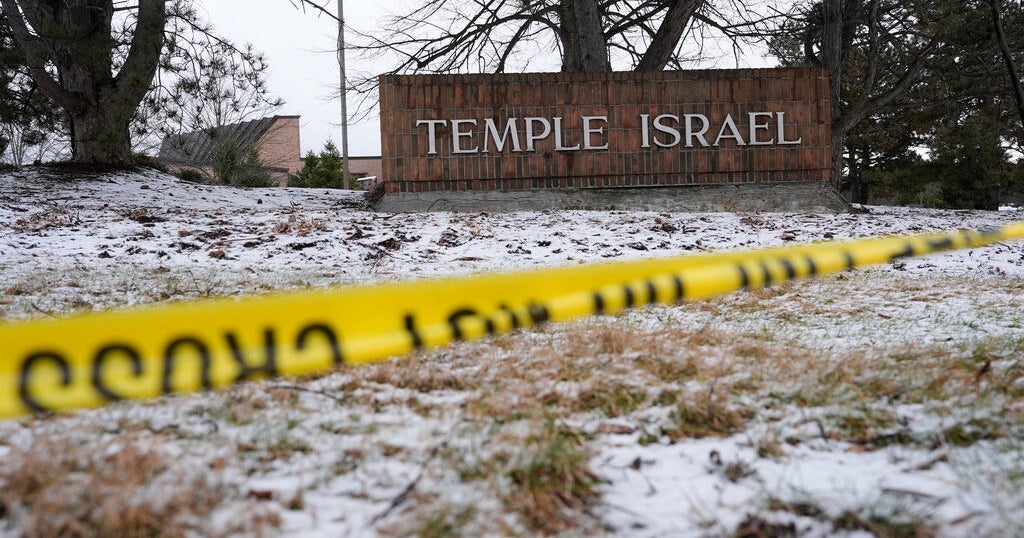
Ayman Ghazali, a 41-year-old Lebanese-born man who had become a U.S. citizen, allegedly carried out a calculated and devastating attack on Temple Israel synagogue outside Detroit last Thursday. According to federal authorities, Ghazali learned that four of his family members had been killed in the Israeli strike in Lebanon, and this news appears to have triggered his violent response. The attack was not spontaneous or impulsive—Ghazali reportedly waited outside Temple Israel for approximately two hours, sitting in his vehicle which was loaded with an alarming arsenal including a rifle, commercial-grade fireworks, and multiple jugs of liquid that investigators believe was gasoline. During this time, more than a hundred children were attending classes inside the synagogue, completely unaware of the danger lurking in the parking lot. When Ghazali finally acted, he crashed his truck directly into the building and began firing his weapon through the windshield. An armed security guard at the synagogue returned fire, engaging in a gun battle that likely prevented even greater tragedy. The attack ended when Ghazali became trapped in his vehicle as the engine caught fire, ultimately dying by suicide according to FBI Special Agent in Charge Jennifer Runyan, who briefed the media on Friday.
Casualties and Community Impact
While Ayman Ghazali was the only fatality in the Michigan attack itself, the incident left deep scars on the local Jewish community and first responders. A security guard who bravely engaged the attacker was injured during the exchange of gunfire, and dozens of law enforcement officers who responded to the scene required treatment for smoke inhalation caused by the vehicle fire. The fact that no children or other community members were killed despite the attacker’s obvious intent and preparation speaks to both the quick response of security personnel and perhaps an element of fortune in what could have been an unthinkable massacre. The FBI quickly characterized the incident as a “targeted act of violence against the Jewish community,” recognizing it not as a random act of violence but as a deliberate attack motivated by hatred and revenge. The psychological impact on the Temple Israel community, particularly the children who were present during the attack and the parents who faced every family’s worst nightmare, cannot be overstated. This attack has become yet another painful reminder of the vulnerability of Jewish institutions in America and the ongoing need for enhanced security measures at synagogues, community centers, and schools.
The Attacker’s Path to American Citizenship
Understanding how Ayman Ghazali came to be in the United States and what his life was like before the attack provides important context to this tragedy. According to the Department of Homeland Security, Ghazali entered the United States legally in May 2011, sponsored by his then-wife who was already an American citizen. This is a common and legitimate immigration pathway that allows U.S. citizens to bring their foreign-born spouses to America. Five years later, in 2016, Ghazali himself became a naturalized U.S. citizen, completing what seemed to be a successful immigration story. The FBI’s Detroit office, which is leading the investigation into the synagogue attack, has declined to comment on the Israeli military’s claims about Ibrahim Ghazali’s role in Hezbollah, with spokesman Jordan Hall stating in an email Sunday that “out of respect for the ongoing investigation, we will continue to refrain from commenting on its substance.” This silence from American investigators is standard procedure during active investigations but leaves many questions unanswered about what authorities knew about Ghazali’s background and family connections, and whether any warning signs were missed that might have prevented this attack.
A Wider Pattern of Violence and Growing Concerns
The attack on Temple Israel didn’t occur in isolation but rather as part of a deeply troubling pattern of violence that has emerged both domestically and internationally. Remarkably, on the very same day as the Michigan synagogue attack, another act of terrorism unfolded at Old Dominion University in Virginia, where a former Army National Guard member who had previously served prison time for attempting to aid the Islamic State opened fire on a classroom, killing one person and wounding two others. These near-simultaneous attacks, though apparently unconnected, highlight the persistent threat of ideologically motivated violence in America and the challenges law enforcement faces in preventing such incidents. The Michigan attack is particularly concerning because it demonstrates how conflicts occurring thousands of miles away can directly impact American communities, with individuals bringing their grievances and vendettas from foreign battlefields to American soil. As tensions continue to escalate in the Middle East, with the ongoing Israeli-Palestinian conflict and Israel’s confrontation with Hezbollah in Lebanon, American security officials worry about similar revenge attacks targeting Jewish communities across the United States. The incident at Temple Israel serves as a sobering reminder that America’s diverse immigrant population, while generally a source of strength and cultural richness, can sometimes become a vector for importing international conflicts into previously peaceful communities. Moving forward, the challenge for American society will be maintaining its welcoming stance toward immigrants and refugees while also ensuring adequate security measures to protect all communities from those who would use violence to settle scores from conflicts half a world away.