


Iran Firmly Rejects Trump’s Claims of Seeking Negotiations
Diplomatic Standoff Intensifies as War Enters Third Week
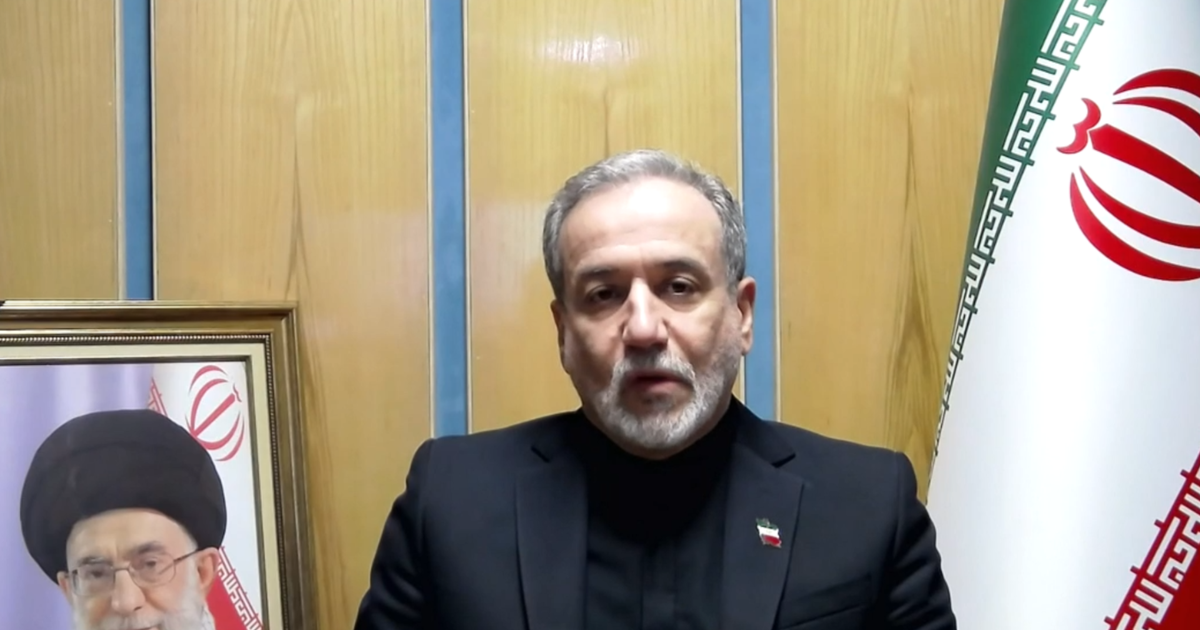
In a stark contradiction to President Trump’s recent assertions, Iranian Foreign Minister Abbas Araghchi delivered an unequivocal message to the American public this Sunday: Iran has no interest in negotiating with the United States. Speaking candidly on CBS’s “Face the Nation,” Araghchi pushed back firmly against the President’s characterization that Iran is desperately seeking a diplomatic resolution to the ongoing conflict between the two nations. “We don’t see any reason why we should talk with Americans,” the foreign minister stated plainly, emphasizing that Iran has “never asked for a ceasefire” and has “never asked even for negotiation.” This direct rebuke comes as the military confrontation between the United States and Iran has stretched into its third week, with no clear end in sight and both sides presenting fundamentally different narratives about who actually wants peace.
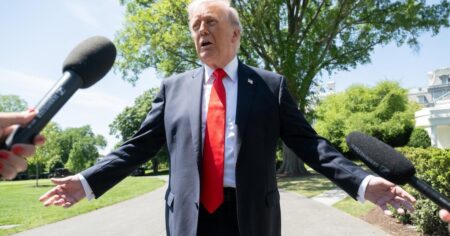
President Trump has spent recent days painting a picture of an Iranian government on the brink, claiming through various channels that Tehran is eager to strike a deal to end hostilities. Late Friday evening, the President posted on his Truth Social platform that Iran “is totally defeated and wants a deal – But not a deal that I would accept!” The following day, speaking with NBC News, Trump doubled down on this assertion, telling reporters that “Iran wants to make a deal, and I don’t want to make it because the terms aren’t good enough yet.” These statements suggest a President positioning himself as holding all the cards, portraying Iran as weakened and desperate while he maintains the upper hand in any potential negotiations. However, Araghchi’s comments present an entirely different reality—one where Iran sees itself as resilient, determined, and thoroughly uninterested in coming to the negotiating table under current circumstances.
Iran’s Defiant Stance and Accusations Against Trump
The Iranian foreign minister’s language during the interview was notably pointed and personal in its criticism of President Trump. Araghchi framed the ongoing conflict not as a necessary military action but as “an illegal war with no victory” that serves no legitimate purpose. Perhaps most controversially, he suggested that innocent lives are being lost merely because “President Trump wants to have fun,” characterizing the military engagement as frivolous rather than strategic. According to Araghchi, this is fundamentally “a war of choice by President Trump and the United States,” not a conflict that Iran sought or provoked. In his view, Iran is simply exercising its right to self-defense against unprovoked American aggression, and Tehran intends to continue defending itself “as long as it takes” until the Trump administration recognizes the futility of its military campaign.
Addressing concerns that the conflict might threaten the survival of Iran’s government, Araghchi projected confidence and stability. “We are, you know, stable and strong enough,” he insisted, dismissing any notion that domestic pressures or military setbacks might force Iran’s hand at the negotiating table. This assertion directly challenges the Trump administration’s apparent strategy of applying maximum military pressure to achieve diplomatic concessions. If Iran’s government truly feels secure and believes it can sustain its defensive posture indefinitely, the calculus behind the American military campaign becomes considerably more complicated. The foreign minister’s comments suggest that Tehran has prepared for a protracted conflict and doesn’t view the current situation as an existential crisis that requires immediate diplomatic resolution.
Broken Trust and Failed Pre-War Negotiations
Central to Iran’s reluctance to engage in new talks is the bitter memory of negotiations that were underway immediately before the United States and Israel launched their initial strikes on Iranian targets late last month. Araghchi revealed that diplomatic channels were actually open and active when the attacks commenced, making this “the second time” that America had attacked Iran while supposedly engaged in diplomatic dialogue. “We were talking with them when they decided to attack us,” the foreign minister explained with evident frustration. This experience has fundamentally damaged Iran’s trust in American diplomatic intentions. “There is no good experience talking with the Americans,” Araghchi stated bluntly. From Tehran’s perspective, if the United States is willing to launch military strikes while simultaneously conducting negotiations, what value do those negotiations actually hold? “We were talking, so why they decided to attack us? So what is good if we go back to talk once again?” he asked, articulating the core of Iran’s skepticism about renewed diplomatic engagement.
These pre-war negotiations involved some of the Trump administration’s most trusted advisors, including Steve Witkoff and Jared Kushner, the President’s son-in-law who has played key roles in various Middle East initiatives. During those discussions, according to Araghchi, Iran demonstrated significant flexibility and willingness to address American concerns about its nuclear program. The foreign minister disclosed that Iran had offered to dilute its enriched uranium stockpile—a substantial concession that would have directly addressed Western fears about Tehran’s nuclear ambitions. Araghchi described this as a “big concession in order to prove that Iran has never wanted nuclear weapons and would never want them.” This revelation suggests that serious progress might have been possible through diplomatic channels before military action derailed the process. The fact that Iran was willing to make such a significant concession—only to be met with military strikes shortly thereafter—helps explain Tehran’s current unwillingness to return to the negotiating table.
Nuclear Concessions Off the Table for Now
When pressed by interviewer Margaret Brennan about whether Iran’s previous offer regarding uranium dilution still stands, Araghchi made clear that the window for that particular opportunity has closed, at least for the present. “There is nothing on the table right now,” he stated definitively. The foreign minister explained that any future negotiations would require Iran to make fresh decisions about what concessions or proposals might be appropriate given the circumstances at that time. “Everything depends on the future,” Araghchi said. “If any time in the future we decide to enter into negotiation with the U.S. or other interlocutors, you know, we may decide what to put on the table. For the time being, nothing is on the table.” This position represents a significant hardening of Iran’s diplomatic stance compared to just weeks ago, when Tehran was apparently willing to make substantial compromises on its nuclear program.
The withdrawal of Iran’s uranium dilution offer has serious implications for regional security and the broader nuclear non-proliferation regime. Enriched uranium is the critical material needed for both nuclear energy and nuclear weapons, and the level of enrichment determines its potential uses. Iran’s willingness to dilute its stockpile would have reduced concerns about the country’s ability to quickly produce weapons-grade material. With that offer now withdrawn, the international community faces renewed uncertainty about Iran’s nuclear trajectory. Moreover, Araghchi’s comments suggest that any future negotiations would essentially need to start from scratch, with Iran reassessing what concessions it might be willing to make based on the diplomatic and military context at that future moment. This creates additional unpredictability, as there’s no guarantee that Iran would be willing to make similar offers again, particularly if the current conflict continues to erode trust between Tehran and Washington.
The Path Forward Remains Unclear
The contradictory narratives presented by President Trump and Foreign Minister Araghchi leave considerable uncertainty about how this conflict might eventually resolve. If Trump’s assessment is correct and Iran is indeed seeking a diplomatic off-ramp but unwilling to meet American terms, continued military pressure might eventually produce the concessions Washington seeks. However, if Araghchi’s portrayal is accurate and Iran is genuinely committed to indefinite resistance with no interest in negotiations, the current military strategy may prove ineffective at achieving American objectives. The truth likely lies somewhere between these two public positions, with both sides engaging in strategic messaging designed to shape perceptions and strengthen their respective negotiating positions for whenever substantive talks might eventually resume.
What seems clear is that the breakdown of pre-war negotiations and the subsequent military escalation have significantly damaged the trust necessary for productive diplomacy. Iran views American willingness to launch strikes while talks were ongoing as a betrayal that calls into question the value of any future negotiations. Meanwhile, the Trump administration apparently believes that sufficient military pressure will ultimately force Iran to accept terms it currently rejects. As the conflict enters its third week with no resolution in sight, the human cost continues to mount—a tragedy that Araghchi directly attributed to President Trump’s decision-making. Whether through military exhaustion, diplomatic breakthrough, or international mediation, some form of resolution will eventually be necessary. The question is how much additional suffering will occur before both sides find a path forward that allows them to step back from the brink while preserving their essential interests and dignity.