


Navy SEAL Turned Congressman Weighs In on Middle East Military Escalation
Understanding the Military Deployment
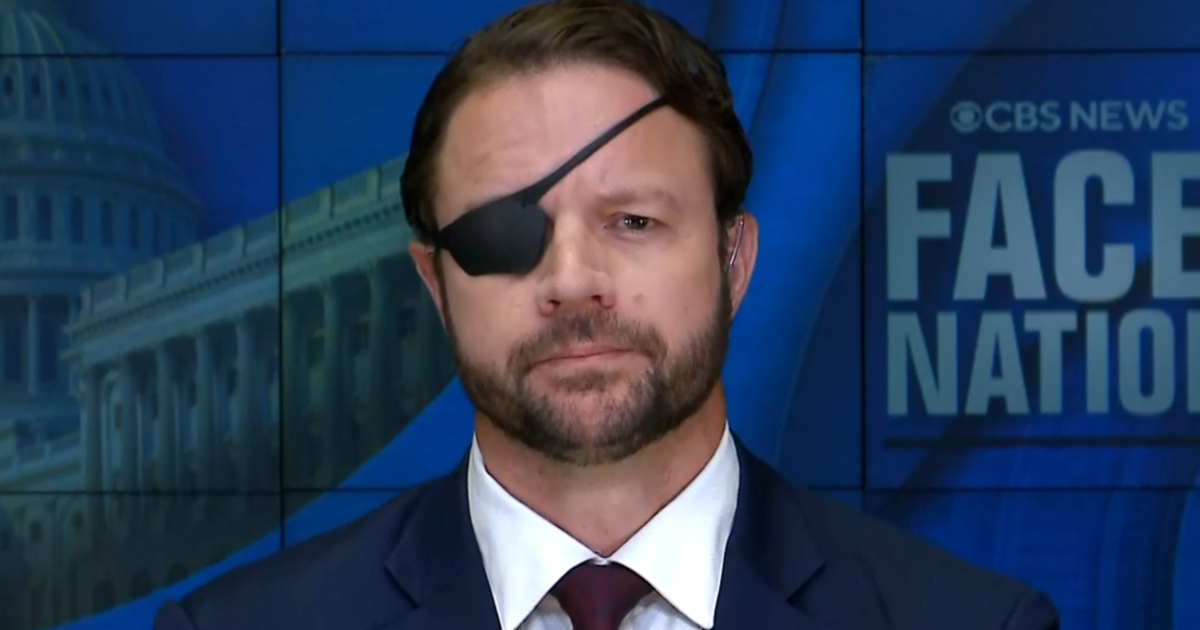
Texas Congressman Dan Crenshaw, a former Navy SEAL, recently appeared on Face the Nation to discuss the Trump administration’s decision to deploy additional Marines to the Middle East, joining the roughly 50,000 American forces already stationed in the region. Drawing from his military experience, Crenshaw emphasized that people shouldn’t interpret this deployment of approximately 5,000 troops as a full-scale boots-on-the-ground invasion. Instead, he explained that these expeditionary units serve multiple purposes – they could be preparing for contingency operations, standing ready to evacuate American citizens from Gulf allied countries if necessary, or supporting various other strategic objectives. The congressman viewed this move as a signal of serious commitment to the situation, arguing that when America decides to engage militarily, it needs to follow through completely. He specifically highlighted the importance of taking the Straits of Hormuz seriously, noting that the U.S. military practices operations in this critical waterway annually with over thirty allied nations. For Crenshaw, the president’s call for allies to assist in protecting this vital shipping lane represents exactly the kind of coordinated international response that the situation demands.
Defending Aggressive Military Rhetoric
When questioned about Secretary Hegseth’s controversial statements regarding “no stupid rules of engagement,” “punching them while they’re down,” and offering “no quarter, no mercy for our enemies,” Crenshaw didn’t express the concerns that many observers might expect. Instead, the congressman defended this aggressive language, explaining it through the lens of someone who has actually fought in Iraq and Afghanistan. He described firsthand experience with what he considers “bad rules of engagement” – restrictions that prevented soldiers from taking action unless they were already under fire. From Crenshaw’s perspective, the Secretary’s statements aren’t reckless rhetoric but rather a clear message that Iranian military targets will be pursued without hesitation. He argued that this kind of clarity has been sorely lacking in America’s recent conflicts and that it’s actually beneficial for military personnel to understand their mission parameters without ambiguity. When pressed about whether such language could endanger American troops if they were captured or put our forces at risk of retaliation, Crenshaw remained firm in his position. He drew a distinction between public messaging to the American people and the actual written rules of engagement that military personnel follow, suggesting that formal military protocols would remain professional and legally compliant regardless of the administration’s public statements.
Addressing Anti-Muslim Rhetoric Within the Republican Party
The conversation took a significant turn when Margaret Brennan confronted Crenshaw with recent inflammatory statements from Republican colleagues. Tennessee’s Andy Ogles had declared that “Muslims don’t belong in American society,” Florida’s Randy Fine called for “more Islamophobia,” and Alabama Senator Tommy Tuberville posted a provocative image linking the 9/11 attacks to New York City’s mayor attending a Ramadan dinner. Brennan asked whether Republican leadership should publicly condemn such statements, invoking Crenshaw’s own previous calls for “moral clarity” regarding antisemitism within the party. The congressman’s response revealed a complicated political calculation. While acknowledging that peaceful Muslims live among Americans, Crenshaw characterized these statements as “fairly fringe” and suggested that speaking out against them might actually amplify their reach rather than diminish their impact. He pointed to internal Republican conflicts over Israel and antisemitism as evidence that public condemnation can sometimes inflame controversies rather than resolve them. Notably, Crenshaw pivoted from directly addressing anti-Muslim bigotry to discussing “radical Islamism” as a legitimate threat, maintaining that the administration’s focus should be on properly funding agencies like the Department of Homeland Security to combat terrorism. This careful navigation suggested a reluctance to directly confront members of his own party, even when their rhetoric crossed obvious lines of religious bigotry.
Lessons from a Primary Defeat
In a candid moment, Crenshaw reflected on his recent primary election loss, attributing it largely to what he called a “culture of misinformation.” The congressman described himself as a “unique Republican” who has been subjected to prolonged online smear campaigns and conspiracy theories throughout his political career. He explained that his defeat came down to several factors: historically low primary turnout with only about twenty percent of Republican voters participating, combined with the widespread circulation of false information that voters apparently believed when they entered the voting booth. Despite repeated attempts to debunk claims – such as allegations that he had accumulated millions through insider trading – these narratives persisted and influenced voter behavior. What particularly troubled Crenshaw was the source of some misinformation: he noted that Democrats spent nearly a million dollars promoting these smears through television advertising, meaning Republican primary voters were making decisions based on information provided by political opponents and what he characterized as misleading reporting from liberal journalists. This situation created an absurd scenario where members of his own party were believing attack ads funded by Democrats and based on partisan media coverage.
The Challenge of Truth in Modern Politics
Crenshaw’s analysis of his defeat extended beyond personal grievance to broader concerns about American democracy and informed citizenship. He emphasized that while politicians have a responsibility to “get the truth out” and make genuine efforts to correct false information, there’s an equally important responsibility on the part of voters themselves. The congressman posed a direct challenge to the American electorate: are voters going to believe everything they read online or receive through various communication channels, or will they take the time to verify information and think critically about sources? This question gets at the heart of contemporary political dysfunction, where the information ecosystem has become so polluted with misinformation, disinformation, and deliberate manipulation that even engaged citizens struggle to distinguish fact from fiction. For Crenshaw, the lesson from his primary loss isn’t just for Republican politicians who need better communication strategies; it’s fundamentally a lesson for Republican voters about media literacy and the dangers of accepting information at face value without scrutiny. His experience highlights how vulnerable even informed, accomplished political figures have become to coordinated campaigns of misinformation, and how difficult it is to combat false narratives once they’ve taken root in partisan media ecosystems.
Broader Implications for American Politics
This interview with Congressman Crenshaw reveals several troubling dynamics in contemporary American politics. First, there’s the normalization of aggressive military rhetoric that previous generations of leaders might have considered reckless or counterproductive. While Crenshaw’s military experience lends credibility to his interpretation of these statements, the public blurring of lines between strategic communication and operational reality remains concerning to many national security experts. Second, the congressman’s reluctance to forcefully condemn explicitly anti-Muslim statements from fellow Republicans suggests how partisan loyalty and strategic calculation can override moral clarity, even from figures who have previously called for exactly that kind of principled stand on other forms of bigotry. The distinction he draws between antisemitism and Islamophobia – treating one as worthy of internal party conflict while dismissing the other as too fringe to merit response – reveals an inconsistency that critics will likely highlight. Finally, Crenshaw’s experience with misinformation and his ultimate primary defeat demonstrates how even experienced, well-funded, and media-savvy politicians are struggling to compete in an information environment where false narratives can spread faster than corrections, where partisan sources are trusted more than neutral fact-checkers, and where voters’ existing beliefs make them susceptible to confirmation bias. These challenges extend far beyond one congressman’s election loss; they represent fundamental threats to democratic governance that require solutions beyond better campaign strategies or more aggressive debunking efforts.