


Senator Warner Raises Alarm Over FBI Restructuring and Rising Threats to American Security
Domestic Terror Incidents Expose Dangerous Gaps in Law Enforcement
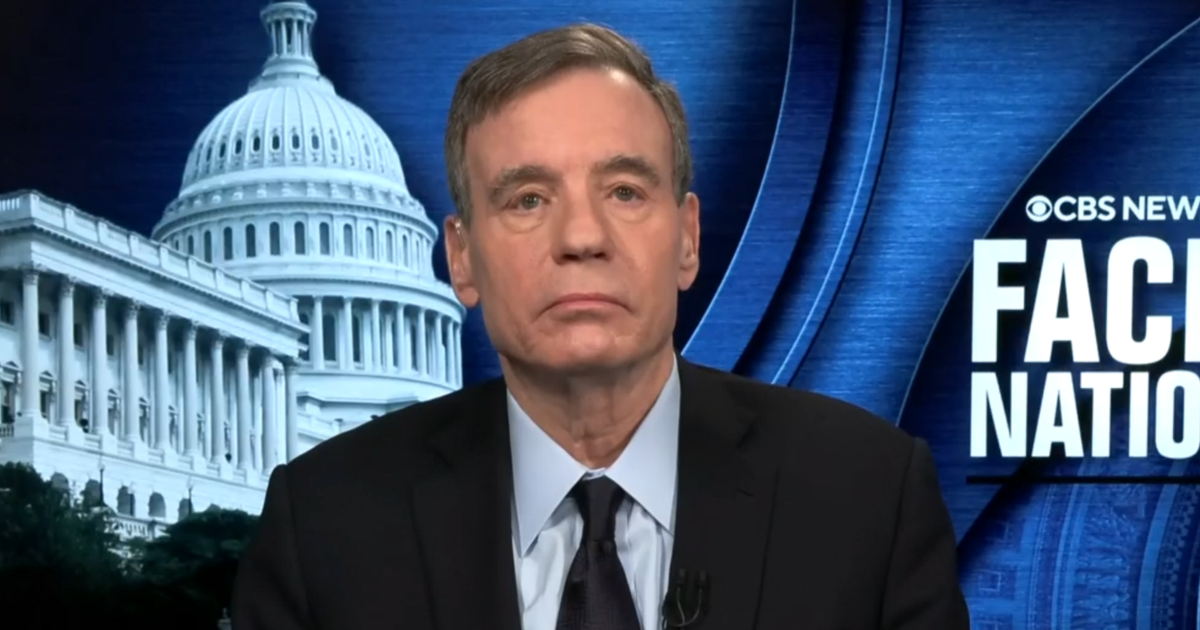
In a deeply concerning interview on “Face the Nation,” Senator Mark Warner of Virginia, who serves as vice chairman of the Intelligence Committee, painted a troubling picture of America’s current security landscape. The conversation centered on recent terror attacks on U.S. soil, including a shocking incident at Old Dominion University in Virginia where a convicted ISIS supporter walked into an Army ROTC classroom and murdered an instructor while injuring two others. This attacker had previously served years in prison for attempting to support the terrorist organization, raising immediate questions about how someone with such a dangerous background could slip through the cracks of law enforcement surveillance. Senator Warner didn’t mince words about where he believes the responsibility lies, pointing directly at the FBI’s current leadership under Director Kash Patel. According to Warner, the bureau has undergone a dramatic and dangerous restructuring that has gutted its counterterrorism capabilities at precisely the moment when such expertise is most needed. He revealed that approximately one-third of FBI officers who were previously focused on counterterrorism operations and investigating serious crimes like sex trafficking have been reassigned to immigration enforcement duties. This wholesale reshuffling of priorities, Warner argued, has left critical gaps in the nation’s security apparatus that terrorists can exploit. The senator expressed deep frustration that he had warned about these consequences repeatedly, and now those warnings are manifesting in the most tragic way possible.
Intelligence Assessment Contradicts Military Action Against Iran
The interview took a significant turn when discussion shifted to the broader geopolitical situation, specifically regarding Iran and the military actions taken against the country. Senator Warner addressed a fundamental contradiction between U.S. intelligence assessments and the military decisions that followed. He pointed out that just a year ago, America’s top intelligence officials testified before his committee during the annual Worldwide Threats Briefing with a clear and unambiguous message: Iran was not actively building a nuclear weapon, and the country’s Supreme Leader had not reauthorized the nuclear weapons program that had been suspended back in 2003. This assessment represented the considered judgment of America’s entire intelligence apparatus, yet it was apparently disregarded when President Trump decided to pursue military action against Iran. Warner emphasized that Israel disagreed with this U.S. intelligence assessment and apparently succeeded in persuading the president to take a different course. When pressed on whether the intelligence community had gotten it wrong, Warner was unequivocal: they had not. There was no imminent threat to the United States from Iran, and Warner believes there wasn’t even an imminent threat to Israel at that particular moment, though he acknowledged that Iran’s ballistic missile capabilities could pose a growing danger to Israel over time. The decision to go to war, Warner stressed repeatedly, was a “war of choice” made by President Trump rather than a necessary response to an urgent threat.
Questions About War Objectives and Strategic Outcomes
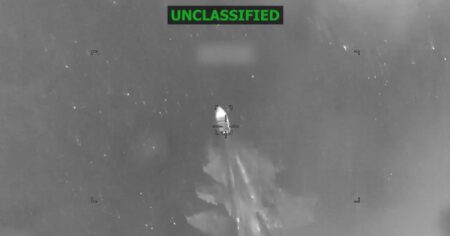
Senator Warner then outlined what he understood to be the four stated objectives of the military campaign against Iran: achieving regime change, eliminating Iran’s enriched uranium stockpiles, destroying their missile capabilities, and sinking their naval forces. His assessment of progress toward these goals was bluntly pessimistic. On regime change, he noted that Iran now has a new Supreme Leader who appears to be even more hardline than his predecessor, hardly the outcome the administration would have hoped for. Regarding uranium enrichment, Warner pointed out that actually securing and removing such materials would require troops on the ground, a commitment that raises the specter of a prolonged occupation. The missile threat remains largely intact, with some capabilities possibly enhanced by the conflict. As for the Iranian navy, Warner expressed particular concern that while larger vessels may have been targeted, Iran still possesses hundreds of small speedboats capable of planting mines throughout the Strait of Hormuz, a vital maritime chokepoint through which much of the world’s oil supply passes. Indeed, Warner indicated that Iran has already begun mining operations in this strategic waterway, creating an ongoing hazard to international shipping. The senator also mentioned that Ukraine had apparently offered to assist with drone operations against Iranian targets—their drone technology being considerably cheaper than American alternatives—but this offer was inexplicably declined. Now, with 13 American service members killed and thousands more in harm’s way, Warner questioned the president’s stated criteria for determining when to end operations: that he would know when it “felt right in his bones.” For a senator with sailors from the aircraft carrier USS Ford home-ported in his state of Norfolk, Virginia, this seat-of-the-pants approach to life-and-death military decisions seemed dangerously inadequate.
Tragedy at Iranian Elementary School Demands Answers
Perhaps the most emotionally charged portion of the interview addressed a horrific incident in which an American airstrike hit an elementary school in the Iranian city of Minab, killing nearly 200 people according to CBS reporting. The preliminary assessment suggests this catastrophic mistake resulted from using outdated intelligence for target coordinates, a failure with devastating human consequences. Defense Secretary Pete Hegseth has appointed an outside investigator from beyond Central Command to conduct a thorough probe into what went wrong. When Margaret Brennan pressed Senator Warner on whether the fatal error originated within the intelligence community or whether the military failed to properly vet the intelligence they received, the senator refused to jump to premature conclusions. He emphasized that while only preliminary assessments are available, a thorough investigation is absolutely necessary before assigning blame to either the Defense Intelligence Agency or Central Command. What Warner could confirm with certainty is that it was indeed an American strike, despite initial attempts by the president to deny responsibility or even suggest Iran itself might have been responsible. This attempt at deflection, Warner suggested, represents a broader problem with how the administration has handled communication about this conflict. The president never formally addressed the American people to explain why this war of choice was necessary or what the specific objectives were beyond the four goals that Warner had outlined. The senator also noted important context about the school’s location: it was immediately adjacent to an Iranian military base, which may explain how it ended up being targeted but certainly doesn’t excuse the loss of innocent life, particularly children. Given this tragedy, Brennan asked whether Warner remained confident in the intelligence being used for ongoing targeting decisions affecting more than 50,000 American service members now committed to operations in and around Iran. Warner’s response emphasized the need for facts rather than speculation, arguing that everyone would serve the country better by waiting for complete investigation results before drawing conclusions about systemic intelligence or military failures.
Economic Consequences of Conflict Hit American Families
Beyond the immediate security and humanitarian concerns, Senator Warner highlighted the very real economic pain that American families are experiencing as a result of this conflict. He specifically disagreed with comments made earlier in the program by Kevin Hassett, who had apparently downplayed the economic impact. Warner provided concrete examples from his home state of Virginia: just two weeks before the interview, gasoline prices stood at $2.81 per gallon; by the time of his appearance, they had jumped to $3.45 per gallon. That’s an increase of more than 20 percent in a matter of days, directly hitting the wallets of every American who drives to work, takes their kids to school, or runs a business that depends on transportation. The price spike at the pump is just the most visible manifestation of broader economic disruptions. Warner also mentioned speaking with a farmer who reported that his fertilizer costs had increased by 40 percent, a staggering jump that will inevitably translate into higher food prices for consumers and potentially devastating losses for agricultural producers operating on thin margins. These economic shocks stem directly from the closure and mining of the Strait of Hormuz, through which a significant portion of the world’s oil supply normally flows. With that critical chokepoint compromised, global energy markets have responded with the kind of price volatility and supply concerns that ripple through every sector of the economy.
Government Shutdown Compounds Crisis for Security Workers
As if the complex foreign policy crisis weren’t enough, Senator Warner also addressed a parallel disaster unfolding domestically: the ongoing failure of Congress to fund the Department of Homeland Security. For the fourth time, the Senate had failed to advance funding legislation, leaving critical security personnel in an untenable position. Transportation Security Administration agents, the frontline workers who screen millions of airline passengers every day to prevent terrorist attacks, have missed paychecks and are literally standing in food lines to feed their families. They missed a half paycheck at the last pay period and were scheduled to miss a full paycheck on the Friday following the interview. Airline CEOs have publicly faulted Congress for this situation, which not only creates hardship for dedicated public servants but also potentially compromises aviation security at a time when the terror threat level has clearly elevated. Warner expressed frustration with the deadlock, explaining that Democrats have offered to fund TSA, FEMA, the Coast Guard, CISA (the Cybersecurity and Infrastructure Security Agency), and even Customs and Border Patrol. The sticking point is ICE (Immigration and Customs Enforcement), where disagreements over reform have prevented a comprehensive funding bill. Warner questioned why Republicans won’t accept what amounts to funding 95 percent of the department while negotiations continue on the remaining 5 percent. The situation leaves thousands of security professionals trying to protect America while unable to pay their own bills, a shameful state of affairs that Warner argued demands immediate resolution through the partial funding approach Democrats have proposed.