
Another Pardoned Capitol Rioter Faces Legal Trouble: The Jonathan Munafo Case
A Pattern of Violations Emerges
Jonathan Munafo, who received a presidential pardon for his involvement in the January 6th Capitol riot, has once again found himself on the wrong side of the law. According to court documents examined by CBS News, Munafo was taken into custody this Tuesday in Richmond, Virginia, after allegedly breaking the terms of his supervised release connected to a separate federal threat case. This arrest marks yet another chapter in Munafo’s troubled legal history and highlights a concerning trend among some pardoned Capitol riot defendants who have struggled to stay out of trouble following their release. The Justice Department filed paperwork on Wednesday revealing that Munafo had essentially disappeared from supervision in New York’s Northern District, prompting his probation officer to request the complete revocation of his supervised release status.
The Original Capitol Riot Charges and Presidential Pardon
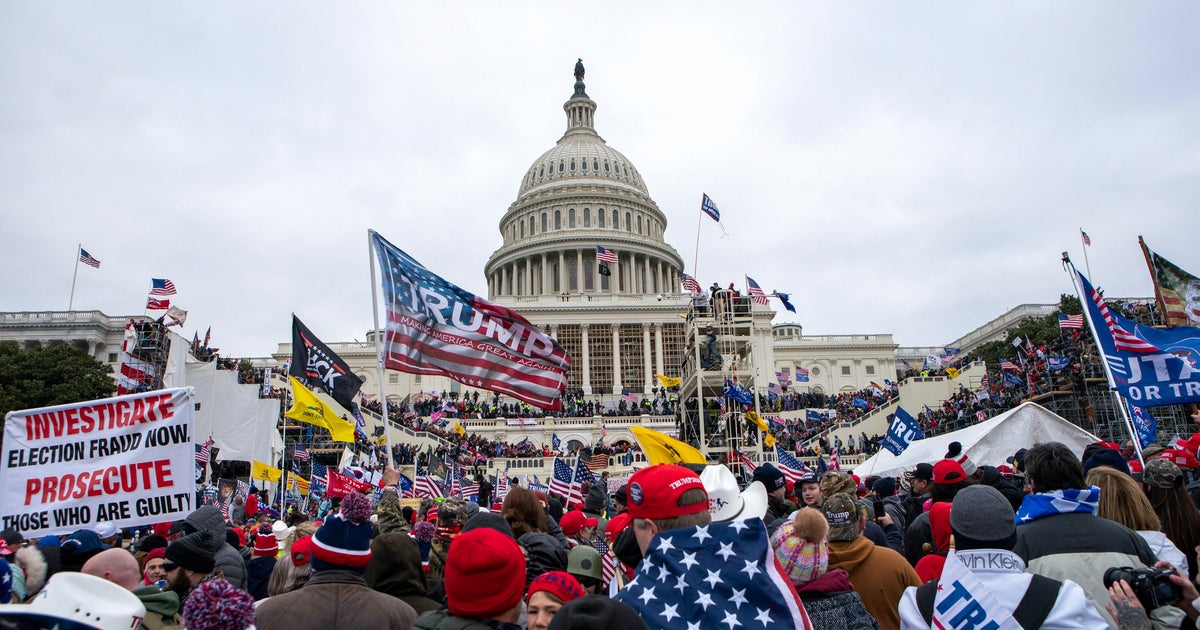
Munafo was part of the group of January 6th rioters who faced serious accusations of violent behavior against law enforcement officers during the Capitol siege. Federal prosecutors presented evidence that Munafo attacked a Metropolitan Police Department officer by punching him twice while simultaneously trying to tear away the officer’s protective riot shield. The charges against him painted a picture of aggressive conduct during one of the darkest days in recent American history. He was among the defendants who received pardons from President Trump last year, despite the severity of the accusations against him. However, what made Munafo’s case particularly troubling to prosecutors was what happened after he obtained the shield—according to court records, he took the protective equipment and disappeared into the crowd of rioters, leaving the officer defenseless and exposed to potential attacks from other members of the mob. This act demonstrated not just momentary aggression but a deliberate action that put a law enforcement officer in serious danger.
The Threats Case That Wasn’t Pardoned
While President Trump’s pardon addressed Munafo’s Capitol riot charges, it didn’t provide him with complete legal immunity from all his actions. There was another serious federal case that remained on his record. In 2022, Munafo entered a guilty plea in a federal threats case that originated in Michigan, involving deeply disturbing behavior that occurred just one day before the Capitol riot. According to prosecutors, on January 5, 2021, Munafo made numerous threatening phone calls to a government facility located near Battle Creek, Michigan. The content of these calls was particularly menacing—federal authorities stated that he threatened to “cut the throat” of a 911 dispatcher and extended those threats to include the dispatcher’s family members as well. This case illustrated a pattern of threatening behavior and aggression toward public servants that went beyond his actions at the Capitol, suggesting deeper issues with authority and impulse control that couldn’t be erased with a presidential pardon.
Recent Violations and Disappearing Act
Munafo’s legal troubles continued to multiply even after the threats case conviction. In May 2025, he was accused of violating the conditions of his release in connection with the threats case, this time involving incidents at a facility in Rensselaer County, New York. Local authorities reported that Munafo engaged in destructive behavior by intentionally flooding his jail cell and damaging a sprinkler device. Court documents from New York show that Munafo admitted to breaking his release restrictions, which resulted in a judge sentencing him to an additional seven months in prison last November. However, the question of whether Munafo actually began serving this additional prison time remains unclear based on available court filings.
What has become clear is that Munafo subsequently went off the radar entirely. A court record from December, reviewed by CBS News, detailed attempts by a supervising officer to locate and contact him. The officer tried calling the cellphone number Munafo had used during his initial period of supervision, only to discover the number was no longer in service. Further attempts to track him down included multiple tries to reach a friend of Munafo’s named Dennis Rodgers, but those efforts also proved unsuccessful—no contact could be established. This disappearing act prompted the probation violation petition and led to his arrest in Richmond. According to the Justice Department’s Wednesday filing, Munafo is now scheduled to appear before a federal court in Richmond on Monday to address this latest violation.
A Troubling Trend Among Pardoned Rioters
Munafo’s case is far from unique among the January 6th defendants who received pardons. He represents part of a disturbing pattern of individuals who, after being granted clemency for their roles in the Capitol riot, have subsequently been arrested on new charges or for violating the conditions of their release in other cases. Just this past Monday night, another January 6th defendant named Bryan Betancur, age 28, was arrested following an alleged assault and battery incident that took place on a train in the Washington, D.C., metro area. The list continues with John Banuelos, 40, who was charged with carrying out a violent attack against a woman. Interestingly, while Banuelos’s attack actually occurred in 2018—three years before the Capitol siege—he wasn’t arrested until 2025, after investigators finally managed to identify him. Banuelos had received a pardon before his Capitol riot trial could proceed, despite facing accusations that he fired a gun into the air while part of the mob at the Capitol.
The pattern extends further. Zachary Alam, a Virginia resident who had been convicted for his role in the Capitol riot and was released from prison following the Trump pardons, was arrested in May on charges of breaking and entering at a home near Richmond, Virginia. He was subsequently convicted on those charges. Christopher Moynihan, another Capitol siege defendant from upstate New York, entered a guilty plea earlier this year to a local charge in Dutchess County, New York, after allegedly making threats to murder House Minority Leader Hakeem Jeffries. These cases collectively raise serious questions about the wisdom of granting clemency to individuals who participated in violent acts against law enforcement and government institutions, particularly when some of them appear to have ongoing issues with respecting the law and the safety of others. The fact that multiple pardoned defendants have quickly returned to criminal behavior suggests that for at least some of these individuals, the pardon may have been interpreted not as a second chance to become law-abiding citizens, but as validation or vindication of their previous actions. As Munafo’s case moves forward in Richmond federal court, it serves as a stark reminder that presidential pardons, while they can erase certain legal consequences, cannot change underlying behavioral patterns or guarantee that someone will choose to follow the law going forward.