
The Alleged Iranian Assassination Plot: A Pakistani Businessman’s Extraordinary Trial
A Plot Straight from a Thriller
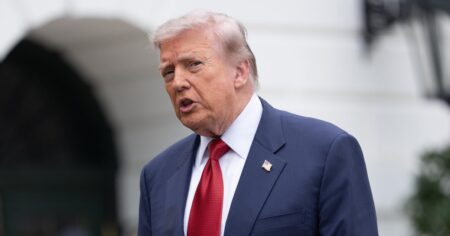
In what reads like a Hollywood screenplay, a Pakistani businessman named Asif Merchant stands accused of attempting to orchestrate political assassinations on American soil on behalf of Iran’s Revolutionary Guard. The 47-year-old defendant allegedly tried to hire what he believed were contract killers, even providing them with $5,000 in cash as a down payment for carrying out murders of high-profile American political figures. The alleged targets included then-President Donald Trump, President Joe Biden, and former presidential candidate Nikki Haley. However, in a dramatic twist that prevented any actual violence, the supposed hitmen Merchant approached were actually undercover FBI agents who had been monitoring his activities from the beginning. Merchant was arrested on July 12, 2024—remarkably, just one day before an unrelated assassination attempt on Trump occurred in Butler, Pennsylvania. As he testified in a Brooklyn federal court, Merchant painted a picture not of a willing terrorist conspirator, but of a desperate man caught between powerful forces, acting under duress to protect family members living in Iran from potential harm by Revolutionary Guard operatives.
A Businessman Caught in an International Web
Asif Merchant’s background appears ordinary enough on the surface—he built a successful two-decade career in banking in Pakistan before diversifying into various business ventures including clothing manufacturing, automobile sales, banana exports, and insulation imports. His business activities, particularly in the garment industry, required periodic travel to the United States, a detail that would eventually catch the attention of Iranian intelligence operatives. Merchant maintains two families, one in Pakistan and another in Iran, a situation that would later make him vulnerable to pressure and threats. According to his testimony, delivered through an Urdu interpreter, his life took a dark turn around late 2022 when he was introduced to an intelligence operative from Iran’s Islamic Revolutionary Guard Corps, a powerful paramilitary organization that the United States has designated as a “foreign terrorist organization.” What began as discussions about potentially participating in a hawala—an informal money transfer system commonly used in parts of South Asia and the Middle East—gradually evolved into something far more sinister as the Revolutionary Guard handler began to show interest in Merchant’s connections to the United States.
The Descent into an Assassination Scheme
Merchant’s testimony revealed how he was gradually drawn deeper into the plot through what he describes as manipulation and coercion. The Revolutionary Guard operative provided him with training in countersurveillance techniques and instructed him to identify U.S. residents who might be willing to work on behalf of Iran. The assignments escalated from intelligence gathering to active plotting—Merchant was told to find criminals who could organize protests, steal documents, launder money, and ultimately, commit murder. When the handler finally revealed the intended targets, Merchant said he was shocked to learn they were among the most prominent political figures in America: Donald Trump, Joe Biden, and Nikki Haley. Despite claiming he never intended for the plot to succeed, Merchant went through the motions of carrying out his instructions with disturbing thoroughness. He researched locations of Trump rallies, created sketches outlining how a shooting at a political rally might be executed, made contact with individuals he believed were professional criminals willing to kill for money, and scraped together $5,000 from a cousin to serve as what he called a “token of appreciation” for the would-be assassins. To maintain the facade with his Revolutionary Guard handler, he even sent falsified intelligence reports hidden in a book that was shipped to Iran through a network of intermediaries.
Fear, Family, and Alleged Coercion
Throughout his testimony, Merchant insisted that his participation in the assassination scheme was not voluntary but rather the result of threats against his family members living in Iran. “My family was under threat, and I had to do this,” he told the jury, emphasizing that he wasn’t acting willingly but out of fear for his loved ones’ safety. According to Merchant, his handler made it clear that he knew the identities and locations of Merchant’s Iranian relatives, an implicit threat that left him feeling he had “no other option” but to comply with the orders he was given. In a claim that raises eyebrows, Merchant testified that he actually expected to be arrested before the plot could be carried out and believed that cooperating with U.S. authorities after his arrest might even help him obtain permanent residency through a green card. However, prosecutors have pointed out significant holes in this defense narrative. In court filings, they noted that Merchant never sought help from law enforcement before his arrest, even though he claims he realized he was under surveillance as early as April 2024, when immigration agents pulled him aside at Houston’s airport, searched his belongings, and questioned him about his travels to Iran. Merchant countered that he couldn’t approach authorities because he believed his handler had people watching him, and later added that he didn’t think FBI agents would believe his story based on the nature of their questions during his initial interviews, which made him feel “they think that I’m some type of super-spy.”
The Legal Battle and Broader Context
The trial is proceeding against an extraordinary geopolitical backdrop. Less than a week before Merchant’s testimony, military strikes in what has been termed the “Iran war” resulted in the death of Iran’s Supreme Leader, Ayatollah Ali Khamenei, in an attack that President Trump characterized with the chilling phrase, “I got him before he got me.” Jurors have been specifically instructed to ignore news coverage relating to the case, though the timing makes the trial’s context impossible to completely separate from current events. The Iranian government has categorically denied any involvement in plots to assassinate Trump or other American officials, dismissing such allegations as fabrications. During cross-examination, Assistant U.S. Attorney Nina Gupta cut through Merchant’s nuanced explanations with stark, direct questions: “You traveled to the United States for the purpose of hiring Mafia members to kill a politician, correct?” His response was equally straightforward: “That’s right.” This matter-of-fact exchange highlighted the core contradiction in Merchant’s defense—he admits to the actions but claims his motivations were fundamentally different from what prosecutors allege. The prosecution has also emphasized that in his voluntary FBI interviews following his arrest, Merchant “neglected to mention any facts that could have supported” his current argument that he acted under duress, suggesting that his coercion defense may have been developed later rather than being his immediate explanation when first confronted by authorities.
Questions of Intent and Credibility
The central question facing the jury is ultimately one of intent and credibility: Was Asif Merchant a willing participant in an international terrorism plot who got cold feet only when caught, or was he a businessman-turned-reluctant-pawn who never intended for anyone to be harmed and was simply trying to protect his family from a powerful and ruthless organization? When asked directly by his defense attorney Avraham Moskowitz, “And are you a super-spy?” Merchant replied with simple clarity: “No. Absolutely not.” This exchange encapsulates the defense strategy—portraying Merchant as an ordinary person swept up in circumstances beyond his control rather than a sophisticated international operative. The prosecution’s case, however, rests on the concrete actions Merchant took: the research, the planning, the money changing hands, and the systematic progression toward what could have been a catastrophic attack on American democracy. The fact that Merchant was arrested just one day before an actual assassination attempt on Trump in Butler, Pennsylvania—an unrelated incident—adds a chilling element of “what if” to the proceedings. As the trial continues, jurors must weigh Merchant’s claims of coercion and his assertion that he expected to be caught against the documented evidence of his methodical preparation for political murder. The outcome will not only determine Merchant’s fate but may also shed light on the extent of Iranian efforts to reach into American soil to settle scores and eliminate perceived enemies during a period of intense geopolitical tension.