

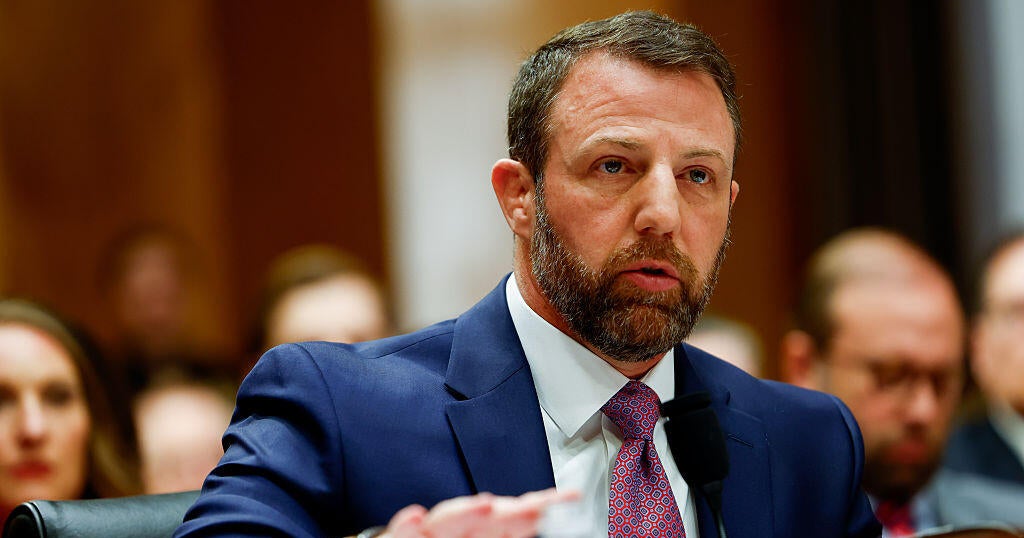

Senate Confirms Markwayne Mullin as New Homeland Security Secretary Amid Agency Crisis
A Changing of the Guard at DHS
The Senate voted on Monday to confirm Oklahoma Republican Senator Markwayne Mullin as the new Secretary of the Department of Homeland Security, marking a significant shift in President Trump’s cabinet after months of controversy surrounding his predecessor. The confirmation came through with a 54-45 vote, with most senators voting along party lines, though there were notable exceptions that highlighted the complex political dynamics at play. In an unexpected show of bipartisan support, Democratic Senators John Fetterman of Pennsylvania and Martin Heinrich of New Mexico broke ranks with their party to vote in favor of Mullin’s appointment. On the flip side, Kentucky’s Republican Senator Rand Paul stood alone as the only member of his party to oppose the nomination, signaling deep-seated concerns about Mullin’s suitability for the role. This vote brings to a close a tumultuous chapter at DHS that saw former Secretary Kristi Noem removed from her position amid mounting criticism from both sides of the aisle, and it opens a new chapter that many hope will bring stability to an agency in crisis.
The Fall of Kristi Noem and the Circumstances Leading to Change
The departure of Kristi Noem from the DHS secretary position didn’t happen overnight—it was the result of accumulating controversies that eventually became too much for the administration to ignore. The breaking point came following two deadly shootings involving federal agents during immigration enforcement operations in Minneapolis this past January. These tragic incidents drew sharp criticism from lawmakers across the political spectrum, with both Democrats and Republicans questioning the agency’s use of force policies and overall approach to immigration enforcement. The fallout from these shootings created a legislative logjam, with Congress unable to agree on funding for the department as calls for reform grew louder. However, the final nail in Noem’s political coffin appeared to be her testimony at a congressional hearing just days before her removal, where she faced intense scrutiny over the agency’s advertising spending. The optics of spending significant taxpayer dollars on advertising while the agency faced serious operational and ethical questions proved untenable, and President Trump ultimately decided a leadership change was necessary to move forward.
Mullin Takes the Helm During a Critical Shutdown
Markwayne Mullin inherits a Department of Homeland Security that has been effectively shut down for nearly 40 days, creating operational challenges that extend far beyond the agency itself and touch the lives of ordinary Americans. The funding impasse stems from Democratic lawmakers’ insistence that any appropriations bill must include meaningful reforms to the agency’s immigration enforcement practices, particularly in light of the Minneapolis shootings and other controversial actions taken under Noem’s leadership. Republicans, meanwhile, have pushed for funding without strings attached, arguing that the agency needs resources to carry out its mission. This standoff has had real-world consequences that have become increasingly difficult to ignore—most notably, severe staffing shortages at the Transportation Security Administration have created nightmarish delays at airports across the country, angering travelers and putting immense pressure on lawmakers to find a solution. Recent weeks have shown signs of thawing in the negotiations, with both parties appearing more willing to come to the table and hammer out a compromise. While White House border czar Tom Homan has been leading negotiations up to this point, Mullin’s confirmation means he will likely take the lead in these critical talks going forward, bringing fresh perspective and potentially new approaches to breaking the deadlock.
A Different Leadership Style and Approach
During his confirmation hearing last week, Mullin was clear about his intention to lead DHS differently than his predecessor, signaling what could be significant shifts in both tone and policy. He described his leadership philosophy as one focused on “empowering people,” suggesting a more collaborative and less top-down approach to running the sprawling department with its hundreds of thousands of employees. Perhaps most significantly, Mullin indicated that under his watch, federal agents would be required to obtain judicial warrants before entering homes and businesses during enforcement operations—a major departure from the previous administration’s position and one that addresses a key concern raised by civil liberties advocates and reform-minded lawmakers. This policy change alone could help rebuild trust with communities that have felt targeted by aggressive enforcement tactics and may provide the basis for the reforms Democrats are seeking in exchange for funding. When asked by reporters on Monday what changes he expects to see at DHS under Mullin’s leadership, President Trump expressed confidence in his new appointee while giving him room to operate independently. “He’s going to be fantastic. He’ll make his own changes,” Trump said, adding, “He’s a fantastic guy. I think he’s just the right guy.” This hands-off endorsement suggests Mullin may have more autonomy than Noem did to chart his own course.
A Bridge-Builder with an Unusual Background
At 48 years old, Markwayne Mullin brings an eclectic background to the role that sets him apart from typical Washington bureaucrats and political appointees. Before entering politics, Mullin was a successful business owner who also competed as a mixed martial arts fighter—experiences that have shaped his straightforward, no-nonsense communication style. He served Oklahoma in the House of Representatives for a decade before winning election to the Senate in 2023, where he quickly established himself as an effective communicator between the House, Senate, and White House. What truly distinguishes Mullin in today’s polarized political environment is his genuine ability to work across the aisle and maintain strong personal relationships with Democrats—relationships that proved crucial to his confirmation. Senator Martin Heinrich’s statement of support captured this dynamic perfectly, noting that he and Mullin have “a very honest and constructive working relationship” built on mutual respect despite policy disagreements. Heinrich emphasized that Mullin “is not someone who can simply be bullied into changing his views,” and expressed relief at the prospect of having a DHS secretary who doesn’t simply “take their orders” from the White House. Perhaps most tellingly, Heinrich declared, “This is going to surprise some people, but I consider Markwayne Mullin a friend. We often disagree and when we do, we work to find whatever common ground we share.” This ability to maintain friendships across party lines while standing firm on principles is increasingly rare in Washington and may prove to be Mullin’s greatest asset in navigating the challenges ahead.
The Rand Paul Opposition and What Comes Next
The confirmation process wasn’t without drama, particularly the intense opposition from Senator Rand Paul, who chairs the committee that conducted Mullin’s confirmation hearing. Paul wasted no time expressing his displeasure with the nominee, calling him out for allegedly referring to Paul as a “freaking snake” and for reportedly saying he understood why a neighbor physically attacked Paul back in 2017—a reference to a serious assault that left Paul with broken ribs. At the hearing, Paul questioned whether “someone who applauds violence against their political opponents is the right person to lead an agency that has struggled to accept limits to the proper use of force.” This criticism carried particular weight given the circumstances of Noem’s departure and the ongoing concerns about DHS agents’ use of force. Paul ultimately voted against advancing Mullin’s nomination out of committee, but in an ironic twist, it was Democrat John Fetterman who provided the crucial vote that allowed the nomination to proceed to the full Senate floor. Mullin’s confirmation now creates a vacancy in the Senate that Oklahoma Governor Kevin Stitt is expected to fill quickly through appointment. Political observers widely expect Stitt to tap Alan Armstrong, an oil and gas executive, who would serve until Oklahoma voters can elect someone to complete the remainder of Mullin’s term in a special election. As Mullin prepares to take the reins at DHS, he faces enormous challenges: ending the funding shutdown, implementing reforms that satisfy Democrats while maintaining security operations, rebuilding morale within the agency, and restoring public confidence in an institution that has been battered by controversy. Whether his unique combination of business acumen, political savvy, and ability to work across the aisle will be enough to meet these challenges remains to be seen, but his confirmation represents a fresh start for an agency desperately in need of one.