
The Cryptocurrency Winter May Be Thawing: Expert Signals a Bitcoin Comeback
A Shifting Tide in Digital Assets
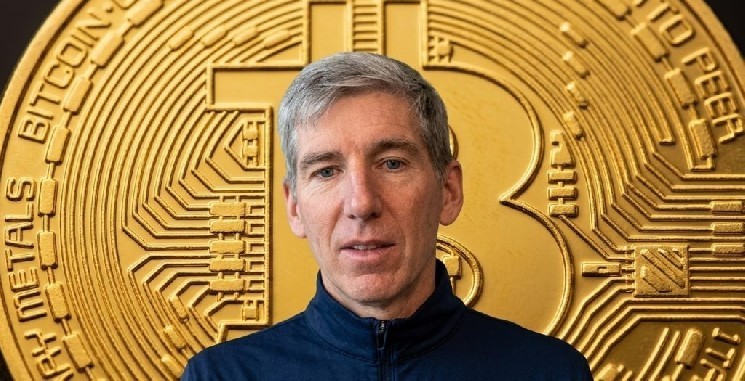
The cryptocurrency landscape has been experiencing turbulent times, with Bitcoin and other digital currencies facing significant headwinds while traditional safe-haven assets like gold have been stealing the spotlight. However, according to Matt Hougan, the Chief Investment Officer at Bitwise Asset Management, there are compelling signs that this dynamic is about to change dramatically. Hougan, whose insights carry considerable weight in both traditional finance and cryptocurrency circles, believes we’re witnessing the final stages of what many have dubbed the “crypto winter” – an extended period of declining prices and waning investor enthusiasm. His analysis suggests that the massive capital flows that have been driving gold to record highs are beginning to lose steam, and that Bitcoin is positioned to reclaim its status as the preferred alternative asset for forward-thinking investors. This perspective comes at a crucial moment when many market participants are questioning whether Bitcoin can truly fulfill its promise as “digital gold,” especially given its recent underperformance compared to its metallic counterpart.
Understanding the Gold-Bitcoin Dynamic
Hougan’s analysis centers on a fundamental shift in what he calls the “attention economy” within investment markets. Over recent months, investor focus has pivoted sharply toward two primary themes: the safety and stability offered by gold amid global economic uncertainty, and the explosive potential of artificial intelligence technologies. This dual focus has left Bitcoin somewhat in the shadows, creating what Hougan describes as a “trend break” – a temporary disruption in Bitcoin’s narrative as the next-generation store of value. Institutional investors, who represent some of the largest pools of capital in the world, have been asking pointed questions: if Bitcoin is supposed to be digital gold, why has it been declining while gold reaches all-time highs? This reasonable inquiry reflects a broader skepticism that has developed around Bitcoin’s fundamental value proposition. However, Hougan argues that this questioning period is actually a natural part of market cycles and that the underlying fundamentals supporting Bitcoin’s long-term case have only strengthened during this period of relative underperformance. The key insight here is that market attention and capital flows don’t move in straight lines – they ebb and flow based on sentiment, timing, and evolving narratives.
Gold’s Rise as a Positive Signal for Bitcoin
Rather than viewing gold’s extraordinary performance as a threat to Bitcoin, Hougan presents a contrarian and optimistic interpretation. The fact that gold’s total market capitalization has now surpassed $30 trillion represents, in his view, tremendously positive news for Bitcoin’s future prospects. To understand why, Hougan takes us back to 2004, when the first gold exchange-traded fund (ETF) was launched. At that time, the entire gold market was valued at approximately $2.5 trillion – a fraction of its current size. The explosion in gold’s value over the subsequent two decades demonstrates what happens when institutional investment vehicles make an asset class more accessible to mainstream investors. Now, with Bitcoin spot ETFs having launched in the United States and other major markets, the cryptocurrency is following a similar trajectory, but with even more room to grow. Hougan calculates that the total addressable market (TAM) for “store of value” assets – the category that includes both gold and Bitcoin – is expanding toward a staggering $50 to $100 trillion globally. If Bitcoin can capture even a modest percentage of this enormous market, its long-term value proposition becomes compelling. This perspective reframes gold’s success not as competition, but as validation of the growing demand for assets that preserve wealth outside the traditional banking system.
Technical Indicators Point to a Bitcoin Bottom
Beyond the narrative and fundamental arguments, Hougan also points to specific technical indicators that suggest Bitcoin may be at or near a significant bottom relative to gold. The Relative Strength Index (RSI) for the Bitcoin/Gold trading pair has fallen to historically low levels – essentially indicating that Bitcoin has become extremely oversold compared to gold. For those unfamiliar with technical analysis, the RSI is a momentum indicator that measures the speed and magnitude of price changes, helping to identify overbought or oversold conditions. When the RSI reaches extreme lows, it often signals that an asset has been excessively punished by the market and may be due for a rebound. Additionally, Hougan notes that sentiment indicators among retail investors show fear and pessimism at their most extreme levels. The crypto fear and greed index, which aggregates various sentiment metrics, is registering readings that historically have coincided with major market bottoms. While it’s impossible to time markets with perfect precision, these technical signals combined with fundamental factors create what contrarian investors often look for: maximum pessimism at the point of maximum opportunity. History has shown that the best investment returns often come from buying when sentiment is darkest and selling when euphoria reigns – a principle that appears to be setting up for Bitcoin once again.
The Institutional Perspective and Market Maturation
Hougan’s position as CIO of Bitwise gives him unique insight into the thinking of institutional investors – the pension funds, endowments, family offices, and asset managers that control trillions of dollars in capital. These institutions move more slowly than retail investors and require greater conviction before making significant allocations to emerging asset classes like cryptocurrency. The launch of Bitcoin spot ETFs in early 2024 was a watershed moment that gave these institutions a regulated, familiar vehicle through which to gain Bitcoin exposure without the operational complexities of custody and security. However, the subsequent volatility and Bitcoin’s underperformance relative to gold created pause among many institutional decision-makers who were just beginning to explore cryptocurrency allocations. Hougan’s message to these institutions is essentially one of patience and perspective: the short-term price action doesn’t invalidate Bitcoin’s long-term thesis, and the current moment may actually represent an attractive entry point. The maturation of the cryptocurrency market includes these periods of doubt and consolidation, which ultimately serve to shake out weak hands and set the foundation for the next phase of growth. As institutions become more educated about Bitcoin’s unique properties – its fixed supply, its decentralized nature, its portability and divisibility – many are beginning to view it not as a replacement for gold, but as a complementary asset that offers different benefits for different scenarios.
Looking Forward: The End of Crypto Winter
While Hougan and other analysts are careful to note that their observations don’t constitute investment advice, the broader message is one of cautious optimism for Bitcoin believers who have weathered the recent storm. The concept of “crypto winter” refers to extended periods where cryptocurrency prices stagnate or decline, media attention wanes, and many participants lose interest or exit the market entirely. Previous crypto winters, such as the one following the 2017 bull run, eventually gave way to new all-time highs as the technology matured and new participants entered the market. Hougan’s analysis suggests we may be approaching the end of the current winter cycle, with several catalysts potentially driving renewed interest: gold’s momentum beginning to fade as it reaches what many traditional analysts consider stretched valuations; institutional adoption continuing to grow despite short-term price weakness; and the ongoing development of blockchain infrastructure and applications that increase cryptocurrency’s utility beyond mere speculation. The cryptocurrency market has always been characterized by extreme boom-and-bust cycles, with each successive cycle bringing prices higher than the previous peak while also attracting a broader and more sophisticated investor base. If Hougan’s reading of current market conditions proves accurate, Bitcoin may be poised to remind investors why it captured their imagination in the first place – as a revolutionary technology that offers a fundamentally different approach to money and value storage in an increasingly digital world.