


Melania Trump Breaks Silence on Epstein Connections and Calls for Congressional Action
First Lady Addresses Controversy in Historic White House Statement
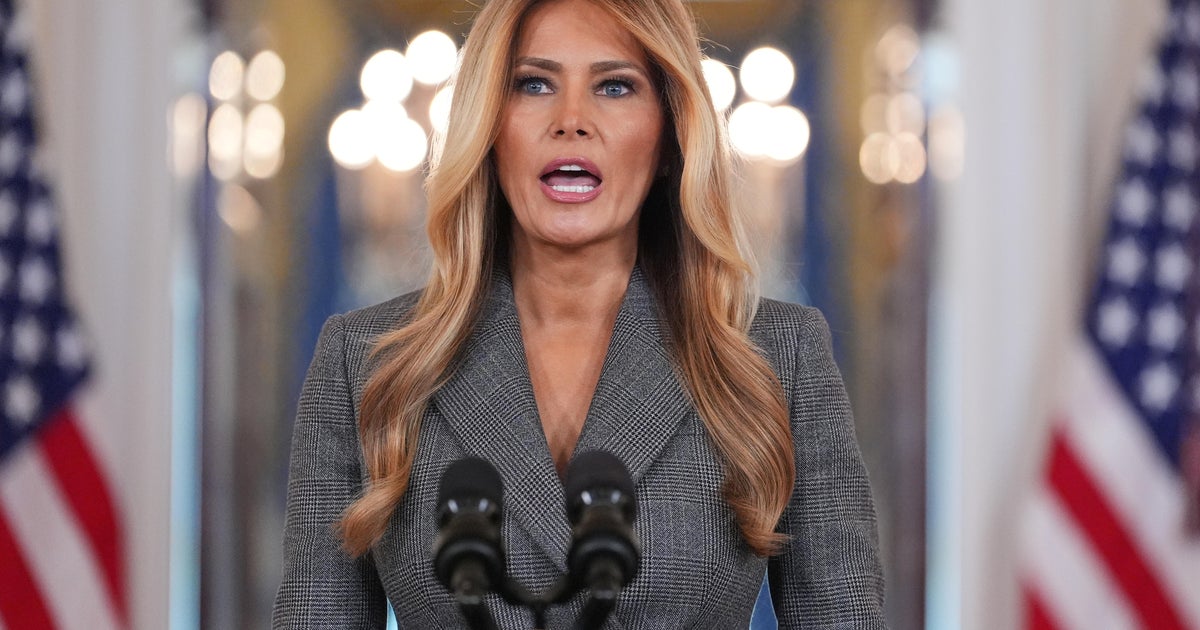
In an unprecedented move that caught many by surprise, First Lady Melania Trump stepped before cameras at the White House on Thursday to deliver a powerful six-minute statement addressing her alleged connections to the late Jeffrey Epstein and Ghislaine Maxwell. The statement marked the first time Mrs. Trump has publicly and directly confronted these allegations following the Justice Department’s recent release of thousands of documents related to the Epstein case. Speaking to a room full of reporters, the First Lady firmly denied any friendship or relationship with either Epstein or Maxwell, while simultaneously making a compelling call for Congress to provide a public platform for Epstein’s survivors to share their stories under oath.
The timing of Mrs. Trump’s statement has raised questions among observers, as it came weeks after the initial release of the Justice Department documents rather than immediately following their publication. These records included evidence of at least one email exchange between the First Lady and Ghislaine Maxwell, and numerous photographs showing the Trumps socializing with both Epstein and Maxwell have been in public circulation for years. Despite these documented interactions, Mrs. Trump was emphatic in her denial of any meaningful relationship with the pair, characterizing her email correspondence with Maxwell as nothing more than a “polite” and “casual” reply. She also took aim at what she described as “fake images and statements” that have been circulating on social media platforms for years, urging the public to exercise caution about what they choose to believe.
Setting the Record Straight on Her Relationship with Donald Trump
One of the most significant aspects of Mrs. Trump’s statement was her detailed clarification about how she met her husband, President Donald Trump. Addressing rumors and speculation that have swirled for years, the First Lady stated unequivocally that Jeffrey Epstein did not introduce her to Donald Trump, as some have suggested. Instead, she explained that she met her future husband “by chance at a New York City party in 1998,” a meeting she claims is “documented in detail” in her book titled “Melania.” According to her account, she didn’t even encounter Epstein until 2000, at an event she attended alongside Donald Trump—two years after she had already met her husband. Mrs. Trump emphasized that at the time of this first meeting with Epstein, she “had never met Epstein and had no knowledge of his criminal undertakings.”
The First Lady’s denials extended beyond just the nature of her introduction to President Trump. She made several categorical statements distancing herself from Epstein’s activities and properties. “I have never had any knowledge of Epstein’s abuse of his victims,” she declared. “I was never involved in any capacity. I was not a participant. Was never on Epstein’s plane. And never visited his private island.” These statements directly address some of the most serious allegations that have circulated in connection with Epstein’s sex trafficking operation, which operated for years before his arrest and subsequent death in jail. By making these denials so explicitly and in such a public forum, Mrs. Trump has put her credibility on the line in a way that few First Ladies have done when addressing personal controversies.
A Bold Call for Congressional Hearings and Survivor Testimony
Perhaps the most unexpected element of Mrs. Trump’s statement was her direct appeal to Congress to hold public hearings specifically focused on Epstein’s survivors. “Now is the time for Congress to act,” she declared, calling on lawmakers to “provide the women who have been victimized by Epstein with a public hearing specifically centered around the survivors.” Her proposal went further, advocating for these women to “testify under oath in front of Congress with the power of sworn testimony.” Mrs. Trump emphasized that “each and every woman should have her day to tell her story in public, if she wishes,” and that their testimony should be “permanently entered into the congressional record.” Only through this process, she argued, would the full truth emerge. This call for action represents a significant moment, as it places the First Lady in the position of advocating for survivors of sexual abuse and demanding governmental accountability—a stance that could have far-reaching political implications.
The First Lady’s call for congressional hearings was met with immediate response from Democratic lawmakers, who found themselves in the unusual position of agreeing with Mrs. Trump’s proposal. Representative Robert Garcia of California, the top Democrat on the House Oversight Committee, described the First Lady’s remarks as “pretty stunning” and noted that her call for survivor testimony is “something that we have been asking for for months and have been told every time that it wasn’t possible.” Garcia told reporters that Democrats “certainly welcome and agree with her call to hear directly from the survivors,” highlighting the bipartisan potential of such hearings. He also pointed out what he considered an important subtext to the First Lady’s statement: “She is being clear that there are still powerful men out there. There are still stories to be told.” This acknowledgment suggests that the Epstein case extends far beyond the late financier himself and implicates a broader network of influential figures whose involvement has yet to be fully exposed or understood by the public.
Presidential Response and Questions About Timing
Adding another layer of intrigue to an already complex situation, President Trump told reporters that he didn’t “know anything about” the First Lady’s statement before she delivered it. This claim of ignorance about such a significant public statement from his wife raises questions about the dynamics within the Trump White House and whether Mrs. Trump’s decision to speak out was entirely her own initiative or part of a larger strategic communication plan. The fact that the President claims to have been unaware of the statement beforehand is particularly notable given the sensitive political nature of anything related to the Epstein case and the potential implications for his administration. It suggests either a remarkable degree of independence for the First Lady in managing her own public image and messaging, or perhaps a deliberate attempt by the White House to create distance between the President and his wife’s statements on this controversial topic.
The question of timing remains one of the most puzzling aspects of this entire episode. Why did Mrs. Trump wait until this particular moment to address the Epstein matter publicly, rather than responding immediately when the Justice Department documents were first released? The photographs showing the Trumps socializing with Epstein and Maxwell at various events have been available to the public and media for years, so their existence alone doesn’t explain the timing. Similarly, while the released DOJ emails did reveal at least one exchange between Mrs. Trump and Maxwell, this correspondence was characterized by the First Lady as innocuous and superficial. Political analysts and observers have offered various theories about the timing, ranging from strategic calculations about news cycles and public attention to the possibility that additional revelations were forthcoming that prompted the First Lady to get ahead of the story by establishing her narrative first.
Broader Implications for Justice and Accountability
Mrs. Trump’s statement arrives at a critical moment in the ongoing public reckoning with Jeffrey Epstein’s crimes and the systems that enabled them for so many years. By calling for congressional hearings and emphasizing the importance of survivors having their voices heard under oath and entered into the permanent public record, the First Lady has positioned herself as an advocate for transparency and justice—regardless of whose reputation might be damaged in the process. Her emphasis on “powerful men” still being implicated in the Epstein case echoes concerns that have been raised by survivors, advocates, and investigators who worry that the full story has not yet been told and that some of Epstein’s associates and co-conspirators have escaped scrutiny. Whether Congress will actually act on Mrs. Trump’s call for hearings remains to be seen, but her public statement has certainly increased the pressure on lawmakers to address the matter and has given political cover to those who have been advocating for exactly such proceedings. The coming weeks and months will reveal whether this moment represents a turning point in the Epstein case or merely another chapter in an ongoing saga that continues to implicate powerful figures across political, business, and social spheres. What remains clear is that survivors of Epstein’s abuse deserve the opportunity to tell their stories and that the full truth about who enabled his crimes for so long has yet to be completely revealed to the American public.