


Michigan Synagogue Attack Officially Designated as Hezbollah-Inspired Terrorism
A Deadly Attack Shakes America’s Jewish Community
In a significant development that has sent shockwaves through communities nationwide, federal officials have formally classified the devastating March 12 attack on Temple Israel synagogue in West Bloomfield, Michigan, as an act of terrorism inspired by Hezbollah, the Lebanon-based militant organization. This marks the first time U.S. authorities have officially connected a domestic attack to the Iranian-backed group, which has been designated as a foreign terrorist organization by the United States since 1997. The attacker, Ayman Ghazali, a naturalized U.S. citizen originally from Lebanon, drove a truck loaded with explosives into the building before engaging in a firefight with security personnel and ultimately taking his own life. The incident occurred at Michigan’s largest synagogue, located in the Detroit suburb of West Bloomfield, a community with a significant Jewish population. What makes this case particularly chilling is the calculated nature of the attack and its direct connection to international terrorism, bringing the reality of global conflicts dangerously close to American soil.
The Perpetrator’s Background and Motivations
Ayman Ghazali’s story reflects the complex and often troubled path of radicalization that can occur even within established immigrant communities. Living in nearby Dearborn, Michigan—a city known for its large Arab-American population—Ghazali worked at a local restaurant and had become a naturalized U.S. citizen in 2016, seemingly integrating into American society. However, beneath this ordinary exterior, tragedy and extremism were brewing. His two brothers had remained in Lebanon, where they served in Hezbollah’s rocket unit, actively participating in the militant organization’s operations. On March 5, just one week before Ghazali’s attack, an Israeli Defense Forces drone strike targeted Hezbollah outposts in southern Lebanon, killing his brothers and other family members. This personal loss appears to have been the catalyst that transformed grief into violent extremism. In the days following the drone strike, Ghazali began recording videos of himself and sending them to family members back in Lebanon, discussing his desire to become a martyr. These recordings provide a disturbing window into his mindset during those final days, as he prepared to carry out what he saw as an act of revenge and religious duty.
The Attack and Its Immediate Aftermath
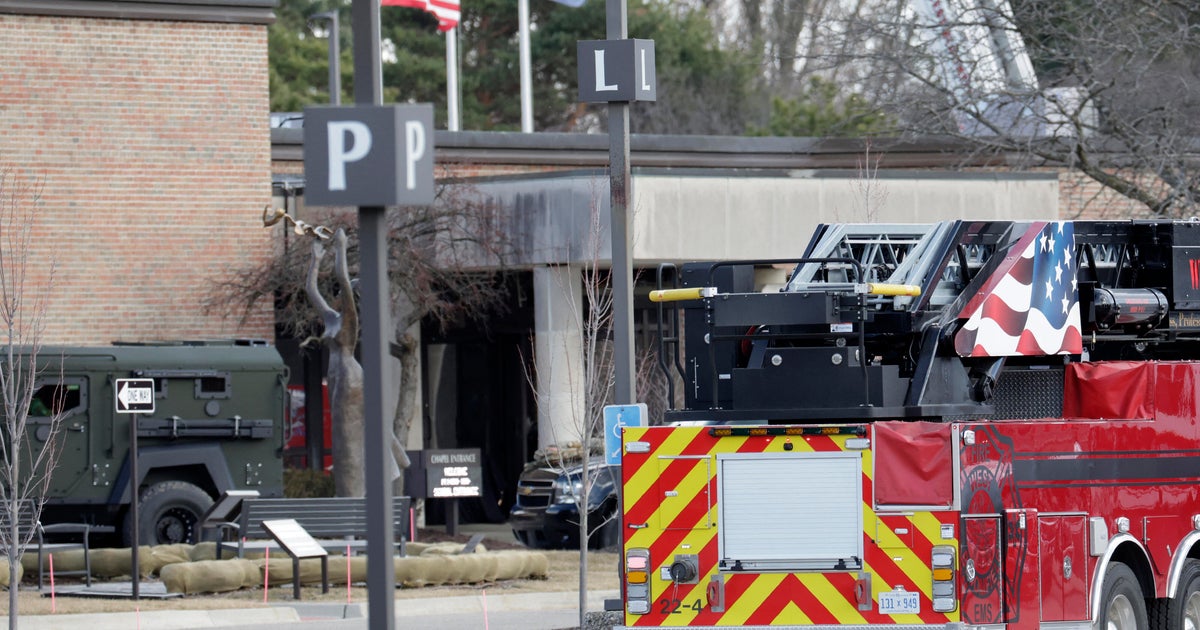
The events of March 12 unfolded with terrifying speed at Temple Israel, a sprawling religious complex that serves not only as a house of worship but also as a community center and home to an early childhood education program. At the time of the attack, classes were in session at the synagogue’s early childhood center, putting dozens of young children, their teachers, and staff members in immediate danger. Ghazali arrived at the synagogue parking lot, where he sat in his explosive-laden truck recording videos detailing his planned “operation,” which he explicitly stated was intended to “kill Jews and burn their world.” Armed with an AR-style rifle—the same weapon he had previously photographed himself holding in an image overlaid with Arabic text including Quranic verses and language about revenge—Ghazali then drove his vehicle into the building. The impact triggered an explosion and started fires throughout the structure. The synagogue’s security guards immediately responded, engaging Ghazali in a gunfight that prevented him from advancing further into the building where children and staff had taken shelter. During this exchange, Ghazali took his own life. Miraculously, despite the violence and chaos, none of the children, teachers, or staff members inside were killed, though one security guard was hospitalized after being struck by Ghazali’s vehicle, and several first responders required treatment for smoke inhalation. Investigators credit the building’s sprinkler system with preventing what could have been a catastrophic fire, though the synagogue still sustained significant damage.
The Federal Investigation and Legal Implications
The investigation into the attack has revealed disturbing details about Ghazali’s preparation and ideological motivations. U.S. Attorney for the District of Eastern Michigan Jerome Gorgon explained to CBS News that under federal law, the attack itself constituted material support to Hezbollah, marking this as a terrorism crime. “He committed the terrorism crime of providing material support to Hezbollah,” Gorgon stated, clarifying how an individual act of violence could legally be considered support for a foreign terrorist organization. Investigators recovered Ghazali’s cellphone at the scene, which proved to be a treasure trove of evidence documenting his radicalization. The phone contained an extensive search and browsing history dating back to January that painted a clear picture of his descent into extremism. According to Gorgon, the phone revealed consumption of “pro-Hezbollah news, shootout videos, live coverage of Naim Qassem, and news coverage of an Iranian fatwa for jihad against the U.S. military.” Naim Qassem, who has served as Hezbollah’s secretary-general since 2024, was apparently a figure of particular interest to Ghazali. Qassem, one of Hezbollah’s founding members in 1982 and the organization’s first deputy secretary-general from 1991 to 2024, represents the leadership that inspired Ghazali’s violent actions. The designation of this attack as terrorism is significant beyond the legal technicalities—it represents an official acknowledgment of the threat posed to Jewish communities in America and the ways in which international conflicts can directly manifest on U.S. soil.
The Broader Security Implications for Jewish Communities
Federal officials have emphasized that calling this attack a targeted act of terrorism against the Jewish community is crucial for accurately describing both the event itself and the ongoing threats facing Jewish Americans. This designation sends a clear message that attacks motivated by antisemitism and connected to foreign terrorist organizations will be treated with the full weight of federal counterterrorism resources. Gorgon specifically noted that the new classification as an act of terrorism is important to “accurately describe the event and threat facing Jewish communities,” acknowledging the vulnerable position of Jewish institutions in an increasingly dangerous environment. The timing of this designation is particularly significant as it comes just weeks before Passover, one of Judaism’s most important holidays, which begins April 1. In response to both this attack and the heightened threat environment, law enforcement agencies across the country have announced plans for an increased physical presence at synagogues, Jewish community centers, and other Jewish institutions during the holiday period. This visible deterrent is intended to prevent potential copycat attacks and reassure communities that their safety is a priority. The attack on Temple Israel represents a terrifying escalation in the threats facing American Jewish communities, moving from isolated hate crimes to coordinated attacks inspired by international terrorist organizations with sophisticated propaganda and recruitment capabilities.
Moving Forward: Community Resilience and National Security
The Temple Israel attack serves as a sobering reminder that the tentacles of international terrorism can reach into seemingly safe American communities, transforming personal tragedy into mass violence. The case highlights the challenges facing law enforcement and intelligence agencies in identifying radicalized individuals before they act, particularly when radicalization occurs rapidly in response to overseas events. Ghazali’s transformation from a naturalized citizen working at a local restaurant to a would-be mass murderer happened in a matter of days following the death of his brothers, leaving little time for intervention. This reality underscores the need for robust community engagement programs, improved intelligence sharing between federal and local authorities, and continued vigilance by security personnel at vulnerable institutions. The heroic response of Temple Israel’s security guards undoubtedly saved lives that day, demonstrating the critical importance of security measures at religious institutions. As Jewish communities prepare for Passover and other gatherings in the coming months, they do so with the knowledge that they remain targets but also with the determination that fear will not prevent them from practicing their faith. The formal designation of this attack as terrorism validates their concerns and hopefully ensures that the resources necessary to protect Jewish Americans will be prioritized. While the physical damage to Temple Israel can be repaired, the psychological impact on the community—particularly the children who were present that day—will require ongoing support and healing. Yet in the face of such hatred, American Jewish communities have consistently demonstrated resilience, refusing to be intimidated or silenced. The challenge now is ensuring that law enforcement, policymakers, and community leaders work together to prevent the next attack before it happens, recognizing that the threat is real, evolving, and demands sustained attention and resources.