


FBI Confirms Hezbollah-Inspired Terror Attack on Michigan Synagogue
The Attack That Shook West Bloomfield
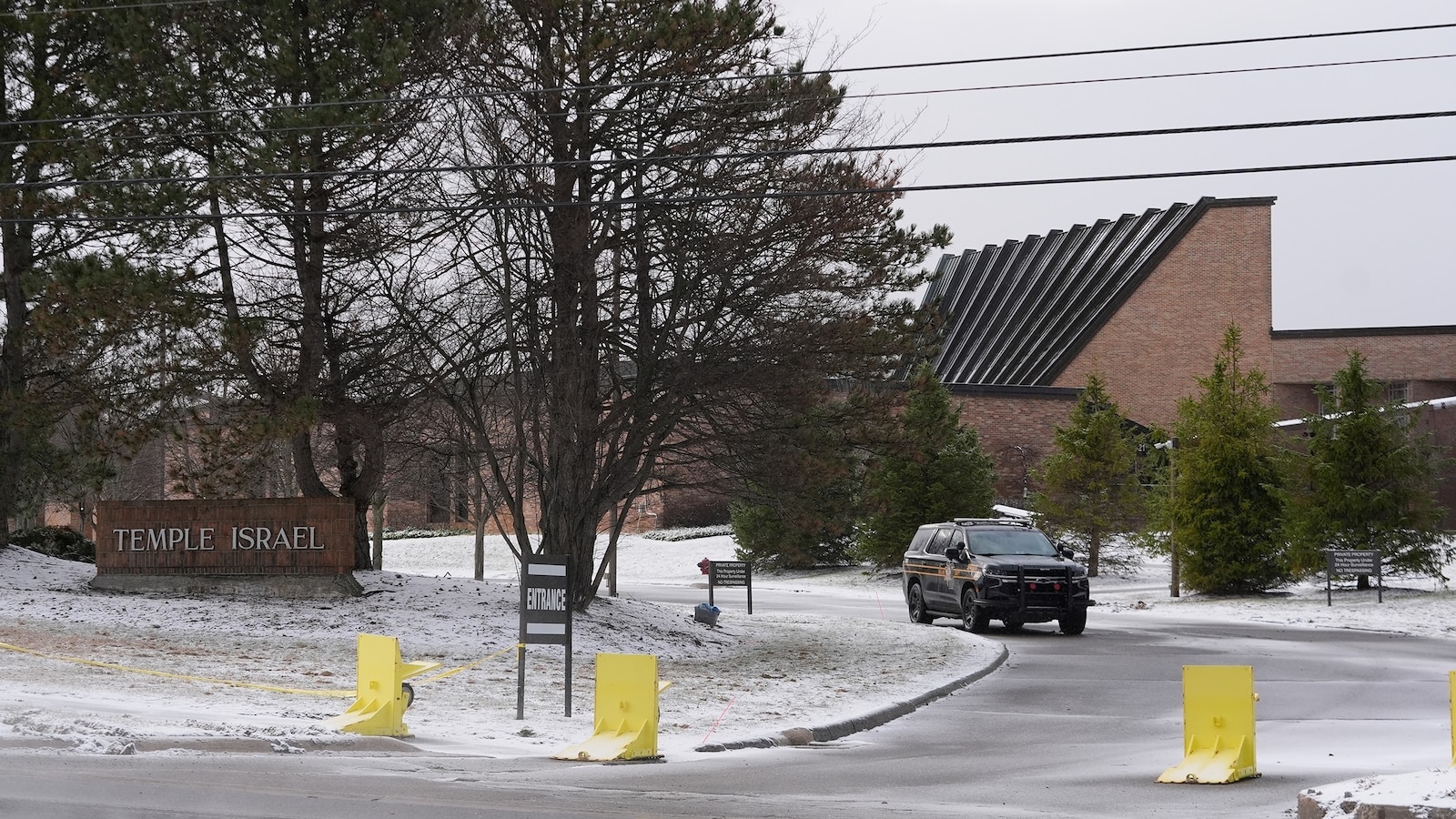
On March 12, the Jewish community of West Bloomfield, Michigan, experienced what federal authorities have now officially classified as a deliberate act of terrorism targeting Jewish Americans. Ayman Mohamad Ghazali, a 41-year-old U.S. citizen, drove his truck loaded with fireworks and gasoline into Temple Israel, the largest Jewish temple in Michigan, in what the FBI describes as “a Hezbollah-inspired act of terrorism purposely targeting the Jewish community.” Jennifer Runyan, special agent in charge of the FBI Detroit Field Office, confirmed during a Monday news conference that Ghazali was “motivated and inspired by Hezbollah’s militant ideology” when he carried out his assault. The attacker’s goal, according to investigators, was to kill as many people as possible. While Ghazali died at the scene from a self-inflicted gunshot wound, and dozens of law enforcement officers were treated for smoke inhalation, the outcome could have been catastrophically worse. Remarkably, nobody inside the synagogue was injured, including all 140 children attending the building’s preschool, though a security guard struck by Ghazali’s truck sustained injuries but was expected to recover.
Three Days of Calculated Preparation
The investigation revealed that Ghazali’s attack wasn’t a spontaneous act of violence but rather a carefully planned assault that began taking shape just three days before the incident. On March 9, Ghazali started researching local synagogues online, beginning his search for a target within Michigan’s Jewish community. His preparation demonstrated both determination and premeditation as he attempted to acquire weapons through private sales, approaching two different individuals to purchase a gun. When both refused his requests, Ghazali didn’t abandon his plans—instead, he visited a gun store where he legally purchased an AR-style rifle, along with ten rifle magazines and approximately 300 rounds of ammunition. His online searches grew increasingly specific and disturbing, with investigators discovering he had looked up phrases including “largest gathering of Israelis in Michigan” and “Israelis near me.” In an apparent attempt to cover his tracks, Ghazali tried to delete his search history, though forensic investigators were able to recover this digital evidence. He also took time to practice with his newly acquired weapon at a shooting range and spent more than $2,200 on fireworks that would later be used as part of his attack arsenal.
Digital Trail of Radicalization and Revenge
Ghazali’s social media activity in the days and hours before the attack painted a clear picture of his ideological motivations and personal grief that fueled his violent intentions. On March 11, just one day before carrying out his assault, he began curating a Facebook photo album with the chilling title “vengeance.” This album included images of Ayatollah Ali Khamenei, Iran’s supreme leader who had been killed in U.S.-Israeli strikes on February 28. The personal became inseparable from the political for Ghazali, whose two brothers and several other relatives had been killed in an Israeli airstrike on March 5 in Mashghara, Lebanon, according to a town official who spoke with ABC News. On the morning of March 12, hours before his attack, Ghazali posted numerous photographs of his deceased family members to Facebook, accompanied by the written declaration: “We will seek retribution for his sacred blood.” While sitting in the synagogue parking lot, preparing for his assault, Ghazali sent his sister a collection of 19 videos, photos, and messages that, according to Runyan, “reiterated his intent to commit a mass terrorist attack, as well as affirming his Hezbollah-inspired ideology.” He also exchanged several brief phone calls with his ex-wife, whose concern about his state of mind prompted her to contact local police requesting a welfare check—a call that came tragically too late to prevent the attack.
The Attack Unfolds at Temple Israel
On the afternoon of March 12, Ghazali put his deadly plan into motion, driving his truck directly into Temple Israel with the intent to cause maximum casualties. Upon impact, he struck a security guard before the vehicle became wedged in a hallway inside the building. Once his truck could advance no further, Ghazali began firing his weapon at those inside the synagogue. The building’s security guards, demonstrating remarkable courage under fire, returned shots as they worked to protect the people inside, including more than a hundred preschool children. The situation rapidly deteriorated as fire engulfed the synagogue—investigators later determined that Ghazali had brought approximately 35 gallons of gasoline with him, which contributed to the blaze that filled the building with smoke. During the exchange of gunfire with security guards, Ghazali died at the scene from what officials determined was a self-inflicted gunshot wound. The response from law enforcement was swift and massive, with dozens of officers rushing to the scene. Many of these first responders were treated for smoke inhalation as they worked to secure the building and ensure all occupants were safely evacuated. Despite the chaos, flames, and gunfire, the security measures at Temple Israel and the quick response of guards and law enforcement prevented what could have been a massacre, with Oakland County Sheriff Michael Bouchard confirming that everyone inside the synagogue survived, including all the young students.
Understanding the Terrorist Connection
Federal investigators worked intensively to understand Ghazali’s connections to Hezbollah and the extent to which his attack was coordinated or merely inspired by the terrorist organization’s ideology. Special Agent Runyan acknowledged that while the FBI has not been able to verify whether Ghazali—a U.S. citizen with no criminal history—was formally a member of Hezbollah, the evidence clearly showed he was “engaging in that ideology” even before the deaths of his relatives in Lebanon. When asked whether the U.S.-Israeli strikes that killed Iranian leaders had inspired Ghazali’s attack, Runyan couldn’t definitively confirm a direct connection but noted that his radicalization predated his family members’ deaths, suggesting a longer process of ideological commitment to Hezbollah’s militant worldview. U.S. Attorney for the Eastern District of Michigan Jerome Gorgon addressed the legal implications during Monday’s news conference, stating with conviction: “Had this man lived, I’m convinced that my office would prove, beyond a reasonable doubt, that he committed the federal crime of providing material support to Hezbollah.” Gorgon further explained that Ghazali “acted under Hezbollah’s direct and control,” though he clarified this didn’t necessarily mean formal organizational membership or direct communication with terrorist leaders. Instead, Gorgon emphasized how “terrorist propaganda is designed to activate the so-called ‘lone wolf’ to act on behalf of the terrorist organization”—a phenomenon that represents one of the most challenging aspects of counterterrorism in the digital age, where individuals can be radicalized remotely through online content without ever making direct contact with terrorist operatives.
Implications for Security and Community Safety
The attack on Temple Israel has sent shockwaves through Jewish communities across America and raised urgent questions about the security of religious institutions in an era of rising extremism. The fact that Ghazali was able to legally purchase an AR-style rifle and substantial ammunition despite his recent online searches for Jewish targets highlights ongoing debates about background checks and the intersection of gun laws with terrorism prevention. The incident also demonstrates both the vulnerability of houses of worship and the critical importance of security measures—the security guards at Temple Israel undoubtedly saved lives through their quick response and willingness to engage an active shooter. For law enforcement and intelligence agencies, this case exemplifies the challenge of identifying and stopping individuals who radicalize quickly, especially when they have no criminal history and may not be in direct contact with terrorist organizations abroad. The FBI’s investigation revealed how personal grief—the loss of Ghazali’s brothers and relatives in Lebanon—intersected with extremist ideology to create a lethal combination, suggesting that counterterrorism efforts must account for both ideological and emotional factors that can drive individuals toward violence. As Jewish communities process this traumatic event and consider enhanced security measures, the broader American public faces renewed awareness of how international conflicts and terrorist propaganda can inspire violence on U.S. soil, turning American citizens against their neighbors in acts of hatred that tear at the fabric of our diverse society.