

Military’s Top Catholic Leader Questions the Morality of War with Iran
A Crisis of Conscience at the Highest Levels
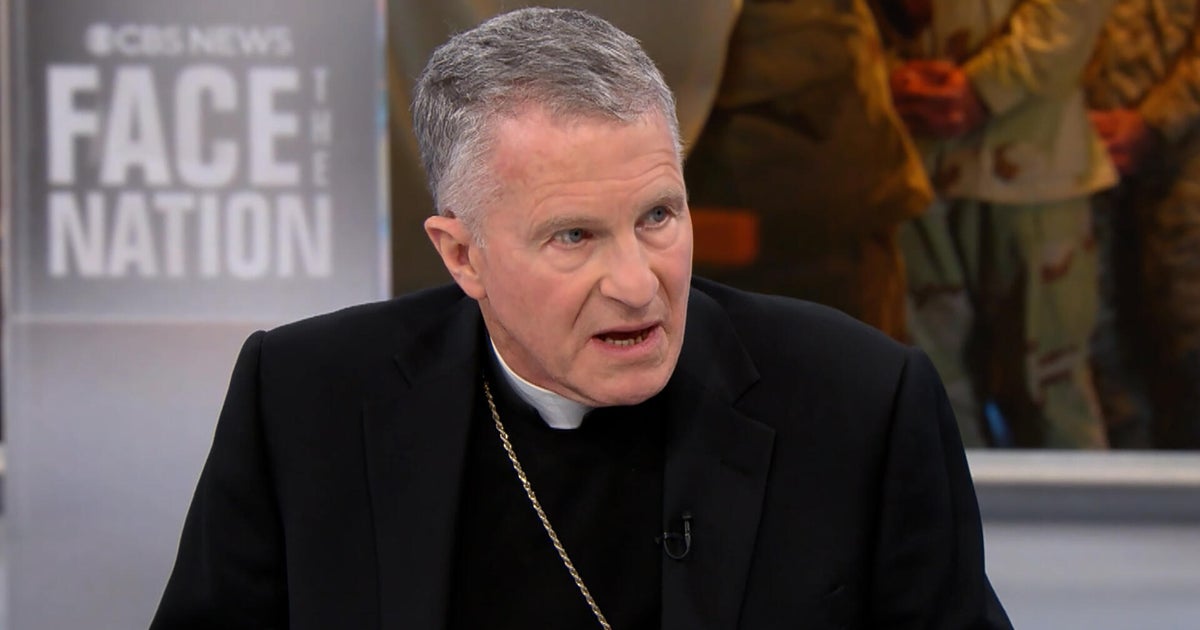
In a remarkable moment of moral courage, Archbishop Timothy Broglio, the leader overseeing all Catholic chaplains serving in the United States military, has publicly expressed deep concerns about the justification for America’s ongoing war with Iran. Speaking candidly with CBS News in an interview set to air on “Face the Nation,” Broglio didn’t mince words about his theological and ethical reservations. While acknowledging the existence of nuclear threats, he questioned whether the United States was “compensating for a threat before the threat is actually realized” – essentially asking whether America jumped the gun. His comments represent a significant moment of institutional soul-searching within the military’s spiritual leadership, as the Archbishop grapples with reconciling his faith’s teachings on peace with the reality of service members under his pastoral care who are engaged in active combat. This isn’t just academic theologizing; it’s a powerful statement from someone who holds tremendous influence over the spiritual wellbeing of thousands of Catholic men and women in uniform, and it signals a growing unease about the moral foundations of this conflict.
The Just War Tradition and Its Discontents
Archbishop Broglio’s concerns are rooted in the ancient Christian doctrine known as Just War Theory, a framework dating back to St. Augustine that attempts to define when, if ever, warfare can be morally justified. One of the core principles of this centuries-old teaching is that war should only ever be undertaken as an absolute last resort – when all other avenues have been exhausted and when the goal is ultimately to achieve a lasting peace. Preemptive strikes, according to this tradition, are deeply problematic because they involve using violence against threats that haven’t yet materialized into actual attacks. “The Lord Jesus certainly brought a message of peace and also, I think war is always a last resort,” Broglio explained, invoking the fundamental teachings of Christianity. He was careful not to completely condemn the Trump administration’s decision-making, acknowledging that leaders may possess classified intelligence that informed their choices – information he doesn’t have access to. However, even with this diplomatic caveat, his fundamental assessment was clear and troubling: “I do think that it’s hard to cast this war, you know, as something that would be sponsored by the Lord.” These are not the words of a fringe activist or political partisan, but rather the considered theological judgment of a senior Church official whose job is to provide spiritual guidance to Catholic service members.
When Religious Rhetoric Meets Military Reality
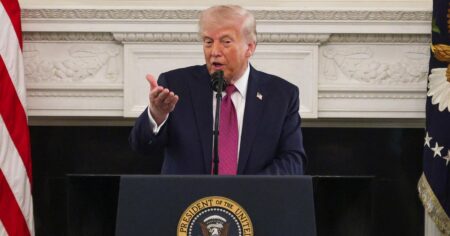
The Archbishop’s concerns became even more pointed when the conversation turned to Defense Secretary Pete Hegseth’s public statements about the war. Hegseth has repeatedly invoked Jesus’ name and called for prayers for American troops in the context of the Iran conflict, effectively wrapping the military campaign in explicitly Christian language. Broglio diplomatically but firmly pushed back against this approach, calling it “a little bit problematic” to suggest that Jesus would endorse this particular war. This represents a fascinating tension in American public life – the disconnect between how political and military leaders use religious language and how actual religious authorities interpret their own traditions. Broglio made clear that he stands with Pope Leo XIV, the first American to hold the papacy, who has been consistently calling for negotiation and de-escalation. The Pope has urged President Trump and other world leaders to find an “off-ramp” from the conflict and to pursue diplomatic solutions that could reduce violence in the Middle East. By aligning himself with the Pope’s position, Broglio is sending a message that the institutional Catholic Church, from Rome to the military chaplaincy, has serious reservations about the trajectory of American policy toward Iran.
The Impossible Position of Catholic Service Members
Beyond the high-level theological and political debates, Archbishop Broglio also addressed the deeply personal moral dilemmas facing individual Catholic men and women serving in the military during this war. His guidance was both practical and compassionate: “do as little harm as you can, and to try and preserve innocent lives.” This advice acknowledges the reality that most service members don’t have the luxury of refusing deployment or resigning their commissions over philosophical disagreements with policy. Broglio explained that the structure of conscientious objection in the U.S. military creates an all-or-nothing situation – service members can claim conscientious objector status only if they oppose all war on principle, not if they object to one specific conflict they believe is unjust. This creates an agonizing bind for Catholics (and members of other faiths) who accept that some wars might be justified but believe this particular one isn’t. The Archbishop noted that where someone falls in the chain of command affects what options they might have, suggesting that senior officers like generals and admirals might have more room to question strategy or seek alternative approaches. However, he acknowledged that even these high-ranking officers face their own version of the same dilemma, caught between their consciences and their duty to execute orders from civilian leadership.
The Hidden Wounds of Moral Injury
Perhaps the most moving part of Archbishop Broglio’s interview concerned what he and fellow chaplains are calling “moral injury” – the psychological and spiritual wounds that come from participating in violence, even when following legitimate orders. This concept goes beyond post-traumatic stress disorder (PTSD) to address something deeper: the damage done to one’s sense of moral self when forced to take actions that conflict with deeply held values. “Even if you obey a legitimate command, but you have to kill someone, that’s going to leave some traces in, you know, in your heart or on your soul,” Broglio explained with evident compassion. This acknowledgment is profound because it validates the inner turmoil many service members experience but often feel they cannot express in the hypermasculine, mission-focused culture of the military. The Archbishop revealed that military chaplains are now devoting increased time and resources to helping service members work through these questions of conscience and to find spiritual healing after actions they may regret or feel conflicted about. This pastoral response recognizes that you can break a person’s spirit through moral compromise just as surely as you can break their body through physical trauma, and that recovery requires addressing both dimensions.
Faith, Duty, and the Search for Peace
Archbishop Broglio’s intervention represents something increasingly rare in American public discourse: a willingness to speak uncomfortable truths about the costs of war from a position of institutional authority. He’s not a protestor on the outside throwing stones; he’s a senior leader within the military structure itself, responsible for the spiritual welfare of Catholic service members. His careful but clear criticism of the war’s justification, his pushback against the religious packaging of military action, and his compassionate concern for the moral injuries service members are suffering all point to a deeper crisis. When the head of military Catholic chaplains questions whether a war can be called just according to the faith tradition he represents, it should give everyone pause – regardless of their religious beliefs or political affiliations. His message ultimately calls for what both Catholic teaching and basic human decency demand: that before we send young men and women to kill and possibly die, we must exhaust every other option, we must be honest about our motives, and we must never pretend that God enthusiastically endorses our violence. In a time of polarization and reflexive flag-waving, Broglio’s thoughtful moral witness reminds us that patriotism and faith sometimes require us to question our government’s choices, and that supporting the troops might mean asking whether we should have sent them to war in the first place. His is a voice of conscience in a wilderness of certitude, and one that deserves to be heard.