





The Fall of a Mob Legacy: John Gotti’s Grandson Sentenced for COVID Relief Fraud
A Modern Crime with Old Family Ties
In a case that merges notorious organized crime history with contemporary white-collar fraud, Carmine Agnello—grandson of infamous mob boss John Gotti—has been sentenced to 15 months in federal prison for orchestrating a sophisticated scheme to defraud the U.S. government’s COVID-19 relief program. According to the Department of Justice, Agnello illegally obtained $1.1 million from pandemic assistance funds, money that was supposed to help struggling businesses survive an unprecedented economic crisis. Instead of using these taxpayer dollars for their intended purpose, he diverted the funds into personal cryptocurrency investments, demonstrating how modern financial crimes have evolved while maintaining the same core principle of exploitation that defined his grandfather’s criminal empire. The sentence serves as a stark reminder that fraud targeting emergency relief programs carries serious consequences, regardless of one’s family connections or the sophistication of the scheme.
The Mechanics of the Fraud Scheme
Between April 2020 and November 2021—a period when countless legitimate businesses were fighting for survival during the COVID-19 pandemic—Agnello systematically submitted fraudulent applications to the Small Business Administration (SBA) for disaster relief loans. According to the U.S. Attorney’s Office for the Eastern District of New York, he falsely claimed that the money would support his auto parts and recycling business located in Queens, New York. The applications included fabricated information about employee salaries and operational expenses that simply didn’t exist. Of the $1.1 million he illegally obtained, approximately $420,000 was invested in a cryptocurrency business venture, transforming what should have been lifeline funding for struggling employees and businesses into personal speculation in digital assets. This deliberate misuse of emergency funds represents not just a legal violation but a moral betrayal during one of the most challenging economic periods in modern American history. Agnello’s scheme was eventually uncovered through collaborative investigation efforts, leading to his conviction and the requirement that he repay the stolen funds as part of his sentence.
Official Condemnation and the Broader Impact
United States Attorney Joseph Nocella didn’t mince words when describing Agnello’s crimes, stating that “During the height of the COVID-19 pandemic, the defendant shamefully lined his own pockets with government and taxpayers’ dollars, which he must repay as part of today’s sentence.” This strong language reflects the particular outrage that comes with exploiting a national emergency for personal gain. United States Postal Inspection Service Inspector in Charge Larco-Ward echoed these sentiments, emphasizing that “Mr. Agnello defrauded a program designed to assist businesses and employees during the pandemic.” These official statements highlight an important dimension of pandemic-related fraud: it’s not merely theft from an abstract government entity, but rather a direct attack on the social safety net created to help real people—business owners, employees, and families—survive an extraordinary crisis. Every dollar fraudulently obtained represented resources that could have saved someone’s job, kept a family business afloat, or prevented financial ruin for hardworking Americans. Agnello is scheduled to turn himself in to begin serving his sentence on July 1, giving him time to settle his affairs before incarceration.
A Pattern of Pandemic Fraud
Unfortunately, Carmine Agnello’s case is far from unique in the landscape of COVID relief fraud. His criminal actions represent just one example in what has become a disturbing pattern of exploitation targeting pandemic assistance programs. Bruce Choi, in another notable case, illegally obtained $2 million in pandemic-era business loans by creating entirely fictitious companies, then used the stolen funds to purchase cryptocurrency through the Kraken exchange. Similarly, David T. Hines fraudulently secured $3.9 million from relief programs and used a portion of the proceeds to purchase a Lamborghini luxury vehicle—a purchase that starkly illustrated the disconnect between the program’s humanitarian purpose and the fraudsters’ selfish motives. These cases share common elements: sophisticated misrepresentation, significant sums of stolen taxpayer money, and the use of funds for personal enrichment rather than business survival. The frequency and audacity of these schemes reveal both the vulnerabilities in rapidly deployed relief programs and the willingness of certain individuals to exploit national tragedy for personal benefit, regardless of the consequences for their communities.
The Staggering Scale of COVID Relief Fraud
The individual cases, while shocking, represent merely the tip of an enormous iceberg. According to statistics compiled by the U.S. Government Accountability Office (GAO), fraud against COVID-related relief funds reached truly staggering proportions, with approximately $135 billion—representing up to 15% of all funds distributed—lost to various scams and fraudulent schemes. This astronomical figure reflects the unique challenges faced by government agencies attempting to distribute emergency assistance quickly during an unprecedented crisis. The programs were designed for rapid deployment to prevent economic collapse, which necessarily meant reduced verification procedures and expedited approval processes. Fraudsters quickly recognized and exploited these vulnerabilities, submitting false applications, creating phantom businesses, and inflating legitimate operations to secure funds they had no legal right to receive. The scale of this theft represents not just a financial loss but a profound breach of social trust during a period when Americans were relying on their government and each other to survive an extraordinary challenge. Recovery efforts continue, but the sheer magnitude of the fraud means that billions of dollars intended to help struggling Americans will never reach their intended recipients.
From Gotti’s Shadow to Personal Accountability
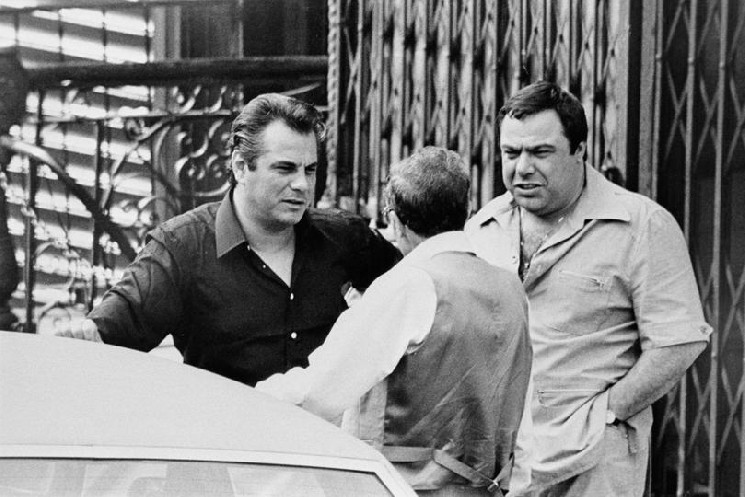
Carmine Agnello’s criminal actions inevitably invite comparison to the notorious legacy of his grandfather, John Gotti, who became one of America’s most infamous mob bosses. The elder Gotti exerted power through brutal violence and, unlike most organized crime figures, actively sought the media spotlight, earning him the nickname “The Dapper Don.” He took control of the Gambino crime family and built an empire that authorities estimated generated approximately $500 million annually through traditional organized crime activities including extorting unions, illegal gambling operations, loan-sharking, and stock fraud. In 1992, Gotti was convicted on 13 criminal counts and sentenced to federal prison, where he died of cancer at age 61. While the crimes differ—the grandson’s white-collar fraud contrasts sharply with the grandfather’s violent racketeering—both represent exploitation of systems for personal enrichment at the expense of others. However, Carmine Agnello’s 15-month sentence and requirement to repay the stolen funds represents a contemporary criminal justice approach focused on restitution and accountability. His case demonstrates that family legacy provides no protection from consequences when laws are broken, and that modern financial crimes, while perhaps less visibly violent than traditional organized crime, still carry serious legal penalties and represent genuine harm to society.









