
When a Good Deed Leads to a Dispute: The John Lewis Delivery Dilemma
The Unexpected Christmas Incident
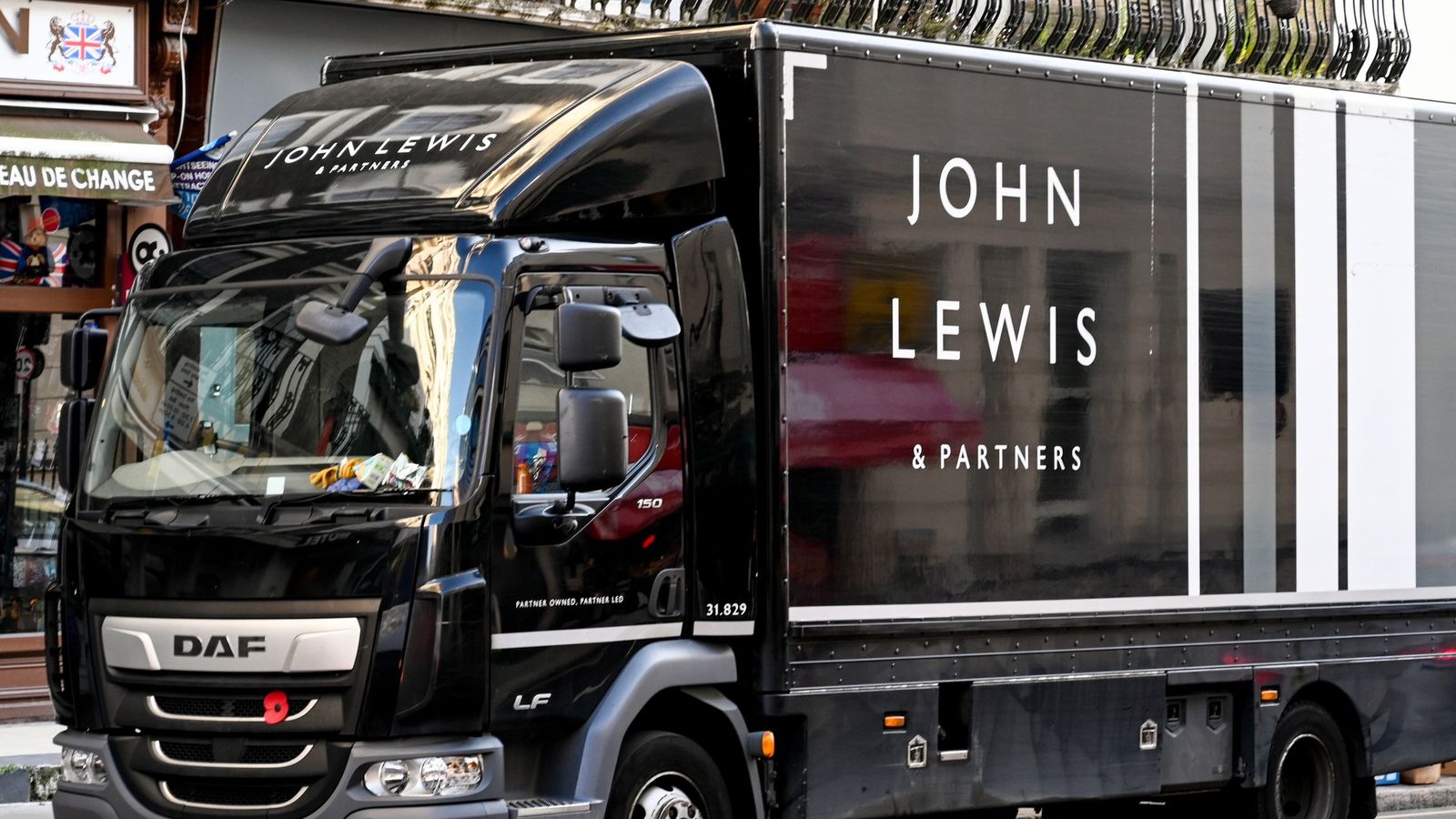
Just days before Christmas, Ruth found herself in an unusual predicament that would lead to weeks of frustration and an interesting ethical debate. After a John Lewis delivery driver successfully dropped off a bed at her property, disaster struck during his departure. The 7.5-tonne lorry reversed too far off her driveway and became hopelessly stuck in her garden. The embarrassed driver immediately sought Ruth’s help to resolve the situation quickly, as he had a packed Christmas delivery schedule to maintain. Understanding the urgency and wanting to be helpful, Ruth contacted her tenant farmer, who responded with remarkable efficiency. Within just twenty minutes, the farmer arrived with his tractor and successfully freed the stranded vehicle, allowing the John Lewis crew to continue their busy day without significant delay. What seemed like a straightforward neighborly gesture would soon develop into a conflict about gratitude, expectations, and corporate responsibility.
The Expectation of Reciprocity
Before performing the rescue operation, the farmer had a brief conversation with the John Lewis crew that would become central to the subsequent dispute. He mentioned that in farming communities, it’s customary for companies to offer a small token of appreciation when farmers use their time, equipment, and expertise to assist in such situations. The farmer suggested that £100 would be an appropriate amount, reflecting not just the inconvenience but also the operational costs of deploying a tractor and his professional skills. However, as days and then weeks passed after the incident, the farmer heard nothing from John Lewis. Ruth, feeling a sense of obligation since she had initiated the request for help, decided to approach the company on the farmer’s behalf. Despite sending lengthy emails explaining the situation and the customary practice of offering compensation, John Lewis firmly refused to provide any goodwill gesture to the farmer—not even a modest voucher. Their reasoning was straightforward but controversial: had they known the farmer would charge for his services, they would have declined his help and arranged for their own professional recovery vehicle instead.
The Ethical Complexity Revealed
When Ruth brought this unusual case to the Money team, reporter Jess Sharp recognized it as something quite different from typical consumer complaints. The situation presented a fascinating ethical dilemma that went beyond simple contractual obligations or consumer rights. On one hand, the farmer and Ruth had shown genuine goodwill by quickly solving a problem that the John Lewis driver had created through his own error. The farmer responded promptly, used his own equipment, and enabled the delivery schedule to continue without disruption—services that would have cost John Lewis considerably more if they had needed to arrange commercial recovery. On the other hand, there was no explicit agreement about payment before the service was rendered, which significantly weakened the farmer’s legal position. As Jess pointed out, a simple statement like “I can pull you out, but I charge x for doing it” followed by the crew’s agreement would have created a much stronger case for payment. The absence of such an agreement meant John Lewis was under no legal obligation to pay, even though many would argue they had a moral obligation to show appreciation.
An Unexpected Perspective on Responsibility
The most surprising twist in this case came from Rupert Wesson, director of etiquette coaching company Debretts, who offered a perspective that few would have anticipated. Rather than focusing solely on John Lewis’s obligations, Wesson suggested that Ruth herself bore primary responsibility for compensating the farmer. His reasoning was straightforward: the farmer had responded to Ruth’s call for help, not to a request from John Lewis directly. Therefore, regardless of any subsequent arrangements or expectations, Ruth should ensure the farmer wasn’t out of pocket for his assistance. Wesson recommended that Ruth should pay the farmer what seems reasonable—ideally the £100 requested, but at minimum something to cover his costs—while hoping to recover the amount from John Lewis later. He was critical of John Lewis’s response, describing their refusal to acknowledge the farmer’s help as “pretty poor form” and noting they had “not covered themselves in glory.” Wesson also highlighted something Ruth hadn’t even pursued: she had legitimate grounds to seek compensation from John Lewis for damage to her garden caused by their driver’s error. The fact that she hadn’t pressed this issue made John Lewis’s refusal to offer even a modest thank-you gesture seem particularly ungracious. He suggested that a small token of appreciation from the company would likely have resolved the entire matter satisfactorily.
The Power of Media Attention
As is often the case with consumer disputes, involving the media can dramatically change outcomes. After Jess Sharp contacted John Lewis about the situation on Ruth’s behalf, the company underwent what Ruth described as a “complete U-turn.” Without any additional prompting from her, John Lewis contacted Ruth directly to make amends. A representative called to offer what Ruth characterized as a humble apology—she even used the word “grovelled” to describe their tone. The company sent a £100 voucher to the farmer as the thank-you gesture he had originally expected, and went further by offering Ruth an unprompted £25 goodwill payment, presumably acknowledging both the inconvenience and her failure to seek compensation for garden damage. Ruth was astonished by this reversal, questioning whether the journalist’s intervention had prompted the change. The official statement from John Lewis Partnership certainly struck a different tone from their earlier correspondence, with a spokesperson saying: “We’re big fans of British farmers, and are really grateful to this gentleman who helped our lorry out of a bit of a sticky, or should we say muddy, situation while it was making a delivery. As a thank you, we’ve sent the farmer a gesture of goodwill.” The lighthearted tone and willingness to acknowledge the farmer’s assistance stood in stark contrast to their previous position.
Lessons on Goodwill and Communication
This unusual case offers several valuable lessons about expectations, communication, and corporate responsibility. First, it highlights the importance of clarity when providing services, even in informal situations. Had the farmer explicitly stated his expectation of payment before pulling out the truck, the situation would have been entirely different—either John Lewis would have agreed to the terms, or they would have arranged alternative recovery, but there would have been no subsequent dispute. Second, it demonstrates the gap that can exist between legal obligations and ethical expectations. While John Lewis was technically correct that they had no contractual duty to pay, their initial refusal to offer even a token of appreciation seemed to violate widely held norms about reciprocating goodwill, particularly when their driver had caused the problem in the first place. Third, the case shows how corporate responses can vary dramatically when public attention is involved, raising questions about whether companies reserve their best customer service for situations that might generate negative publicity. Finally, the etiquette expert’s suggestion that Ruth bore responsibility for payment offers an important reminder that when we ask others to help us solve problems—even if those problems were created by third parties—we may incur obligations we hadn’t anticipated. The happy resolution, with both the farmer and Ruth receiving compensation, shows that persistence and the right kind of advocacy can sometimes overcome initial corporate intransigence, though it shouldn’t require media intervention to prompt companies to do what many would consider the right thing from the start.