


M&S Retail Boss Sounds Alarm: Crime is Becoming “More Brazen and Aggressive”
A Retailer’s Cry for Help
The retail industry is facing an unprecedented crisis, and Marks and Spencer is speaking out. Thinus Keeve, the company’s retail director, has issued a stark warning that should concern us all: crime in Britain’s shops isn’t just increasing—it’s evolving into something far more dangerous and organized. In a powerful letter published on the supermarket’s website, Keeve didn’t mince words about what his staff and stores are experiencing daily. His message was clear: without serious government action and effective policing from London’s leadership, retailers are essentially defenseless against this rising tide of criminality. This isn’t just about stolen merchandise or broken windows anymore; it’s about the safety of employees and customers, and the very fabric of community life that local shops represent. Keeve’s frustration was palpable as he called out both the national government and London Mayor Sadiq Khan for what he sees as a failure to adequately address the spiraling problem. The letter came on the heels of a particularly troubling week that saw organized groups of young people deliberately targeting stores across London, marking what many retail experts are calling a new and frightening chapter in high street crime.
The Clapham Chaos: When Social Media Becomes a Weapon
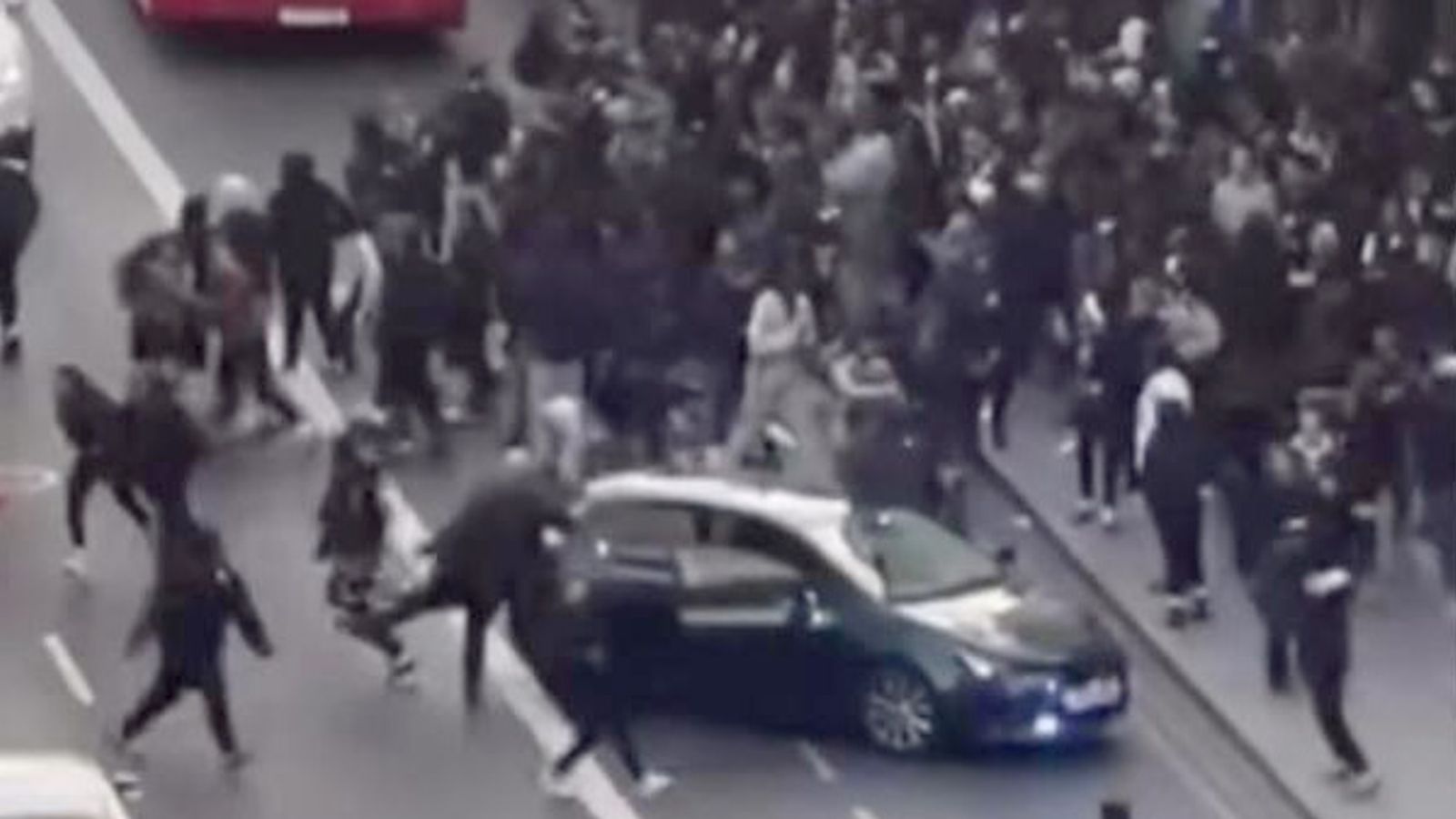
What happened in Clapham, south London, this week illustrates just how dramatically the nature of retail crime has changed. Around 100 police officers were deployed to respond to what can only be described as coordinated chaos—scores of teenagers and young adults descended on the shopping district in what’s being called a “link-up.” These aren’t spontaneous gatherings or coincidental crowds; they’re organized events planned and promoted through social media platforms like TikTok and Snapchat, where young people coordinate to swarm into stores en masse. The result was predictable yet shocking: four police officers were assaulted while trying to restore order, along with one member of the public who was simply in the wrong place at the wrong time. M&S was among the stores specifically targeted during this incident. The use of social media to organize these flash mob-style criminal activities represents a troubling evolution in how crime is committed—it’s faster, more coordinated, and harder to prevent than traditional shoplifting or even organized retail theft rings. Law enforcement is essentially playing catch-up with technology that allows hundreds of people to mobilize in minutes, overwhelming store security and local police resources before anyone can effectively respond.
The Changing Face of Retail Crime
Keeve’s assertion that crime is becoming “more brazen, more organised and more aggressive” reflects what frontline retail workers are experiencing daily. This isn’t your grandmother’s shoplifting problem—where someone might nervously pocket a lipstick or candy bar. Today’s retail criminals operate with a level of boldness and coordination that would have been unthinkable just a few years ago. They’re not afraid of CCTV cameras, security guards, or even the presence of other customers. In many cases, they’re filming their own criminal activities for social media clout, turning theft into a performance and a source of online validation. The organized nature of these crimes means that the same offenders are hitting multiple stores, sometimes on the same day, moving through shopping districts like a destructive wave. The aggression component is perhaps the most concerning aspect—retail workers report being threatened, intimidated, and in some cases physically assaulted when they try to intervene or even just observe what’s happening. These employees didn’t sign up to be frontline defenders against organized criminal gangs, yet that’s increasingly what’s being asked of them, often without adequate support or protection.
A Call for Action: What Retailers Are Demanding
In his letter, Keeve laid out specific, practical demands that go beyond simply complaining about the problem. He’s calling for “a stronger, faster and more consistent police response” that utilizes tools that already exist within the legal framework. This includes targeting repeat offenders—those individuals who retailers see again and again, often within days or even hours of their last offense—and focusing resources on identified crime hotspots where these incidents are most likely to occur. Keeve emphasized that retailers have developed sophisticated data-sharing tools that could help law enforcement identify patterns and target offenders more effectively, but these resources are only useful if police have the capacity and mandate to act on the information. His message to policymakers was direct: “Support our police. Help them show up in our communities when and where we need them.” He’s also calling for increased resources that would allow law enforcement to tackle crime effectively, rather than just respond to it after the fact. The retail industry isn’t asking for vigilante justice or a police state; they’re asking for a coordinated, data-driven approach that makes use of existing laws and emerging technologies to protect businesses, employees, and customers. M&S chief executive Stuart Machin has escalated the concerns even further, writing directly to Home Secretary Shabana Mahmood following the weekend’s incidents, signaling that this issue has reached the highest levels of corporate concern.
The Crime Statistics Controversy
One of the most provocative elements of Keeve’s letter was his direct challenge to official crime statistics, particularly claims that crime is falling in London. “I keep hearing crime is falling, especially in London – something none of us believe, and very few people working in retail would see,” he stated bluntly. This disconnect between official statistics and lived experience is creating a crisis of confidence in both crime reporting and law enforcement priorities. Retail workers who face theft, threats, and violence regularly find it insulting when they’re told the situation is improving. There are several possible explanations for this gap: some crimes may go unreported because retailers don’t believe anything will be done; definitions of what constitutes reportable crime may have changed; or the statistics may be capturing traditional crime while missing emerging patterns like organized social media-driven theft. Whatever the reason, the perception gap is real and damaging. When people don’t trust official statistics, they lose faith in institutions and feel increasingly isolated and unprotected. For retailers on the ground, the numbers don’t matter as much as the reality they face every day—stores being targeted, staff being threatened, and merchandise being stolen with apparent impunity.
The Path Forward: Technology, Accountability, and Community Safety
The response from London’s leadership has been swift, at least rhetorically. Mayor Sadiq Khan condemned the Clapham incidents as “utterly unacceptable” and promised that “the culprits will face the full force of the law.” His office stated that police are working with social media companies to clamp down on “viral online content which promotes violence and theft.” This represents an acknowledgment that the problem requires a multi-faceted solution that addresses not just the criminal acts themselves but the digital infrastructure that enables them. However, words and promises aren’t enough for retailers who have been hearing similar commitments for years while watching the situation deteriorate. The incidents in Rochdale, where police issued a 48-hour dispersal order in response to antisocial behavior, show that this isn’t just a London problem—it’s becoming a nationwide concern that requires a coordinated national response. The solution will likely require unprecedented cooperation between retailers, law enforcement, social media companies, and policymakers. Retailers need to feel confident that when they report crimes or identify repeat offenders, there will be meaningful consequences. Police need adequate resources and clear mandates to respond quickly and effectively to retail crime. Social media companies need to take responsibility for how their platforms are being used to organize criminal activity. And government at all levels needs to recognize that retail crime isn’t a victimless offense or a minor inconvenience—it’s a serious threat to community safety, local economies, and the livelihoods of thousands of workers. The question now is whether those in power will respond with the urgency and commitment that the situation demands, or whether retailers will continue to feel, as Keeve put it, “powerless” in the face of increasingly brazen criminality.