

Understanding the Global Energy Crisis: An Interview with Chevron’s CEO
The Scale of the Current Energy Shock
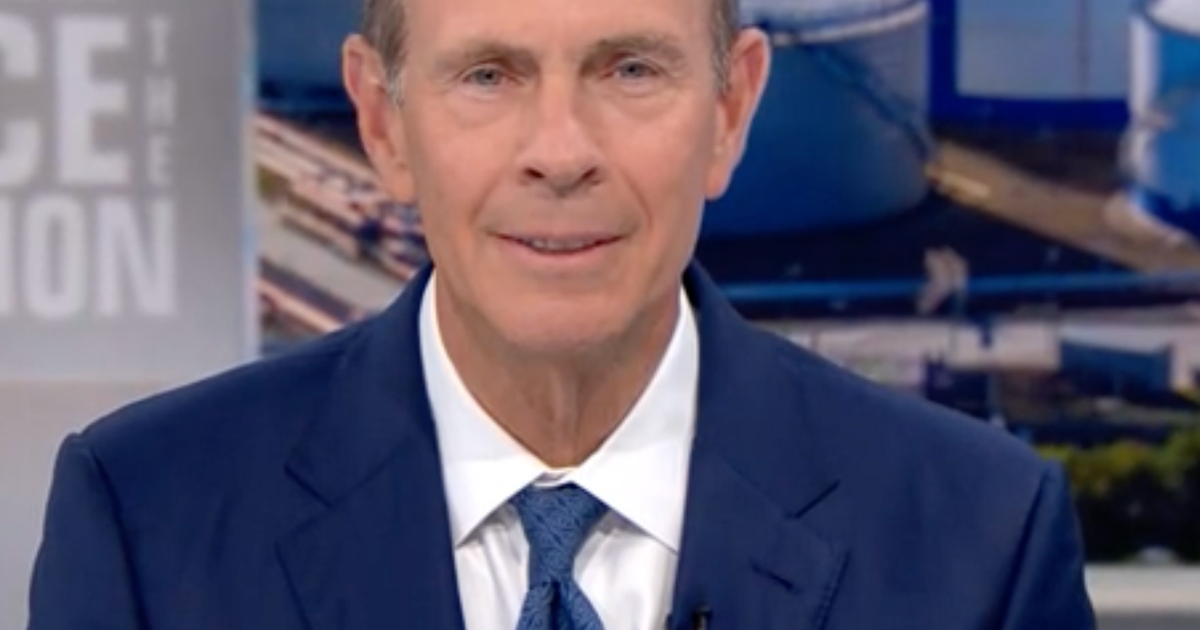
The world is facing an unprecedented energy crisis, one that dwarfs previous oil shocks in history. When Chevron Chairman and CEO Mike Wirth sat down with Margaret Brennan on “Face the Nation,” he painted a sobering picture of the current situation. According to the head of the International Energy Agency, if you were to combine the 1973 Arab oil embargo, the 1979 Iranian oil crisis, and the 2022 disruption following Russia’s invasion of Ukraine, the total impact still wouldn’t match what we’re experiencing today. Wirth explains this isn’t just about supply disruption—it’s about the loss of flexibility in the global energy system itself.
The numbers are staggering: the world consumes roughly 100 million barrels of oil every single day, with each barrel containing 42 gallons. About 20% of that supply normally flows through the Strait of Hormuz, a critical chokepoint that has been significantly disrupted. What makes this crisis particularly dangerous, Wirth explains, is that the “shock absorbers” that typically cushion the energy system during disruptions have been depleted. These shock absorbers—inventories stored in tanks at facilities, oil in transit on ships, and strategic petroleum reserves—have all been drawn down over recent months as events have unfolded. Without these buffers, price shocks and supply disruptions translate much more directly to consumers, creating the volatility and upward pressure on prices we’re witnessing today.
The Challenge of Reopening the Strait of Hormuz
The key to alleviating this crisis, according to Wirth, is restoring flow through the Strait of Hormuz. Even if a ceasefire or truce is negotiated, simply stopping the fighting won’t immediately solve the problem. The strait needs to be safe enough for commercial shipping to resume, and that’s complicated by the threats present in the waterway. Iran has demonstrated the capability to attack vessels moving through the strait, not just with mines but through other means as well. These aren’t new capabilities—they’ve been developed and refined over years—but their deployment has made the passage extremely risky.
Reports indicate the Pentagon has informed Congress it would take approximately six months to clear the strait even in a post-combat situation. For Wirth and other CEOs making decisions about whether to send ships through this critical passage, the calculation comes down to one thing: the safety of their people. While pricing risk and insurance considerations are manageable business concerns, the possibility that crew members could be injured or killed, that ships could be damaged, or that environmental disasters could occur through oil spills—these are the factors that truly govern decision-making. In the early days of any reopening, naval escorts would likely be necessary to provide confidence and defense against potential attacks from land or sea.
The Long Road to Recovery
Even if the strait were to open tomorrow, Wirth emphasizes that getting supplies to where they’re needed and resuming normal functioning of the energy system would take considerable time. The crisis has damaged infrastructure across the Middle East in ways that will take weeks, months, and in some cases years to repair. Twelve refiners in the region were hit by missile or drone attacks, and oil fields have been shut in because there’s nowhere to store the oil. Unlike turning on a faucet, restarting complex oil reservoirs requires careful management due to subsurface dynamics that can’t be rushed.
Some of the most severely damaged facilities, particularly LNG (liquefied natural gas) installations, require specialized equipment with supply chains that will take years to replace. The recovery will be gradual and uneven, with some repairs happening relatively quickly while others stretch out over extended timeframes. This creates uncertainty not just for energy companies but for consumers worldwide who depend on these supplies. The infrastructure damage compounds the supply disruption from the closed strait, creating a double blow to global energy availability.
Impact on Everyday Americans and Global Travel
The effects of this crisis are already being felt by ordinary people, and Wirth warns they’re likely to get worse in the coming weeks. While traders and markets respond to global events, American families see the impact most directly when they fill up their gas tanks. Wirth, drawing on over 40 years in the energy industry, emphasizes how difficult it is to predict prices even in normal times—and these are decidedly not normal times. The dynamics affecting supply are unusual, and the potential for economic slowdown as high prices dampen demand adds another layer of unpredictability.
Aviation fuel represents one of the most immediate concerns. Jet fuel inventories in certain parts of the world were already at seasonally low levels before the conflict began, and Middle Eastern refineries—which supply 75% of Europe’s imported jet fuel—are no longer exporting. This has created rapid tightening in Europe and Asia, leading airlines to adjust flight schedules and raise fares. Wirth suggests this is where consumers will feel the impact most broadly in the short term. If you’re planning to travel to Europe, even months from now, expect significantly higher prices and potentially fewer available flights as airlines optimize routes and fill planes to capacity. The lag effect means that decisions made today will ripple through travel plans for months to come.
Government Response and Industry Collaboration
The current administration has taken several steps to address the crisis, and Wirth credits them with maintaining strong engagement with the business community. President’s administration has issued five different memos applying the Defense Production Act to oil, natural gas, and other energy infrastructure, theoretically allowing increased production. However, Wirth is clear that production can’t be turned on at a moment’s notice—it requires engineering, supply chains, contracts, workers, and time. Chevron had record U.S. production last year at 2 million barrels per day, including 1 million barrels daily from the Permian Basin, and plans to grow by seven to ten percent this year. But this growth was already planned and underway; responding to immediate crises takes time measured in months and years, not days or weeks.
Some government actions have provided more immediate relief. The release from the Strategic Petroleum Reserve helps increase available supply. The waiver of the Jones Act—a 1920s-era law requiring ships moving between U.S. ports to be built in American shipyards and crewed by American mariners—has provided crucial flexibility. With only so many qualifying ships in existence and all of them typically fully utilized, the waiver allows other shipping assets to move crude oil and products from the Gulf Coast to supply Alaska, Hawaii, and California. These are positive short-term measures, but Wirth emphasizes that the longer-term solution requires steady, continuous investment in infrastructure to increase supply and create a more resilient energy system.
Looking Ahead: Structural Changes and New Realities
When asked whether this crisis represents a market shift that might refocus investment on the Western Hemisphere, Wirth suggests it’s too early to say definitively. Energy companies operate on investment cycles that take years to execute and result in assets that last for decades—planning horizons don’t typically respond to circumstances that emerge over just eight weeks. However, he acknowledges that the energy system on the other side of this crisis will likely look structurally different in many aspects. There might be more hemispheric focus in supply chains, new infrastructure in the Middle East designed to avoid critical chokepoints, and different levels of strategic stocks that countries decide to maintain as buffers, particularly nations that have found themselves dangerously exposed during this crisis.
The IMF director recently suggested these disruptions could last through 2026, an assessment Wirth finds reasonable given the scale of the shock to the system. Reorienting trade flows, logistics, and shipping routes while the entire system is in disequilibrium will take time. Resuming flows, restarting fields, and repositioning ships to establish optimal supply patterns isn’t like flipping a light switch—it’s a complex, gradual process. For American consumers hoping for a return to pre-February 28 prices (before the conflict began), Wirth can’t offer firm predictions. The risks currently skew to the upside, meaning prices are more likely to go up than down in the near term, despite optimistic projections from some government officials.
This unprecedented energy crisis reveals both the fragility and interconnectedness of global energy systems. As Wirth’s insights make clear, there are no quick fixes or easy solutions. The path forward requires patience, strategic investment, policy reforms like permitting legislation to enable infrastructure development, and most importantly, a resolution to the conflict that allows the safe resumption of energy flows through critical passages like the Strait of Hormuz. Until then, consumers worldwide should prepare for continued volatility, higher prices, and adjustments to how energy-dependent activities like travel are conducted. The new energy landscape emerging from this crisis will undoubtedly look different from what came before, shaped by hard lessons about resilience, diversification, and the true cost of global interdependence.