
A Night of Terror Averted: Inside the White House Correspondents’ Dinner Security Breach
The Immediate Aftermath and Initial Investigation
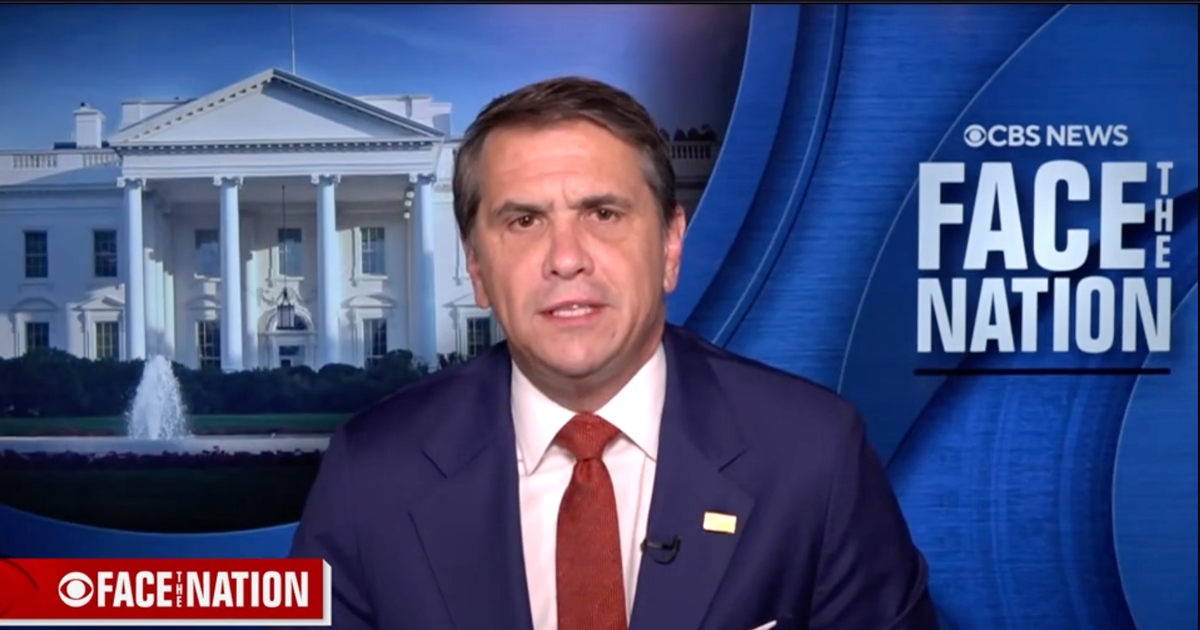
In the early morning hours following what could have been a catastrophic attack on American leadership, Acting Attorney General Todd Blanche sat down with Margaret Brennan on “Face the Nation” to discuss the harrowing events that unfolded at the White House Correspondents’ Dinner. The interview, conducted just twelve hours after an armed individual attempted to breach security at the Washington Hilton hotel, revealed both the gravity of the threat and the swift response by law enforcement agencies. Blanche confirmed that the FBI, working in coordination with local law enforcement and the Secret Service, had executed multiple search warrants throughout the night. Investigators descended upon a residence in Torrance, California, believed to be the alleged shooter’s home, as well as his hotel room in Washington, DC, and were examining various electronic devices recovered from the suspect. Despite the investigation being in its earliest stages, authorities had already collected a substantial amount of evidence. The suspected gunman had traveled across the country by train, first from Los Angeles to Chicago, then from Chicago to Washington, staying at the hotel for several days before making his attempted attack. He approached a security checkpoint armed with a shotgun, handgun, and multiple knives before being subdued by Secret Service agents just feet away from breaching the inner perimeter where the nation’s top leadership had gathered.
Understanding the Threat and the Suspect’s Motivations
When pressed about whether the suspected attacker was part of a larger group or had any foreign connections, Blanche cautiously explained that investigators were still working to understand the motivation behind the attack. However, based on preliminary evidence—not from any statement by the suspect himself, who was not cooperating with authorities—investigators believed he was specifically targeting members of the administration. The acting attorney general emphasized that while they didn’t have specific details beyond this general assessment, the investigation team was actively interviewing people who knew the suspect and analyzing all collected materials. Blanche announced that the alleged shooter would face formal federal charges in Washington, DC court the following morning. U.S. Attorney for the District of Columbia Jeanine Pirro had already indicated that initial charges would include two counts: using a firearm during a violent crime and assault on a federal officer using a dangerous weapon. However, Blanche made clear that additional charges could follow depending on what investigators learned about the suspect’s motive, intent, and level of premeditation. The gravity of even these initial charges was significant, but the acting attorney general stressed that as evidence continued to develop, the case could expand substantially.
Questions About Security Protocols and Interstate Gun Transport
One of the most pressing questions that emerged from the incident concerned how an armed individual could travel across the country by train with multiple weapons and arrive in the nation’s capital without detection. Brennan pointed out the stark contrast between train travel and air travel, where firearms must be declared when crossing state lines. In Washington, DC, where open carry is not permitted, the fact that someone could arrive at one of the most secure events in the nation’s capital with multiple weapons raised serious concerns about potential gaps in security protocols. However, Blanche was reluctant to frame the incident as a failure requiring new laws or restrictions on firearm possession. He emphasized that the firearms appeared to have been purchased legally over the past couple of years, though investigators were still determining exactly how they ended up in the suspect’s possession in Washington. The acting attorney general insisted that the narrative should focus on law enforcement doing their jobs effectively rather than on changing existing laws. He argued that while there were many ways someone could transport weapons across state lines, what mattered most was that the suspect “tried to do something and failed miserably” because law enforcement personnel performed exactly as they were trained to do.
The Unprecedented Gathering of America’s Leadership
The White House Correspondents’ Dinner has been held at the Washington Hilton for over fifty years, but last night’s event was extraordinary for another reason: the sheer concentration of American power gathered in a single room. Present were President Trump, Vice President, the Speaker of the House, and the Secretaries of State, Defense, and Treasury—representing five out of the top six individuals in the presidential line of succession. This raised natural questions about whether such a gathering was prudent given the current threat environment. Brennan pointed out that during the State of the Union address, protocols require a “designated survivor”—a cabinet member who remains elsewhere to ensure continuity of government should disaster strike. Yet despite recent reporting suggesting that heightened security concerns had led to efforts to keep the president and vice president from appearing together at public events, all of America’s top leadership had gathered in one place. Blanche pushed back firmly against the suggestion that the administration would alter its approach to public events in response to the attempted attack. He emphasized that President Trump, the vice president, and cabinet members were together frequently—”almost every day”—and that the appropriate response to threats was not to “go into a bunker and hide” but rather to trust in the robust law enforcement apparatus protecting them.
A Testament to Law Enforcement Excellence
Throughout the interview, Blanche repeatedly returned to what he characterized as the success story embedded within the frightening events of the previous night. While acknowledging that it was “a tragic evening” with “a lot” of bad things happening, he emphasized that it was also a powerful demonstration of law enforcement doing exactly what it was designed to do. The Secret Service agents, FBI personnel, and local law enforcement officers who responded to the threat had trained their entire careers for such a moment, and when it arrived, they performed flawlessly. One Secret Service agent was injured during the incident, struck by gunfire believed to have come from the alleged shooter. However, the agent was wearing a bulletproof vest, which prevented what could have been a fatal injury. Blanche revealed that President Trump had spoken with the injured agent the previous night, finding him in great spirits despite his injury—the agent had apparently been reluctant even to go to the hospital. The acting attorney general noted that everyone in the room heard the agent’s voice during the president’s call, offering words of encouragement, appreciation, and thanks for his service. The fact that the agent survived and that all the high-profile targets in the room remained safe was, as Blanche put it, “a tragedy avoided,” a direct result of proper training, equipment, and the courage of those who put themselves in harm’s way.
Moving Forward: Defiance in the Face of Terror
As the interview concluded, Blanche addressed the broader implications of the attempted attack and how it might shape the administration’s approach to security and public engagement going forward. When asked whether the country’s overall security posture would be increased in response to the incident, he acknowledged that security was a focus every single day and that adjustments would be made if necessary. However, he emphasized continuity rather than dramatic change, expressing confidence that the work being done before the attack would continue and that the nation’s security apparatus remained robust and effective. Perhaps most significantly, Blanche articulated a message of defiance that he attributed to President Trump but clearly represented the administration’s broader stance. If one of the attacker’s goals had been to instill fear or to force America’s leaders to retreat from public life, then he had failed completely. The president had stated clearly, and Blanche emphatically agreed, that this type of conduct would not deter him, would not prevent him from living his life, and would not stop him from doing his job. This commitment extended beyond the president himself to the vice president, the entire cabinet, law enforcement personnel, and even journalists—none would stop doing their jobs because of “this lone man.” The message was clear: American democracy and its leaders would not be intimidated, would not hide, and would continue to engage with the public despite the very real threats that exist in what Blanche acknowledged was an intense threat environment, both domestically and internationally due to ongoing conflicts in Gaza and Iran. The night had been harrowing, but it had ultimately demonstrated both the vulnerability and the resilience of American institutions.