
The Vanishing of Nancy Woodrum: A Story of Love, Loss, and Justice
A Beloved Woman Who Touched Every Life She Met
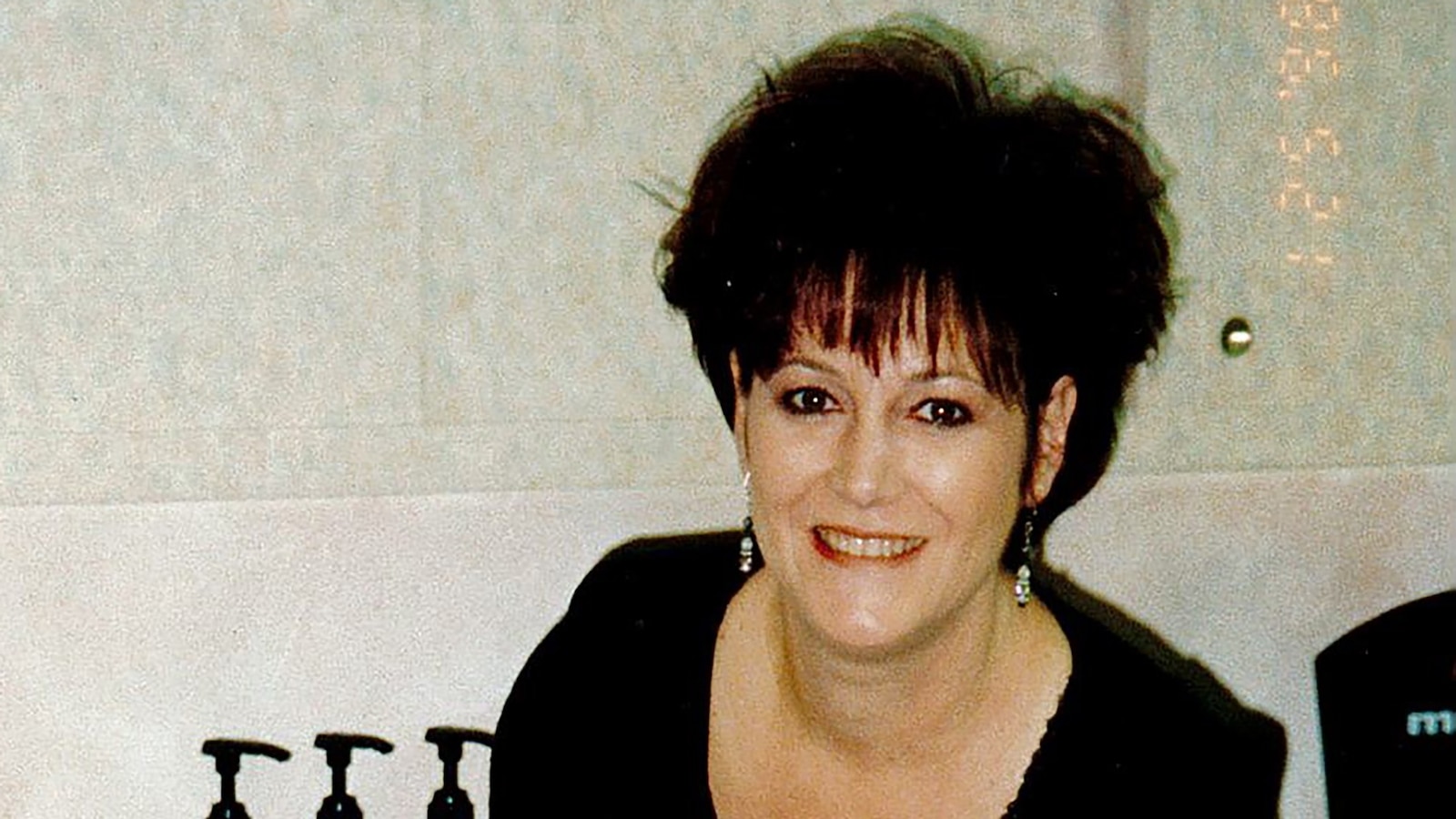
Nancy Woodrum wasn’t just another face in the crowd of Paso Robles, California—she was the kind of person who made you feel like you were the only person in the room. At 62 years old, Nancy owned a hair salon in the picturesque central California town, where she welcomed clients not just as customers but as friends. Her warm personality and genuine care for others created a community around her, a testament to the kind of person she truly was. After losing her husband Robert a few years earlier, Nancy had settled into life at Paradise Ranch, her Victorian-style home that reflected both her aesthetic sensibilities and her independent spirit. Despite living alone, she was far from lonely, surrounded by a community of friends, family, and fellow members of her congregation at the local Kingdom Hall. As Louisa Spadia Beckham, one of Nancy’s friends from the salon, described her: “Nancy clicked with everybody. She just had that amazing gift of just openness, kindness, just generous.” This wasn’t empty praise—it was the universal sentiment of everyone who knew her. Nancy had dedicated her life to two things: caring for others and serving her faith as a devout Jehovah’s Witness. Her daughter Amanda Peel grew up watching her mother embody these values every single day, creating a legacy of compassion that would make her sudden disappearance all the more heartbreaking.
The Day Everything Changed
May 5, 2018, started like any other day, but it would become the day that changed Amanda Peel’s life forever. When her phone rang that afternoon, Amanda couldn’t have imagined the nightmare that was about to unfold. The call brought concerning news: Nancy hadn’t shown up to her Bible study group—a red flag for anyone who knew her. Nancy was nothing if not consistent in her faith practices, and missing a Bible study meeting without explanation was completely out of character. The worry that immediately seized Amanda’s heart wasn’t unfounded; something was terribly wrong. Acting on her maternal instincts, Amanda asked a neighbor to check on her mother at Paradise Ranch. What the neighbor found was chilling: the front door was standing wide open, the television was blaring into the empty house, but Nancy was nowhere to be found. When Amanda arrived to investigate herself, the scene became even more disturbing. Her mother’s bedroom showed signs of a struggle, with what appeared to be blood spattered across surfaces, and perhaps most tellingly, her mother’s bedsheets were completely missing. The woman who had made everyone around her feel safe and cared for had vanished from her own sanctuary, leaving behind only questions and the horrifying evidence that something violent had occurred within those walls.
A Investigation That Seemed to Lead Nowhere
As law enforcement began their investigation into Nancy Woodrum’s disappearance, they quickly discovered her missing bedding and clothes discarded alongside a highway just a few miles from Paradise Ranch—a grim indication that this was no voluntary disappearance. The San Luis Obispo County Sheriff’s Office threw themselves into the case, following every possible lead with the dedication that such a beloved community member deserved. Investigators methodically worked through various theories and suspects, looking at anyone who had recent contact with Nancy. Weekend guests who had stayed at the ranch came under scrutiny. A contractor who had been working on the property was investigated. Even members of Nancy’s own family weren’t beyond the reach of the investigation, as detectives knew that statistically, victims often know their attackers. However, as the weeks turned into months, each promising lead eventually dried up. Every person of interest was systematically cleared, leaving investigators with more questions than answers. For Amanda Peel and the rest of Nancy’s loved ones, the uncertainty was agonizing. More than seven months passed with no meaningful progress in the case, and the investigation began to languish in that terrible limbo where cases sometimes remain unsolved indefinitely. But investigators weren’t ready to give up on Nancy, and they were about to employ a groundbreaking technology that would crack the case wide open.
Technology Brings a Breakthrough
In a move that would prove revolutionary for this case and many others to come, investigators decided to deploy geofencing technology at Paradise Ranch. At the time, this cell phone tracking method was still relatively new in criminal investigations, representing the cutting edge of digital forensics. As prosecutor Chris Peuvrelle explained, the technology works by creating a virtual perimeter around a specific location—in this case, Nancy’s home. Google, which tracks the location data of devices using its services, could then provide information about which accounts, emails, or cell phones entered that virtual fence during a specific time period. The process wasn’t simple; it required carefully written search warrants served upon Google for the precise time period when Nancy disappeared. But the effort paid off spectacularly. The geofencing data revealed a device that had entered Woodrum’s house on the fateful night of her disappearance, and that device belonged to Carlo Fuentes Flores, a painter who was part of a crew that had been contracted to do renovation work at Paradise Ranch. Suddenly, investigators had their first solid lead in months, and they pursued it with careful determination. They began surveillance on Fuentes Flores, and in a move straight out of a crime drama, they managed to surreptitiously collect his DNA from a Coke bottle he drank from at a restaurant. When that DNA was tested, it matched DNA that had been found in Woodrum’s bedroom on the night she went missing. The pieces were finally coming together.
The Horrifying Truth Emerges
Armed with DNA evidence and digital tracking data, investigators brought Carlo Fuentes Flores in for questioning in December 2018. What happened next provided answers but no comfort to Nancy’s family and friends. During interrogation, Fuentes Flores agreed to take investigators to Nancy’s body, leading them to Carrizo Plain, a remote area about an hour outside of Paso Robles. There, more than seven months after her disappearance, police found Nancy’s skeletal remains in the lonely wilderness. In a subsequent interrogation, the full horror of what had happened to Nancy Woodrum came to light. Fuentes Flores admitted that while intoxicated, he had sexually assaulted Nancy at Paradise Ranch. To cover up his crime, he had suffocated her with her own pillow, ending the life of a woman who had never shown him anything but kindness. The man who had been welcomed into her home as a contracted worker had betrayed that trust in the most heinous way imaginable. Following his confession, Fuentes Flores was arrested and charged with murder. He even wrote letters of apology to both Nancy’s family and his own family, seemingly accepting responsibility for his actions. For Amanda Peel, the discovery of her mother’s body brought a bittersweet mixture of emotions. “There was relief,” she told ABC’s “20/20” program, which would later feature Nancy’s story. “I just wanted to find her. We needed to have some closure. There’s a lot of people who never get answers.” It was a small comfort in an ocean of grief, but at least the uncertainty was over.
Justice Served and a Mother Remembered
The path to justice, however, proved more complicated than the family might have hoped. Despite his confessions, his admission of guilt to his wife in recorded jail calls, and his written apology letter, Carlo Fuentes Flores pleaded not guilty when his case went to trial. His defense team argued that all of his previous admissions should be thrown out because there hadn’t been a Spanish translator present during his initial police interview. Fuentes Flores was Mexican-born, and Spanish was his first language, which his lawyers claimed meant his confession wasn’t truly voluntary or informed. It was a legal strategy that added insult to injury for Nancy’s family, forcing them to endure a trial despite the overwhelming evidence of Fuentes Flores’s guilt. Fortunately, the judge saw through this defense strategy. In February 2022, he found Fuentes Flores guilty of first-degree murder during the commission of a rape and sentenced him to life in prison without the possibility of parole. Fuentes Flores had taken what’s known as a “slow plea,” which allowed him to appeal his conviction, but that appeal was ultimately denied by the California Court of Appeals in July 2023, finally bringing the legal proceedings to a close. Today, Amanda Peel works to keep her mother’s memory alive, not as a victim but as the vibrant, loving woman she was. “She was an amazing person,” Amanda told “20/20.” “She loved God. She wanted that to be first in her life. And she wanted people to know that.” Nancy’s story, featured in the “20/20” episode “The Vanishing of Nancy Woodrum,” serves as both a tribute to her life and a reminder of how innovative investigative techniques can bring justice to victims and their families. The geofencing technology that proved crucial in solving her case has since been used in numerous other investigations, creating a legacy that Nancy herself could never have anticipated. Though she’s gone, the warmth and kindness that Nancy Woodrum showed to everyone she met continues to be remembered by all who knew her, a light that couldn’t be extinguished even by the darkness that took her life.