
Rediscovering History: New 3D Technology Reveals the USS Monitor’s Transformation from Warship to Underwater Reef
A Civil War Icon Returns to Life Through Modern Technology
More than a century and a half after the USS Monitor disappeared beneath the turbulent waters off North Carolina’s coast, cutting-edge technology is giving us an unprecedented glimpse into one of America’s most significant naval vessels. The Monitor wasn’t just any ship—it was a game-changer that revolutionized naval warfare and ship design in the 1860s. Thanks to the collaborative efforts of scientists at the National Oceanic and Atmospheric Administration (NOAA) and defense contractor Northrop Grumman, we now have stunning 3D images and high-resolution scans that tell the complete story of this remarkable vessel, from its construction in 1862 to its current status as a thriving underwater ecosystem. This innovative project combines historical preservation with modern marine science, offering both researchers and the public a chance to explore a piece of American history that has been sitting 240 feet below the ocean’s surface for over 160 years.
The Monitor’s Revolutionary Beginning and Historic Battle
The USS Monitor’s story began in January 1862 when it was launched from Greenpoint, New York, representing a bold new chapter in naval engineering. As the U.S. Navy’s prototype ironclad warship, the Monitor was specifically designed to counter the Confederate threat posed by the CSS Virginia, another revolutionary ironclad vessel. The two ships faced off in the legendary Battle of Hampton Roads in March 1862, a confrontation that would forever change naval warfare. This historic clash between iron giants marked the end of the era of wooden warships and ushered in a new age of armored naval vessels. The newly developed interactive digital timeline created by NOAA and Northrop Grumman captures this pivotal moment in history, allowing viewers to experience the Monitor’s journey through time. Starting with its construction and progressing through its brief but impactful service life, the timeline tells a compelling story of innovation, tragedy, and transformation that spans more than 160 years.
Tragedy Strikes: The Monitor’s Final Voyage
The Monitor’s operational life was tragically brief. On New Year’s Eve in 1862, less than a year after its launch, the innovative warship met its fate during a violent storm off Cape Hatteras, North Carolina. The storm’s fury proved too much for the revolutionary vessel, and it sank to the ocean floor, taking with it sixteen brave sailors. Though forty-seven crewmembers were successfully rescued, the loss of life and the ship itself was a significant blow to the Union Navy. What makes this tragedy even more poignant is that the Monitor’s sinking had nothing to do with enemy combat—it was Mother Nature, not Confederate forces, that brought down this symbol of naval innovation. For more than a century afterward, the Monitor became a ghost of maritime history, its exact location unknown and its fate a mystery. The families of those lost sailors, the Navy, and historians could only speculate about where the ship rested and what condition it might be in after decades on the ocean floor.
A Lost Treasure Found and Protected
The Monitor remained hidden beneath the waves until August 1973, when researchers finally discovered remnants of the ironclad, solving a century-old mystery. This discovery was just the beginning of a new chapter in the Monitor’s story. Recognizing the historical significance of the find, NOAA took the unprecedented step of designating the wreck site as America’s first national marine sanctuary. This designation was groundbreaking, establishing a framework for preserving and appreciating the nation’s maritime heritage that extends far beyond just physical artifacts. The sanctuary concept acknowledges that our maritime legacy includes not only tangible items like historic shipwrecks and prehistoric archaeological sites but also intangible treasures such as archival documents, oral histories, traditional seafaring knowledge, and the ecological wisdom of indigenous coastal cultures. Over the years since its discovery, scientists and researchers have carefully collected and conserved various components from the wreck, including pieces of the hull, the iconic turret, and the stern. According to researchers, these recovered elements are invaluable for understanding the Monitor’s innovative construction techniques and the engineering principles that made it such a revolutionary vessel in its time.
Advanced Technology Reveals New Secrets
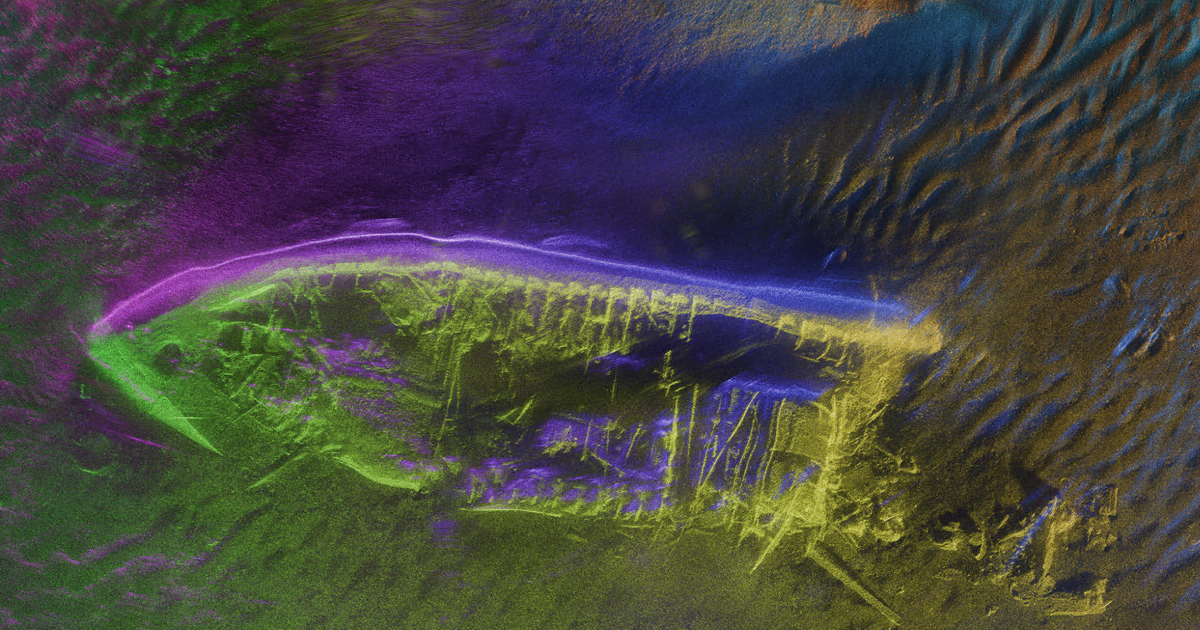
The latest chapter in the Monitor’s story involves technology that the ship’s original designers could never have imagined. Using advanced sonar technology and an autonomous underwater vehicle, Northrop Grumman has produced incredibly detailed, high-resolution images of the wreck site that reveal the ship’s current condition with stunning clarity. These fine-scale scans demonstrate how modern technology can enhance our understanding of historical artifacts and continue the Monitor’s legacy of innovation into the twenty-first century. Maritime archaeologist Tane Casserley from the Monitor National Marine Sanctuary expressed amazement at the new images, telling reporters that the scans show the Monitor is in “fantastic shape” despite spending more than 160 years on the ocean floor. The depth of the wreck—240 feet below the surface—makes it extremely difficult and dangerous for human divers to visit regularly. “It’s difficult to visit. It’s very deep. There’s only so much we can do as scuba divers,” Casserley explained, highlighting how these new technological capabilities allow researchers to study the wreck in ways that were previously impossible. The Mariners’ Museum and Park, which manages the wreck site alongside NOAA, notes that the Monitor technically represents the world’s largest marine archaeological metals conservation project—a testament to both the ship’s historical importance and the complexity of preserving iron artifacts in a saltwater environment.
From Vessel of War to Island of Life
Perhaps the most remarkable aspect of the Monitor’s story is its transformation from an instrument of war into a vibrant ecosystem teeming with marine life. The interactive timeline’s final stop includes a powerful description: “This thriving ecosystem grew from the wreck of the iconic civil war ironclad — from a vessel of war to an island of life.” The accompanying 3D images show how the shipwreck now serves as an artificial reef, providing habitat for fish, sharks, and countless other marine creatures. Recent images from May 2022 show sand tiger sharks swimming gracefully next to the Monitor’s armor belt, a scene that would have been unimaginable to the sailors who once crewed this vessel. This transformation illustrates how history, nature, and technology can intersect in unexpected ways. The iron plates that once deflected cannon fire now provide shelter for marine species. The gun turret that once rotated to face enemy vessels now offers a substrate for coral and sea plants to attach and grow. The hull that once carried sailors into battle now supports an entirely different kind of community. This ecological transformation doesn’t diminish the Monitor’s historical significance—rather, it adds another layer to the ship’s remarkable story, demonstrating how artifacts of human conflict can become sources of life and renewal. As researchers continue to study the wreck using ever-more-sophisticated technology, they’re not just preserving the past; they’re documenting an ongoing transformation that connects Civil War history with contemporary marine biology, offering lessons about innovation, preservation, and the unexpected ways that human creations can contribute to the natural world long after their original purpose has ended.