


A Life in Shadows: The Untold Story of Jose Huerta Chuma
Witnessing a Tragedy That Changed Everything
Jose Huerta Chuma never imagined that an ordinary Friday morning would transform him into a fugitive haunted by guilt and grief. The 41-year-old father from Ecuador has been living in hiding since January 24, when he witnessed the fatal shooting of Alex Pretti by federal Border Patrol agents in Minneapolis. What began as a routine delivery run for his rideshare job ended with him cowering inside a local business for four hours, watching through a window as an innocent bystander was killed during what authorities described as an immigration enforcement operation targeting Huerta Chuma himself. The image of Pretti’s final moments replays constantly in his mind, and he can’t help but torture himself with questions that have no answers. “Maybe if I hadn’t gone to that place, or I don’t know, a little later or a little earlier, I mean, that never would have happened,” he told CBS News in a phone interview conducted in Spanish, his voice breaking with emotion. When asked directly if he feels guilty about Pretti’s death, Huerta Chuma began crying: “I do feel guilty, I do feel bad. I saw stories about the man and I saw a very good person.” Despite spending over two decades building a life in America and raising three U.S.-born children, Huerta Chuma now finds himself branded by the Department of Homeland Security as a “violent criminal illegal alien” who remains “at large,” though the reality of his past appears far more complicated than that label suggests.
The Man Behind the Government’s Label
The stark contrast between how federal authorities have portrayed Huerta Chuma and the actual details of his background reveals a troubling gap between political rhetoric and reality. DHS officials quickly labeled him a “violent criminal” following the shooting, with Border Patrol official Gregory Bovino displaying Huerta Chuma’s booking photo during a press conference just hours after Pretti’s death. Bovino listed his alleged offenses as “domestic assault,” “disorderly conduct,” and “driving without a license,” painting a picture of a dangerous individual who deserved to be hunted. However, documents reviewed by CBS News tell a different story. Huerta Chuma’s record primarily consists of traffic violations, and his only criminal conviction appears to be a 2018 misdemeanor plea for disorderly conduct—a charge later expunged from his record. According to court documents reported by The New York Times, this plea stemmed from a domestic violence arrest related to an argument with his partner at the time, something Huerta Chuma acknowledges. Significantly, the Minnesota Department of Corrections confirmed that Huerta Chuma has never been imprisoned in the state system and that they found no felony convictions in his case. This stands in sharp contrast to the “violent criminal” narrative promoted by federal officials, raising serious questions about whether the government’s characterization was designed more for political purposes than accurate representation of the facts.
That Fateful Morning: From Routine Delivery to Living Nightmare
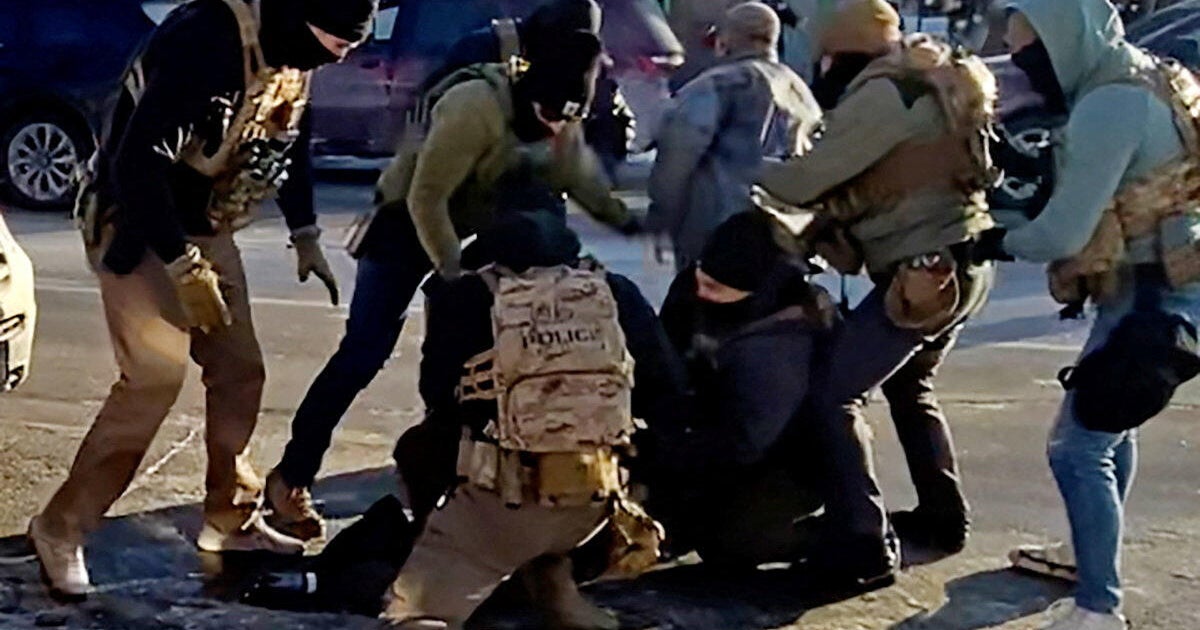
The morning of January 24 started like thousands of others for Huerta Chuma, who had completed nearly 20,000 rideshare trips over almost six years. He was simply trying to pick up a delivery order around 8:18 a.m. in south Minneapolis—routine work that helped him support his children while maintaining the flexible schedule he needed as a single parent. As he drove down Nicollet Avenue, he passed a red car without license plates traveling in the opposite direction. The moment he made eye contact with one of the vehicle’s occupants, he felt a chill of recognition: “One agent was staring at me, but I just blinked my eyes and said, ‘God, they’re immigration.'” His instinct proved correct. When he glanced in his rearview mirror, the car had made a U-turn and was following him. “I didn’t run or anything, I left very calm,” Huerta Chuma recalled. He parked his vehicle, left it running, and got out, with federal agents pursuing him on foot. A compassionate stranger at a nearby business recognized his desperate situation and let him inside, locking the door behind him. What followed was a four-hour ordeal during which Huerta Chuma remained hidden inside the building, watching the street outside as events spiraled toward tragedy. He witnessed Alex Pretti arrive at the scene and begin filming the federal agents. He saw an agent push a woman nearby, then watched multiple agents tackle Pretti to the ground and remove his gun. Huerta Chuma is adamant about what he didn’t see: any attempt by Pretti to hurt the agents or reach for his firearm. Then came the sound he will never forget: “Tac, tac, tac, tac, tac, tac”—the rapid gunfire that ended Pretti’s life.
A Government Narrative Contradicted by Evidence
In the immediate aftermath of the shooting, Department of Homeland Security officials crafted a narrative that has since crumbled under scrutiny from video evidence, witness accounts, and even the government’s own internal review. DHS initially claimed that a Border Patrol agent fired “defensive shots” after Pretti “approached” agents with his firearm, suggesting without concrete evidence that Pretti intended to “massacre” federal agents. This characterization implied that Pretti was an aggressor who posed an imminent deadly threat, justifying the use of lethal force. However, a preliminary report to Congress obtained by CBS News painted a very different picture. The review by CBP’s Office of Professional Responsibility revealed that two agents—not one—fired their weapons during the incident, contradicting the initial single-shooter narrative. More significantly, the report made no mention of Pretti reaching for his firearm, undermining the core justification officials had offered for the shooting. Perhaps most damning, video evidence analyzed by CBS News shows that an agent had already removed Pretti’s gun from his waistband a full second before another agent fired the first shot. This means Pretti was disarmed when he was killed, making the “defensive shots” characterization impossible to reconcile with the documented timeline of events. The bipartisan backlash triggered by these revelations led to Border Patrol official Gregory Bovino being reassigned from his position. Meanwhile, Huerta Chuma watched helplessly as the ambulance arrived, knowing it was too late to save the man who had died in what he believes was an entirely preventable tragedy.
A Father in Limbo, Unable to Return to His Children
Since that terrible morning, Huerta Chuma’s life has been completely upended. The man who built his work schedule around being available for his children—a son and daughter ages 11 and 15 who live with him, plus a 3-year-old who lives with the child’s mother—now cannot see them at all. He hasn’t worked since the shooting, leaving him without income and struggling to support the family that depends on him. He barely eats or sleeps, consumed by fear about his safety and what will happen to his American-born children if he is arrested and deported. His whereabouts remain unknown; he refused to reveal his location even to the journalists he spoke with, understanding that the federal government has publicly asked citizens to report any information about where he might be. The legal complexities of his situation add another layer of uncertainty to an already precarious existence. Information from the Justice Department’s immigration court system indicates that Huerta Chuma’s deportation case was administratively closed in May 2022, and no deportation order appears in the records. He has since applied for a U visa, a special category designed to protect immigrants who are victims of crimes and who have assisted law enforcement investigations. This application suggests he has been cooperative with authorities in some capacity, though the details remain unclear. His immigration history is murky—exactly when and how he first entered the United States is uncertain, though he says he arrived from Ecuador in the early 2000s when he was in his twenties. Court records indicate he has no criminal record in Ecuador, where another of his children still lives.
Carrying the Weight of Another Man’s Death
For Huerta Chuma, the most devastating aspect of his current situation isn’t the threat of arrest or deportation—it’s the crushing weight of guilt over Alex Pretti’s death. Though he had never met Pretti before that day and bears no legal responsibility for what happened, he cannot shake the feeling that his presence somehow caused an innocent person to lose his life. “It felt horrible. To be watching and not being able to do anything,” he said, his anguish evident even over the phone. He has learned about Pretti through news coverage following the shooting, discovering details about the man whose final moments he witnessed. Each story confirmed what he sensed that morning: that Pretti was “a very good person” who didn’t deserve his fate. The injustice of what he saw has left him spiritually devastated. “I’m very devastated, spiritually. Why did they kill the man? He didn’t do anything,” Huerta Chuma said. “I was there. I was there. I saw everything.” His account as an eyewitness contradicts the official narrative that federal authorities initially promoted, adding his voice to the growing chorus questioning whether lethal force was truly necessary. As he remains in hiding, separated from his children and unable to work, Huerta Chuma continues to relive those terrible moments, searching for meaning in a tragedy that transformed him from a working father trying to support his family into a fugitive carrying the unbearable knowledge that someone died because federal agents were looking for him. “I don’t know how long I will be like this,” he confessed, his future as uncertain as the answers to the questions that torment him about whether anything could have prevented Alex Pretti’s death.