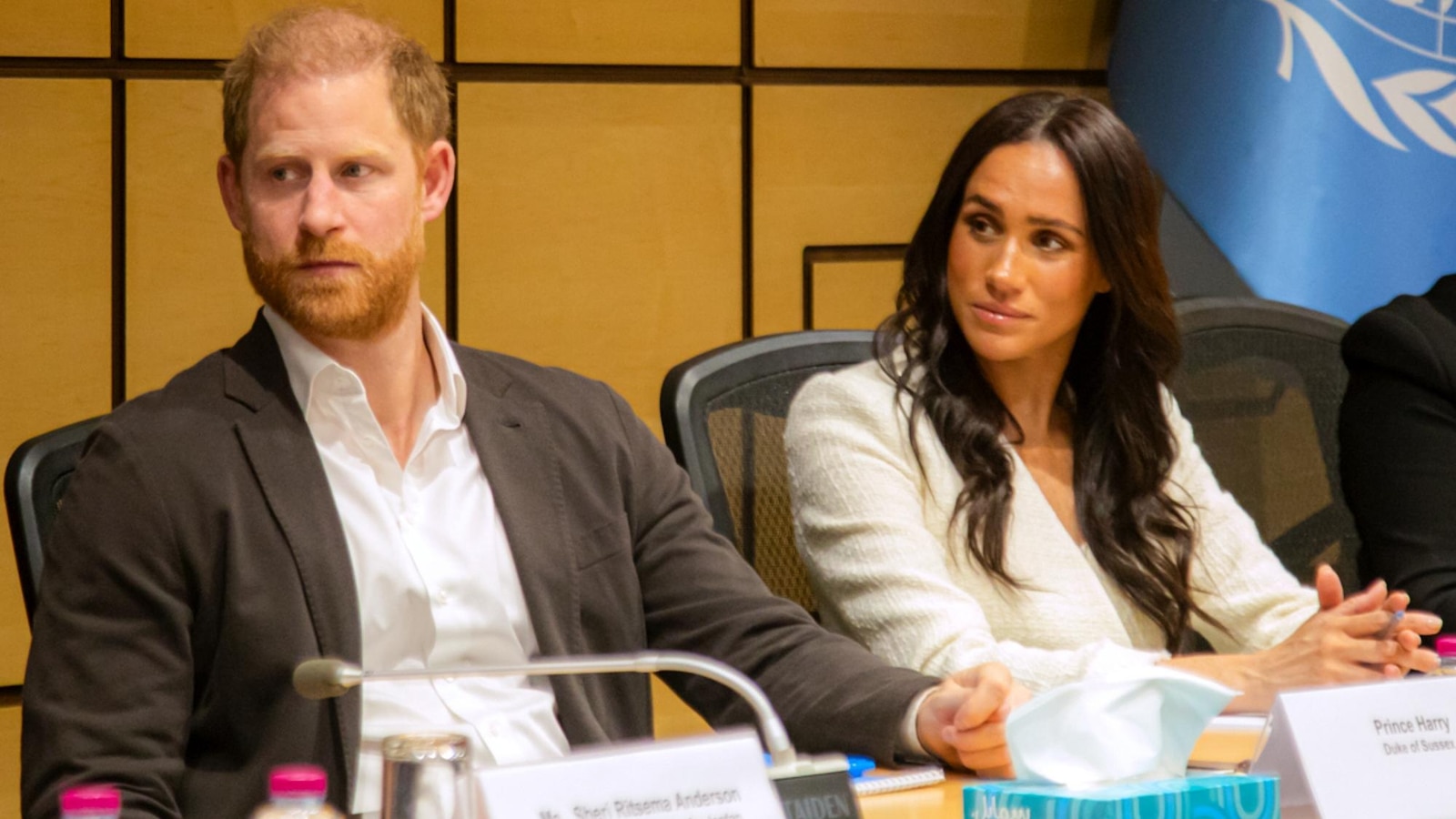

Prince Harry and Meghan Strike Back Against Royal Author’s Latest Claims
A War of Words Escalates
The ongoing saga surrounding Prince Harry and Meghan Markle has taken another dramatic turn as the couple issued a blistering response to allegations made in a new book about the British royal family. In an unusually forceful statement released over the weekend, the Duke and Duchess of Sussex didn’t hold back in their criticism of author Tom Bower, dismissing his latest work as nothing more than “deranged conspiracy and melodrama.” This public confrontation represents yet another chapter in the couple’s complicated relationship with both the media and the royal institution they left behind. The strength of their response suggests that certain lines have been crossed in their view, prompting them to abandon their usual restraint and directly challenge the narrative being constructed about their lives and choices.
The couple’s statement went beyond simply refuting specific claims, instead launching a broader attack on Bower’s credibility and motivations. They accused him of having “long crossed the line from criticism into fixation,” suggesting that his interest in their story has become unhealthy and obsessive. This characterization paints Bower not as a legitimate chronicler of royal affairs but rather as someone with a personal agenda against them. Harry and Meghan specifically highlighted a previous statement attributed to Bower in which he allegedly said “the monarchy in fact depends on actually obliterating the Sussexes from our state of life.” By drawing attention to this quote, they’re attempting to demonstrate that Bower isn’t approaching his subject matter with journalistic objectivity but rather with a predetermined desire to see them diminished or removed from public life entirely.
Explosive Allegations from the New Book
The excerpts from Bower’s latest book, which were published in The Times of London, contain several sensational claims about relationships within the royal family that paint a picture of deep divisions and mistrust. Among the most striking allegations is the claim that Queen Camilla, wife of King Charles III, reportedly told a friend that Meghan had “brainwashed” Prince Harry. This suggestion implies that Harry’s decisions—particularly his choice to step back from royal duties and relocate to the United States—weren’t made of his own free will but were instead the result of manipulation by his wife. Such a claim not only undermines Meghan’s character but also diminishes Harry’s agency as an adult capable of making his own choices about his life and family.
Beyond the alleged comments from Queen Camilla, Bower’s book also claims that Prince William and his wife Catherine, the Prince and Princess of Wales, “evidently saw Meghan as a threat rather than an ally” during the period leading up to Harry and Meghan’s dramatic departure from royal life. This characterization suggests a fundamental breakdown in family relationships, with Meghan portrayed not as a welcome addition to the royal fold but as an outsider who posed some kind of danger to the institution or to William and Catherine’s position within it. The book apparently traces the escalating tensions within the family as Harry and Meghan made their decision to leave Britain, step back from their roles as senior working royals, and eventually settle in California, where they’ve attempted to build independent careers while maintaining certain connections to their royal heritage.
The Pattern of Criticism
What makes this latest controversy particularly significant is that it isn’t Bower’s first foray into writing about Harry and Meghan. In 2022, he published “Revenge: Meghan, Harry, And the War Between the Windsors,” a book that was similarly critical of the couple and their relationship with the royal family. This history is precisely what Harry and Meghan referenced when they accused Bower of having “made a career out of constructing ever more elaborate theories about people he does not know and has never met.” Their statement suggests a pattern of behavior in which Bower has repeatedly targeted them with increasingly complex and unflattering narratives, despite lacking direct access to them or insider knowledge of their private thoughts and motivations.
The new book apparently doesn’t limit its criticism to family dynamics and personal relationships. According to the published excerpts, Bower also takes aim at the couple’s financial arrangements, their charitable endeavors, and even the Invictus Games—the international sporting competition for wounded, injured, and sick military veterans that Harry founded and which has been widely praised as a positive legacy of his military service and royal platform. By attacking even these aspects of their post-royal life, Bower’s book appears to offer a comprehensive critique that leaves little room for acknowledging any positive contributions the couple has made. This wholesale approach to criticism may be part of what prompted Harry and Meghan to respond so forcefully, feeling that even their genuinely meaningful work was being unfairly maligned.
The Couple’s Defense Strategy
In their statement, Harry and Meghan made a clear distinction between what they consider legitimate criticism and what they view as obsessive fixation. They acknowledged that public figures like themselves will inevitably face scrutiny and critical commentary, but they drew a line at what they perceive as Bower’s pattern of behavior. By characterizing his work as “deranged conspiracy and melodrama,” they’re attempting to delegitimize his claims before they can gain wider acceptance as fact. This is a strategic communications approach—rather than engaging with each specific allegation, they’re questioning the credibility of the source itself, suggesting that anyone seeking factual information about them should look elsewhere.
The phrase “those interested in facts will look elsewhere; those seeking deranged conspiracy and melodrama know exactly where to find him” is particularly pointed. It positions Bower’s readership as people who aren’t genuinely interested in truth but rather in sensational entertainment. This characterization serves two purposes: it diminishes the impact of whatever claims the book makes by suggesting they’re not to be taken seriously, and it appeals to a more thoughtful audience who might be inclined to view such sensational accounts with skepticism. By framing the issue in these terms, Harry and Meghan are attempting to control the narrative about themselves, insisting that Bower’s version of events is fundamentally unreliable.
The Broader Context and Implications
This latest controversy unfolds against the backdrop of Harry and Meghan’s ongoing efforts to establish their independence while managing their complex relationship with both the British royal family and the media that covers them. Since stepping back from their roles as senior working royals in early 2020—a move that was dubbed “Megxit” by the British press—the couple has given explosive interviews, launched various business ventures, and produced content for major platforms including Netflix and Spotify. Throughout this period, they’ve maintained that their decision to leave was driven by concerns about media intrusion, lack of institutional support, and in Meghan’s case, experiences with racism and inadequate mental health support from the royal household.
The couple’s willingness to issue such a forceful statement in response to Bower’s book suggests they’ve reached a point where they feel compelled to more actively push back against narratives they view as false or unfair. In previous controversies, they sometimes remained silent or issued more measured responses through representatives. The direct, confrontational tone of this statement indicates a shift in strategy—a decision to meet attacks head-on rather than maintaining a dignified silence. This approach carries both risks and potential benefits. On one hand, engaging with critics can sometimes amplify their message and keep controversies alive longer than they might otherwise persist. On the other hand, failing to respond can allow false narratives to solidify in the public consciousness unchallenged. Harry and Meghan appear to have calculated that in this instance, the damage of remaining silent would outweigh the potential downsides of engaging in public conflict with Bower. As they continue building their post-royal lives in California, how they manage their public image and respond to criticism will remain crucial to their success in establishing themselves as independent public figures with credibility and influence separate from their royal connections.