



The End of an Era: America and Russia’s Last Nuclear Treaty Expires
A Historic Arms Control Agreement Comes to an End
After more than a decade of keeping the world’s two largest nuclear arsenals in check, the New START Treaty between the United States and Russia officially expired on Thursday, marking a sobering milestone in international relations. This treaty, which was signed back in 2010, represented the last remaining safeguard limiting the number of nuclear weapons these superpowers could deploy. Under its terms, both nations agreed to cap their deployed strategic nuclear weapons at 1,550 each—a number that still sounds alarmingly high but was considered a reasonable limit in the complex world of nuclear deterrence. The treaty also required both countries to allow on-site inspections and provide notifications about their nuclear activities, creating a system of transparency and accountability that helped maintain a delicate balance of power. With its expiration, we’re entering uncharted territory for the first time in decades, returning to an era without formal agreements constraining the nuclear capabilities of these two nations that together possess the vast majority of the world’s nuclear weapons.
The Treaty’s Troubled Final Years and What Comes Next
The New START Treaty’s final years were marked by increasing strain, particularly after Russia’s invasion of Ukraine. Moscow stopped providing the required notifications and suspended the inspection protocols, though according to the State Department’s latest assessment released last month, Russia appears not to have dramatically exceeded the agreed-upon limits. President Joe Biden extended the treaty for five years back in 2021, using the maximum extension allowed under its terms, but that was as far as it could go—no further extensions were possible. When President Trump was asked about the treaty’s fate in January during an interview with The New York Times, his response was notably casual: “if it expires, it expires.” This comment suggested he might simply let the agreement lapse without replacement. However, more recent statements from the White House indicate the administration hasn’t completely closed the door on nuclear arms control. A White House official told CBS News that President Trump will determine the path forward on nuclear arms control “which he will clarify on his own timeline,” and he has expressed interest in maintaining some limits on nuclear weapons, though with one significant addition: he wants China involved in any future negotiations.
The China Factor: A New Player Changes the Game
Secretary of State Marco Rubio made the administration’s position crystal clear on Wednesday when he stated that reaching any new agreement without China’s participation would be “impossible” given that country’s “vast and rapidly growing stockpile” of nuclear weapons. This represents a fundamental shift in how nuclear arms control is viewed. The Pentagon’s estimates paint a stark picture of why China has become such a central concern: the country is projected to possess over 1,000 nuclear weapons by 2035, a staggering increase from the approximately 200 it had in 2019. This rapid expansion means that any future arms control framework that ignores China would be incomplete at best and dangerously inadequate at worst. The current treaty structure is strictly bilateral, involving only the United States and Russia, which maintain approximately 4,300 and 3,700 nuclear warheads respectively, according to the Federation of American Scientists. While these numbers dwarf China’s current arsenal, the trajectory of Chinese nuclear development suggests that within a decade, the nuclear landscape will be fundamentally different, with three major powers rather than two dominating the field.
Bridging the Gap: Proposals and Disagreements Among Experts
In September, Russian President Vladimir Putin floated an interesting proposal: both countries could simply continue following the treaty’s parameters for another year without formally signing a new deal. Rose Gottemoeller, who served as Under Secretary of State for Arms Control, told senators during testimony that this informal arrangement could actually work as a temporary solution. “It should be Donald Trump who gets to be the president of nuclear peace in this case, not Vladimir Putin,” Gottemoeller argued before the Senate Armed Services Committee on Tuesday. She believes that maintaining the New START limits for another year would give the United States valuable time “to reestablish strategic stability with Russia and control nuclear weapons at the negotiating table.” However, not everyone agrees with this approach. Retired Admiral Charles Richard, the former head of U.S. Strategic Command, and Tim Morrison, who served as deputy assistant to the president for national security affairs during Trump’s first administration, both expressed skepticism about simply extending the status quo. They argued that the treaty fails to address several critical concerns facing the United States today. All three experts acknowledged the treaty’s imperfections, particularly its failure to account for China’s growing arsenal and its lack of constraints on non-strategic nuclear weapons, such as tactical nuclear weapons that could be used in regional conflicts. Nevertheless, Gottemoeller maintained that an imperfect treaty is better than no treaty at all, telling senators that the alternative could be far worse for American security.
The Proliferation Risk and America’s Aging Arsenal
With the treaty’s expiration now a reality, all the former officials who testified expressed deep concerns about what this might mean for nuclear proliferation around the world. Even countries not currently pursuing nuclear weapons programs might reconsider their positions if the world’s major powers appear to be entering a new arms race. “I don’t think you can understate the risk of proliferation,” Morrison warned senators, highlighting how the absence of arms control agreements between major powers could trigger a domino effect of nations seeking their own nuclear capabilities for security. Gottemoeller framed the challenge in stark terms: “My bottom line is that it does not serve U.S. national security interests to have to address the Chinese nuclear buildup while simultaneously facing a rapid Russian upload campaign.” Beyond the geopolitical concerns, Morrison raised alarming points about the condition of America’s own nuclear arsenal, which has been serving far beyond its intended lifespan. “By 2035, 100% of U.S. nuclear weapons, the warheads and bombs themselves, will have exceeded their design lives by an average of 30 years,” he testified. This aging infrastructure presents both safety and reliability concerns. Morrison emphasized that effective nuclear deterrence isn’t just about having weapons—it’s about having credible, reliable weapons and the willingness to upgrade them. “The only means to reliably enforce compliance with arms treaties is to be able to threaten that failure to comply will be met with a compelling response,” he argued, suggesting that a strong, modern arsenal is essential even when pursuing arms control.
Rebuilding America’s Nuclear Defense Capabilities
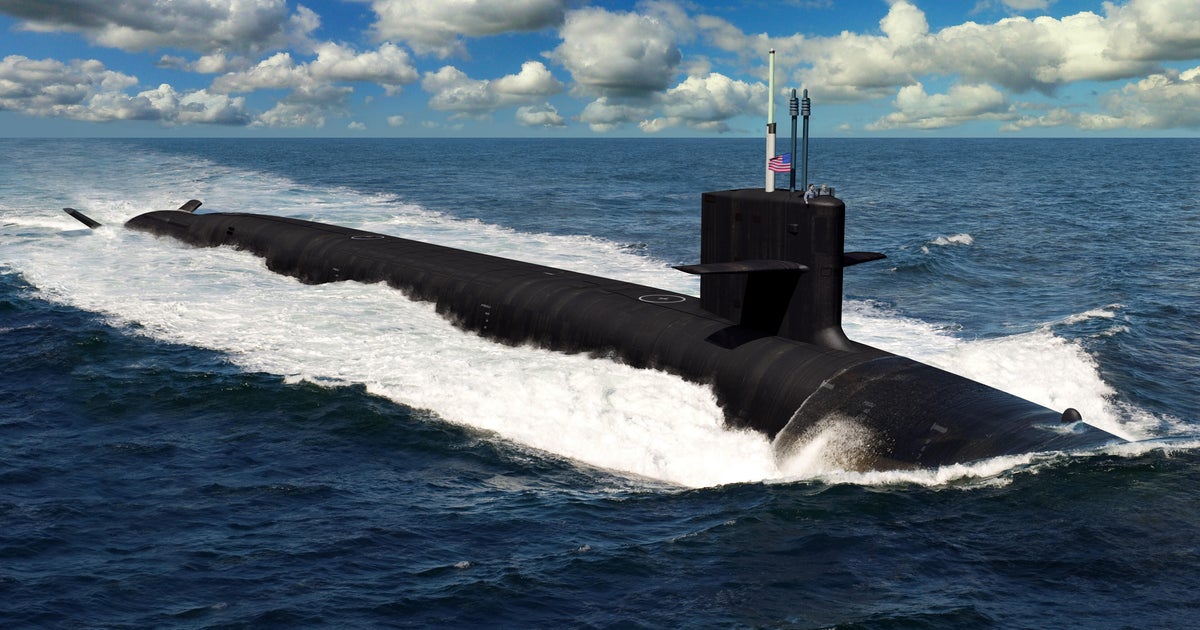
All the former officials who testified agreed on one critical point: to maintain effective nuclear deterrence and deploy weapons successfully, the United States must significantly strengthen its defense industrial base. This is particularly urgent when it comes to building the new Columbia-class submarines, which will form the sea-based component of America’s nuclear triad (the three-pronged nuclear defense system consisting of land-based missiles, submarine-launched missiles, and strategic bombers). Admiral Richard, speaking from his experience leading U.S. Strategic Command, was blunt in his assessment: “I think the numbers are insufficient on all portions of the triad, particularly on the bomber and the ballistic missile submarine leg.” He went further, suggesting that merely replacing aging systems isn’t enough. “There are additional capabilities that we should consider in addition to the recapitalization of the triad and increasing the capacity inside the triad,” Richard said, implying that the United States needs not just newer versions of existing weapons systems but potentially entirely new capabilities to address emerging threats. The Columbia-class submarine program represents a massive undertaking—twelve submarines are planned to replace the aging Ohio-class boats that are reaching the end of their extended service lives. These submarines are considered a top shipbuilding priority because they provide the most survivable part of the nuclear deterrent, able to remain hidden underwater for months at a time, ensuring that the United States could respond to a nuclear attack even if land-based systems were destroyed. As the New START Treaty fades into history, the question now becomes whether the world will see a new framework for nuclear arms control emerge—one that addresses today’s multipolar nuclear landscape—or whether we’re entering a new era of unrestricted nuclear competition.