


Palestinian Student Mohsen Mahdawi Ordered to Remain in Vermont Amid Deportation Battle
Court Grants Temporary Protection While Legal Fight Continues
In a significant development for student activism and immigration rights, a federal judge has ruled that Mohsen Mahdawi, a Palestinian student detained by immigration officials during what was supposed to be a routine citizenship interview, must remain in Vermont for at least 90 days. U.S. District Judge Geoffrey Crawford made this decision during a court hearing on Wednesday, offering a temporary reprieve to the Columbia University student whose arrest has sparked national debate about free speech rights and immigration enforcement. The judge indicated he would extend a restraining order that was initially issued last week by another judge, which prevents the government from deporting Mahdawi or moving him to another state. While this doesn’t mean Mahdawi has been released from detention, it does ensure he won’t be removed from the country or transferred elsewhere while his legal team fights for his freedom. Another hearing has been scheduled for next week in Vermont, and a separate immigration court hearing is set for May 1 in Louisiana, though it remains unclear whether that appearance will proceed as planned.
The Charges: First Amendment Rights Versus National Security Concerns
The heart of Mahdawi’s case centers on a fundamental tension in American democracy—the balance between free speech protections and government authority over immigration. Mahdawi’s legal team argues that the Trump administration detained him specifically because of his leadership role in pro-Palestinian protests at Columbia University during the early stages of the Israel-Hamas war that began in October 2023. They contend this violates his First Amendment rights to free speech and peaceful assembly. The government, however, has invoked an obscure legal provision that allows visa revocations when the Secretary of State determines someone could create “adverse foreign policy consequences for the United States.” This same legal argument has been used against two other student activists: Mahmoud Khalil, Mahdawi’s fellow Columbia organizer who also holds a green card, and Rümeysa Öztürk, a student at Tufts University. Both are similarly fighting their detentions through the courts. The Trump administration maintains it has full legal authority to revoke the visas and green cards of these students, and has further argued that the Vermont federal court lacks jurisdiction over Mahdawi’s case entirely.
Government Position: Privilege, Not Right
The Department of Homeland Security has taken a hard line on the case, with Assistant Secretary Tricia McLaughlin defending the administration’s actions in stark terms. In a statement to CBS News, McLaughlin framed immigration status as a privilege that can be withdrawn: “It is a privilege to be granted a visa or green card to live and study in the United States of America. When you advocate for violence, glorify and support terrorists that relish the killing of Americans, and harass Jews, that privilege should be revoked, and you should not be in this country.” This statement reflects the government’s position that Mahdawi’s protest activities crossed the line from protected political speech into something more dangerous—specifically, support for terrorism and antisemitic harassment. However, Mahdawi and his supporters strongly dispute these characterizations of his activism, arguing that criticism of Israeli government policies and support for Palestinian rights should not be conflated with antisemitism or support for violence.
Mahdawi’s Defense: Compassion for All, Not Hatred
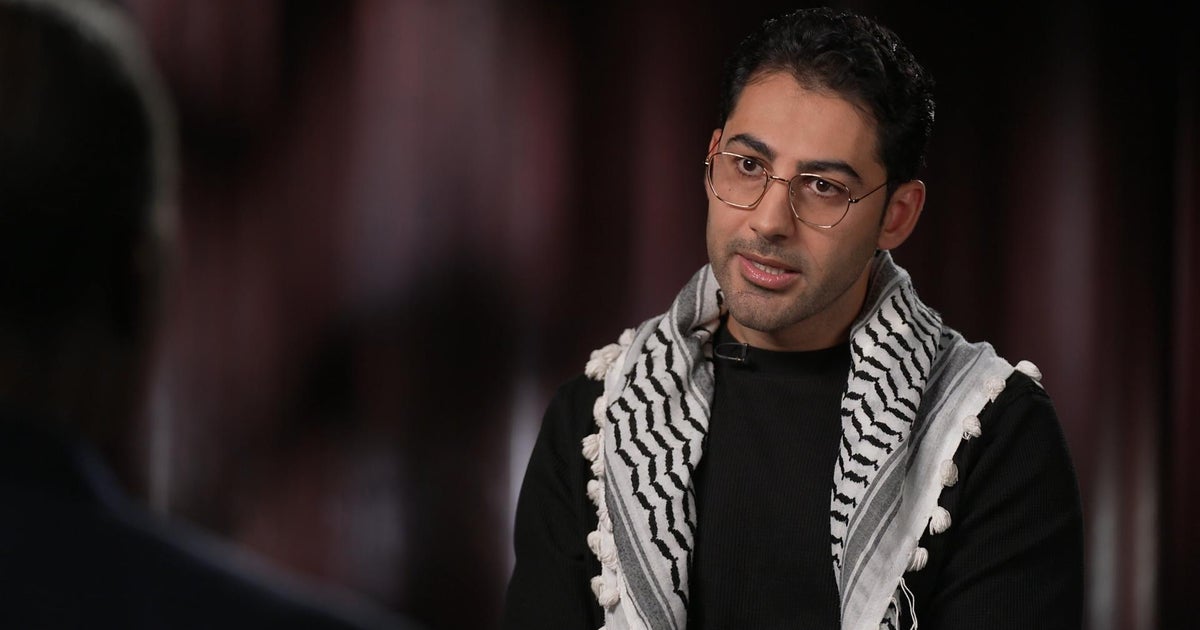
Mohsen Mahdawi has consistently rejected accusations that his activism was motivated by antisemitism or support for violence. In an interview with CBS News conducted just one day before his arrest, Mahdawi made his position clear: “I want people to know that my compassion extended beyond the Palestinian people. My compassion is also for the Jewish people and for the Israelis as well.” He emphasized that his activism was driven by humanitarian concerns rather than hatred toward any group. Additionally, Mahdawi stated that he deliberately stepped back from the protest movement before it escalated into the more controversial actions that grabbed headlines last spring—specifically, when students established encampments on Columbia’s campus and occupied a university building. This detail is important to his defense, as it suggests he was not involved in the most aggressive phases of the protests that drew the most criticism. His attorney, Luna Droubi, expressed confidence after Wednesday’s hearing, stating: “Today, we once again saw that the government has no basis, whatsoever, for Mohsen Mahdawi’s detention other than their own admission that they detained Mohsen on the basis of his speech. Their claims and actions are baseless, without evidence, and are a disgrace to the US constitution. We plan to return to Vermont next week to argue in court and free Mohsen.”
A Life Built in America Now in Jeopardy
Mahdawi’s personal story adds poignancy to the legal battle. Originally from the Israeli-occupied West Bank, he has built a life in the United States over more than a decade. He was just one month away from receiving his bachelor’s degree in philosophy from Columbia University when he was detained. In 2023, he co-founded Columbia’s Palestinian Student Union alongside Mahmoud Khalil, who now faces the same deportation proceedings. Mahdawi’s activism drew the attention of Betar USA, a controversial pro-Israel organization that earlier this year publicly announced he was on their “deport list.” The group told CBS News that it has “provided thousands of names of jihadis to the Trump Administration of visitors to America who support Hamas and will continue to.” When Khalil was arrested in late March, Mahdawi told CBS News that he feared he might be targeted next. His suspicions proved well-founded. When he received notification of his citizenship interview—something he had been waiting for over a year—he experienced conflicting emotions. “It’s the first feeling of like, I’ve been waiting for this for more than a year,” he explained to CBS News before his detention. “And the other feeling is like, wait a minute. Is this a honey trap?” Tragically, his instincts were correct.
Broader Implications for Student Activism and Immigration
The cases of Mahdawi, Khalil, and Öztürk have sent ripples of concern through immigrant communities and student activist circles across the country. Their detentions raise troubling questions about whether the government can use immigration enforcement as a tool to silence political dissent, particularly when that dissent challenges U.S. foreign policy. Legal experts are watching these cases closely because they could set important precedents about the extent to which non-citizens can exercise First Amendment rights without risking their immigration status. The outcome may determine whether expressing unpopular political views—especially regarding contentious foreign policy issues—can be grounds for deportation, even for individuals with green cards who have built lives in America over many years. For now, Mahdawi remains in detention in Vermont, his future uncertain despite the judge’s order preventing his immediate deportation. His legal team continues to fight for his complete release, arguing that his detention represents a dangerous overreach of government power and a violation of constitutional principles. The next hearing, scheduled for next week, may provide more clarity about whether Mahdawi will regain his freedom or face continued detention and possible deportation, leaving behind the American life he has built and the university degree he worked so hard to achieve.