
The End of the Penny: How America is Navigating a Coinless Future
The Death of America’s Smallest Coin
After more than two centuries of existence, the American penny is finally being phased out of production. President Donald Trump made the controversial decision early last year to stop minting the iconic 1-cent coin, citing wastefulness as the primary reason. The numbers behind this decision are striking: it cost taxpayers 3.7 cents to produce each single penny in 2024, according to the U.S. Mint. This means the government was losing money on every penny it made—a fiscal reality that became impossible to ignore. The announcement didn’t mean pennies would disappear overnight, however. The Treasury Department has committed to keeping the approximately 114 billion pennies already in circulation available for “as long as possible,” and businesses must still accept them as legal tender. Nevertheless, the end of penny production triggered an immediate shortage in cash registers across the country last summer, forcing both consumers and businesses to grapple with a practical problem: how do you make exact change in a world without pennies?
States Step In With Their Own Solutions
With no federal guidance initially in place, individual states have taken it upon themselves to address the penny problem, creating what some legislators fear could become a confusing patchwork of different policies across the country. Bills to manage cash transactions without pennies have been passing through state legislatures at a remarkable pace. Arizona, Florida, Oregon, Tennessee, Virginia, and Washington have all passed legislation through both chambers that now awaits their governors’ signatures. These state-level approaches vary significantly—some propose allowing businesses to round cash purchases voluntarily, while others are considering requirements that would make rounding mandatory. Indiana provides a particularly interesting case study in the complexity of this issue. Republican Governor Mike Braun signed a bill into law this month that initially required businesses to round all cash purchases that didn’t end in zero or five. However, lawmakers quickly revised this mandate with a second bill making rounding optional instead, which would take effect almost immediately if signed. This rapid reversal illustrates how lawmakers are still feeling their way through uncharted territory, trying to balance business flexibility with consumer protection and practical necessity.
Understanding Symmetrical Rounding: The Proposed Solution
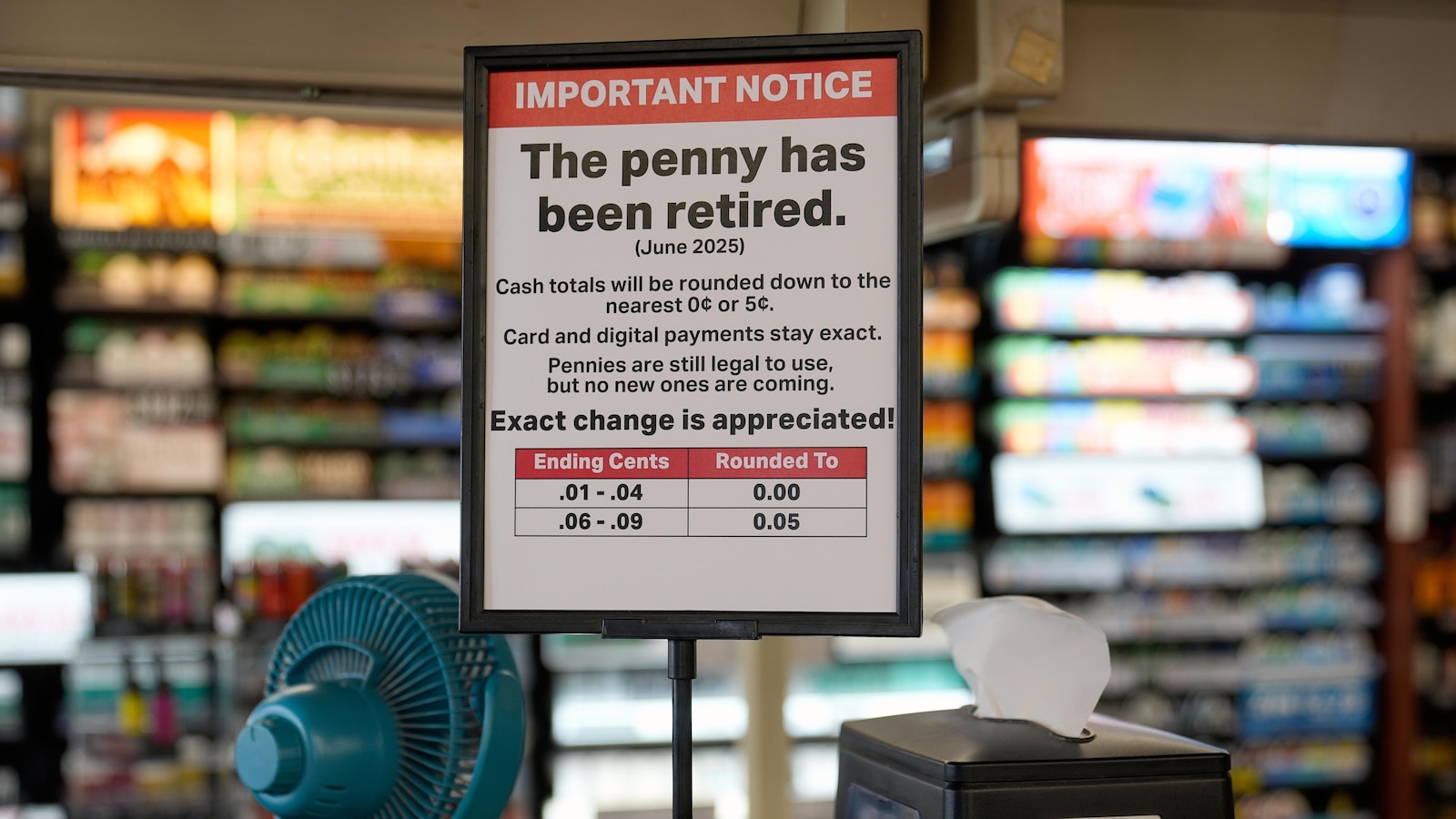
The most commonly proposed solution to the penny problem is a method called symmetrical rounding, which aims to be fair to both consumers and businesses by rounding to the nearest nickel. The system works on a straightforward principle: if the final price of a purchase (calculated after taxes) ends in one, two, six, or seven cents, the cash payment rounds down to the nearest five-cent increment. This means a purchase totaling $1.91 or $1.92 would be rounded down to $1.90. Conversely, if the total ends in three, four, eight, or nine cents, the payment rounds up—so $1.98 or $1.99 would become $2.00. At first glance, this system appears mathematically neutral, with half the possible endings rounding up and half rounding down. The Treasury Department has stated publicly that with this approach, “prices would be rounded down just as often as they will be rounded up, so there should be no overall effect on consumer prices.” A federal bill introduced last year in Congress and successfully passed out of the House Financial Services Committee would implement symmetrical rounding nationwide. Representative Lisa McClain, a Republican from Michigan, argues that federal legislation is essential to prevent the confusion that would result from each state creating its own rules. However, the bill hasn’t yet been voted on by the full House, and even if it passes there, it would still need to clear the Senate before reaching President Trump’s desk for signature—a legislative journey that could take considerable time while the penny shortage continues.
The Real-World Impact: Who Wins and Who Loses?
While symmetrical rounding sounds fair in theory, researchers at the Federal Reserve Bank of Richmond have identified a potential problem that could affect millions of consumers. Using survey data from 2023, these economists discovered that prices not ending in zero or five were disproportionately likely to end in eight or nine—the very digits that would trigger rounding up rather than down. This pricing pattern isn’t random; it reflects common retail psychology where prices like $9.99 or $19.98 are perceived as significantly cheaper than rounded numbers. The researchers concluded that this imbalance means cash transactions would more frequently round up than down, collectively transferring millions of dollars from consumers to businesses over time. To be clear, we’re talking about pennies per person—but when multiplied across hundreds of millions of transactions, those pennies add up. Some states have attempted to mitigate potential problems by allowing businesses to choose their rounding method: they can consistently round up, consistently round down, or use symmetrical rounding. Tennessee took a different approach by making symmetrical rounding exempt from legal claims under state consumer protection laws without actually requiring businesses to use it. As Republican Representative Charlie Baum, the bill’s sponsor, explained during floor debate, the legislation “is to provide safe harbor for private businesses” rather than mandate specific behavior. State agencies in several jurisdictions have also published guidelines advising that rounding should occur after tax calculation and emphasizing that businesses must still remit the full taxed amount to the state, regardless of what the consumer actually pays.
Consumer Reactions: From Confusion to Frustration
The public response to rounding has been mixed, with many Americans taking to social media to express feelings of being cheated, even when the amounts involved are just a penny or two. This reaction highlights an important truth about consumer psychology: people care deeply about fairness in transactions, sometimes independent of the actual dollar amounts at stake. Nikki Capozzo-Hennessy, a 50-year-old resident of Trumbull, Connecticut, who runs a food truck business, offers a balanced perspective. She prefers paying with cash because it makes her more mindful of her spending—a common practice among budget-conscious consumers. When she noticed a rounding adjustment on a grocery store receipt for a purchase totaling $8.73 after tax, she photographed and posted it online. In her case, the store rounded down and she gained three cents, but she acknowledged that consistently losing pennies on every purchase might feel frustrating over time. Nevertheless, she recognizes the practical necessity of having a consistent rule, noting that her own food truck business would likely adopt symmetrical rounding for the sake of simplicity and transparency with customers. “At the end of the day it’s three cents, but I can imagine with all the purchases that you make, it can add up,” Capozzo-Hennessy observed, capturing the tension between accepting minor losses and the cumulative effect of many small transactions. Washington state Representative April Berg, who introduced rounding legislation in her state, empathizes with consumers who feel frustrated about losing even a penny but argues that the elimination of penny production leaves few alternatives. “We did make sure that everyone is allowed to pay exactly what they owe,” Berg noted, referring to provisions in her legislation that preserve the right to pay precise amounts through electronic payment methods.
The Broader Implications and What Comes Next
The penny problem extends beyond simple arithmetic and touches on fundamental questions about currency, consumer behavior, and the ongoing transition away from physical money. While cash isn’t used as universally as it once was—thanks to credit cards, debit cards, and mobile payment systems—it remains important to many Americans. A 2024 survey conducted by the Federal Reserve found that about 8 in 10 U.S. adults had recently used cash, with usage particularly high among older adults and those in lower-income households. For these populations, the transition away from pennies isn’t merely an inconvenience but affects their daily financial transactions in meaningful ways. The government projects that ending penny production will save $56 million annually, but there’s an ironic twist: rounding to the nearest nickel could actually increase demand for 5-cent coins. Unfortunately, nickels are even more expensive to produce than pennies, costing nearly 14 cents each to manufacture in 2024 according to the Mint. This reality has prompted the proposed federal legislation to include a potential cost-saving measure that would allow the Treasury to change the nickel’s composition from the current copper-nickel blend to a cheaper zinc-nickel combination. As states continue developing their own approaches and federal legislation remains stalled in Congress, Americans are experiencing firsthand what happens when a small but ubiquitous part of the economy disappears. Whether the end result is a unified national policy or a state-by-state patchwork of regulations, one thing is certain: the era of penny-perfect transactions is coming to an end, and we’re all learning to round off our expectations along with our purchases.