


A Minnesota Community in Crisis: How Federal Immigration Operations Are Reshaping Daily Life in Brooklyn Park
Fear Grips a Diverse Suburb
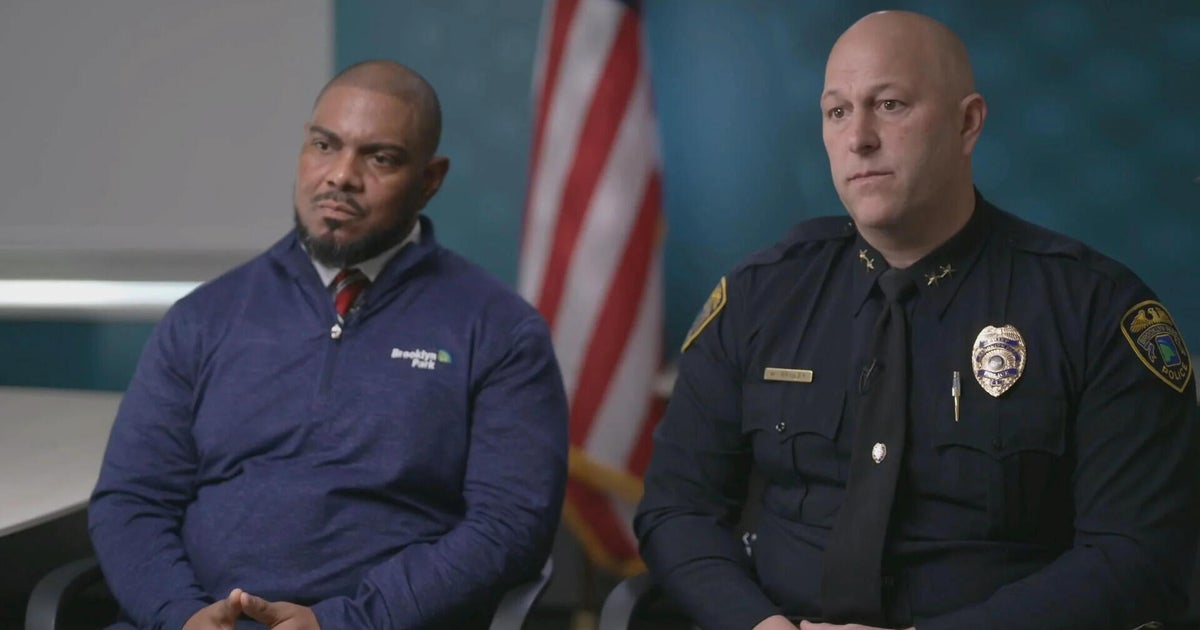
In Brooklyn Park, Minnesota, a vibrant and diverse suburb just north of Minneapolis, life has fundamentally changed. What was once a bustling community where neighbors freely went about their daily routines has transformed into a place where fear keeps people behind locked doors. Mayor Hollies Winston and Police Chief Mark Bruley paint a troubling picture of their city under “Operation Metro Surge,” a massive federal immigration operation that has brought unprecedented numbers of Immigration and Customs Enforcement (ICE) agents to the Twin Cities area. The impact has been immediate and devastating, affecting not just undocumented immigrants but legal residents and U.S. citizens alike. Business corridors that once thrived now stand eerily quiet, with shops closing their doors and residents too frightened to venture outside. This isn’t just about enforcing immigration law, local leaders say—it’s about how enforcement tactics have created an atmosphere of terror that affects everyone. Mayor Winston emphasizes that the fear gripping his community doesn’t discriminate based on legal status: “We’re talking about citizens of the United States [who] are too scared to come out on a city street in America.” In a city where approximately 65% of residents are people of color, the operation has created a climate where ordinary activities like grocery shopping have become sources of anxiety, with many opting for delivery services rather than risk leaving their homes.
Economic Devastation Rivals the Pandemic
The economic consequences of Operation Metro Surge have been swift and severe, drawing comparisons to the COVID-19 pandemic in terms of business impact. Mayor Winston reports that some businesses have experienced revenue drops of 50%, while others have simply given up and closed permanently. The ripple effects extend across all sectors of the city’s economy, creating what Winston describes as an unsustainable situation. He warns that without significant recovery efforts following any eventual de-escalation, Brooklyn Park could be “grappling with this five to ten years from now.” The economic paralysis isn’t limited to businesses that primarily serve immigrant communities—the fear has spread so broadly that it’s creating a chilling effect throughout the entire local economy. When a significant portion of your population is afraid to leave their homes, every business suffers. Restaurants lose customers, retail shops see foot traffic disappear, and service businesses struggle to maintain operations. The mayor’s comparison to the pandemic is particularly apt: just as COVID-19 created economic disruption through public health fears that kept people home, Operation Metro Surge has created a different kind of public safety crisis that has produced similar economic devastation. The difference, Winston argues, is that this crisis is man-made and could be avoided with different enforcement approaches.
When the Enforcers Become the Targets
Perhaps nothing illustrates the indiscriminate nature of the current operation better than the experiences of Brooklyn Park’s own police officers and civilian staff. Police Chief Bruley made the difficult decision to speak out publicly after learning that ICE agents had stopped, questioned, and detained his own personnel—all of whom are U.S. citizens and people of color. In the most disturbing incident Bruley describes, ICE agents with guns drawn “boxed in” one of his off-duty officers who had a child in the vehicle, demanding paperwork to prove their citizenship. The chief admits he initially hesitated to go public, worried that people would think he only cared about the issue once it affected his own staff. But the testimony from his officers and civilian employees—professionals trained in law enforcement procedures, people whose job requires them to testify credibly in court—convinced him that what was happening in Brooklyn Park demanded a public response. “When my staff… people that can go to court and testify… come to me in tears… telling me they’re stopped because of the color of their skin, guns drawn on them, demanding [their] paperwork… It just affirmed how much of this is going on all over the Metro area and throughout the state,” Bruley explained. Other law enforcement officials, including St. Paul’s police chief, have reported similar experiences. For Bruley, having police officers tell him that other law enforcement is “out of control” should be a wake-up call for the entire nation.
Trust, Legitimacy, and the Erosion of Community Policing
Beyond the immediate fear and economic impact, Mayor Winston identifies a more insidious long-term threat: the erosion of trust between Brooklyn Park residents and their local police department. The city has invested years of effort and resources into building community policing approaches and alternative response programs that have successfully driven crime down while improving relationships between law enforcement and the community. Now, that hard-won trust is unraveling because residents can’t always distinguish between local police and federal agents. “Not everyone can differentiate between what our local police do and what they see at the federal government,” Winston explains. This confusion is understandable—to many residents, anyone in tactical gear enforcing the law looks like “the police,” regardless of which agency employs them. The consequences of this confusion could last for years. When community members see aggressive enforcement tactics, racial profiling, and constitutional violations by any law enforcement entity, it damages their willingness to cooperate with all law enforcement, including the local police they rely on for public safety. Winston and Bruley both emphasize that what’s happening now is fundamentally different from previous federal operations in their city. They’ve partnered successfully with federal law enforcement before, including during the investigation into the assassination of former Minnesota House Speaker Melissa Hortman in Brooklyn Park last year. But Operation Metro Surge, they say, has abandoned the collaborative approach that made previous partnerships work.
Body Cameras and Changing Temperatures
When Homeland Security Secretary Kristi Noem announced that ICE agents in Minneapolis would begin wearing body cameras, it marked a significant policy shift in federal immigration enforcement. Mayor Winston welcomed the move as a step toward accountability, though he acknowledged it came far later than it should have. “An opportunity to de-escalate and start talking about how is there gonna be long-term accountability,” is how he framed the body camera announcement. Police Chief Bruley was more blunt, calling the cameras “late by 10 years” while acknowledging that the technology does improve transparency and legitimacy in policing. Bruley also noted a change in federal agent behavior following the arrival of Border Czar Tom Homan in Minnesota. “There has been a noticeable difference in the temperature… they’re just acting better,” the chief said, adding that many of the problematic behaviors stopped when Homan arrived. However, both officials emphasize that their objection isn’t to immigration enforcement itself—it’s to the methods being employed. Bruley articulates this distinction clearly: “It doesn’t matter if you arrest 15 people, but you violated the Constitution. It was wrong.” He points specifically to Fourth Amendment protections against unreasonable searches and seizures, arguing that American citizens have the right to be free from being “contacted, searched [or] interrogated because of the color of their skin.” That fundamental principle, he insists, cannot be compromised regardless of the enforcement objective. The police chief describes surreal situations where residents call 911 asking for local police protection from ICE agents they believe are watching, following, or trying to enter their homes. In one incident, a person ran into the police department lobby begging for help while ICE agents pursued them inside and made an arrest in the lobby itself.
A Warning That Transcends Politics
Both Mayor Winston and Police Chief Bruley want Americans to understand that what’s happening in Brooklyn Park isn’t a “blue state problem” or a political issue—it’s a constitutional and human rights concern that should worry everyone regardless of party affiliation. “American citizens… are being snatched up off the street, demanding their paperwork, just because of color of their skin,” Bruley states flatly. This isn’t acceptable in America, he argues, regardless of one’s views on immigration policy. Winston makes a historical argument about how coercive tactics first used against marginalized communities tend to expand over time, citing the war on drugs as an example. If the justification works in Minnesota, he warns, “it can be used anywhere in the country when it serves anybody’s purpose.” This is the danger of normalizing aggressive enforcement tactics that violate constitutional protections—once those norms are established, they become available tools for future use against any group deemed problematic. For other cities facing similar federal operations, Bruley offers practical advice: there’s “no playbook,” but local leaders must “do what’s right,” document everything they can, and push relentlessly for transparency. He’s clear that immigration enforcement needs to happen—that’s not the issue. The problem is execution. When federal agents cover their faces, conduct stops based on racial profiling, and draw weapons on U.S. citizens demanding papers, that’s “an unacceptable way to do law enforcement” in America. The message from Brooklyn Park is clear: enforcement methods matter as much as enforcement objectives, and when those methods violate constitutional principles and community trust, everyone loses—regardless of their immigration status or political beliefs.