



The Mystery Boom: A Meteor Spectacle Over the Midwest
What Happened in the Ohio Sky
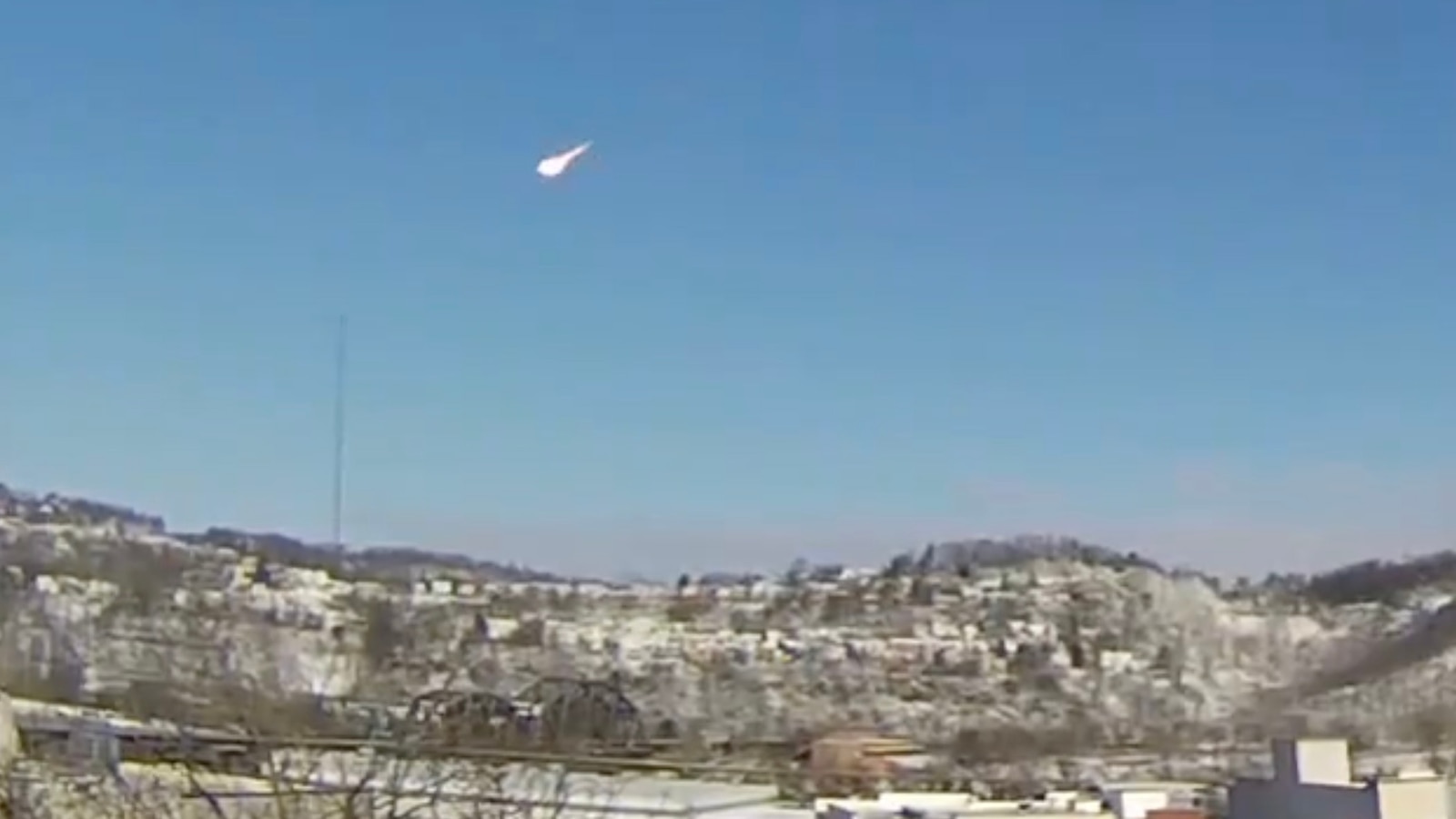
On an otherwise ordinary Tuesday morning, residents across Ohio and several neighboring states were jolted by a mysterious and thunderous “boom” that echoed through the sky. What initially seemed like an unexplained phenomenon quickly became the subject of investigation by meteorological agencies and space experts. The National Weather Service in Cleveland soon confirmed what many had suspected after reviewing available imagery and data: the source of the startling noise was a meteor that had entered Earth’s atmosphere. This celestial visitor put on quite a show as it streaked across the morning sky, creating both visual and auditory effects that caught the attention of thousands of people across multiple states. The event serves as a reminder of how our planet constantly interacts with space debris, and while such occurrences happen more frequently than most people realize, it’s rare for them to be so dramatically visible and audible to so many people at once.
The National Weather Service offices in both Cleveland and Pittsburgh worked together to piece together the puzzle of the morning’s mysterious event. Using sophisticated imagery and radar data, meteorologists were able to confirm that the boom wasn’t the result of any terrestrial phenomenon like an explosion or sonic boom from aircraft, but rather something from beyond our atmosphere. The NWS in Pittsburgh shared compelling images that clearly showed the bright streak of the meteor as it blazed through the sky. What made this event particularly noteworthy was the number of witnesses and the geographic spread of the reports. People didn’t just hear the boom or see a flash of light—many experienced both simultaneously, creating a sensory experience that was impossible to ignore and difficult to forget.
Witness Accounts Across Multiple States
Reports of the loud boom and accompanying fireball came flooding in from an impressively wide geographic area, demonstrating just how significant this meteor event was. Residents throughout western Pennsylvania reported hearing the explosive sound and seeing the brilliant fireball cutting across the morning sky. The phenomenon was so striking that even a National Weather Service employee in the Pittsburgh area managed to capture video footage of the meteor as it streaked overhead, providing valuable documentation of the event. But the sightings didn’t stop at the Ohio-Pennsylvania border. According to Bill Cooke, who leads NASA’s Meteoroid Environments Office, the meteor was also spotted much further south, with observers in Virginia and Kentucky reporting the spectacular sight. This extensive range of sightings indicates that the meteor was visible across a span of several hundred miles, a testament to both its size and the altitude at which it was traveling before it ultimately disintegrated.
The widespread nature of the reports also highlights how connected our communities have become through social media and instant communication. Within minutes of the event, people were taking to online platforms to share their experiences, post videos, and seek explanations for what they had witnessed. This collective sharing of information helped authorities quickly recognize that this was a significant event affecting a large area rather than isolated local incidents. The convergence of eyewitness accounts, professional observations, and scientific data created a comprehensive picture of what had occurred, demonstrating how modern technology and citizen reporting can work together to help us understand natural phenomena.
The Science Behind the Spectacle
When Bill Cooke from NASA’s Meteoroid Environments Office analyzed the event, the details he revealed were nothing short of impressive. The space rock responsible for all the commotion was approximately 6 feet in diameter—about the size of a small car—and weighed around 8 tons. To put that in perspective, that’s roughly equivalent to the weight of five or six average automobiles compressed into a relatively small space. Even more astounding was its speed: the asteroid was traveling at approximately 40,000 miles per hour when it encountered Earth’s atmosphere. At that velocity, it was moving more than 50 times faster than a commercial airliner. The combination of mass and velocity created the perfect conditions for a dramatic atmospheric entry that would be both seen and heard across multiple states.
The meteor met its dramatic end over Medina County, Ohio, located just outside of Cleveland. As it descended through increasingly dense layers of atmosphere, the enormous friction and pressure became too much for the space rock to withstand. It ultimately broke apart in a spectacular explosion that released energy equivalent to approximately 250 tons of TNT. To understand the magnitude of this explosive force, consider that this is roughly equivalent to the power of several World War II-era bombs going off simultaneously in the sky. This massive release of energy is what created the thunderous boom that startled so many people across the region. The explosion didn’t simply vaporize the entire meteor, however. Instead, it fragmented into numerous smaller pieces that rained down over the Medina County area, potentially creating a field of meteorite fragments that could become objects of scientific interest and collector enthusiasm.
How Common Are These Events?
One of the most surprising revelations from NASA expert Bill Cooke was that sizable fireballs like this one actually occur about once a month somewhere over the United States. This statistic might come as a shock to many people who have never witnessed such an event, but it speaks to the constant bombardment our planet experiences from space debris. Every day, tons of material from space enter Earth’s atmosphere, ranging from tiny particles no bigger than grains of sand to larger rocks like the one that visited Ohio. Most of this material burns up harmlessly high in the atmosphere, often going completely unnoticed except by specialized detection equipment or dedicated skywatchers. The difference with the Ohio meteor was not necessarily its size or frequency, but rather the circumstances of its visibility and audibility.
What made this particular meteor event stand out from the monthly average was the combination of factors that made it so noticeable to so many people. According to Cooke, while these sizable fireballs do occur regularly, they usually don’t generate the same level of awareness because they might occur over remote areas, over oceans, during daylight hours when they’re harder to spot, or at altitudes where the explosive breakup isn’t loud enough to reach the ground with significant force. The Ohio meteor checked all the boxes for maximum impact: it occurred at a time when people were awake and active, it traveled over populated areas, it was bright enough to be clearly visible, and its disintegration was low enough and energetic enough to create a sonic boom that reached the ground. This perfect storm of conditions is what transformed a relatively routine astronomical event into a memorable experience for thousands of people.
The Bigger Picture: Our Place in the Cosmos
Events like the Ohio meteor serve as powerful reminders of Earth’s place within a dynamic and sometimes unpredictable solar system. Our planet orbits through a cosmic shooting gallery, sharing space with countless asteroids, comets, and debris from the formation of the solar system billions of years ago. While our atmosphere provides excellent protection from the vast majority of this material, larger objects can and do make it through to create spectacular shows like the one witnessed over Ohio. These events, while initially alarming to those who experience them, are actually part of the natural processes that have shaped our planet throughout its history. In fact, scientists believe that water and organic compounds necessary for life may have been delivered to Earth by ancient meteor and comet impacts, making these celestial visitors not just sources of wonder, but potentially crucial to our very existence.
The Ohio meteor event also highlights the importance of continued monitoring and study of near-Earth objects. Organizations like NASA’s Meteoroid Environments Office work constantly to track and catalog asteroids and other objects that might pose risks to our planet. While the 6-foot asteroid that exploded over Ohio was too small to have been detected before its arrival, ongoing efforts are focused on identifying and tracking larger objects that could potentially cause significant damage if they were to impact Earth. The good news is that scientists have identified and are tracking the vast majority of truly dangerous asteroids—those large enough to cause global catastrophes. However, events like the Ohio meteor remind us that smaller objects can still create localized effects and that our vigilance must continue. Fortunately, the combination of professional monitoring, advancing technology, and an engaged public means we’re better prepared than ever to understand and respond to these cosmic visitors, turning moments of alarm into opportunities for scientific discovery and public education about our amazing universe.