


The Tragic Final Hours of Former NFL Star Doug Martin
The sports world was shaken by the heartbreaking loss of Doug Martin, a former Tampa Bay Buccaneers running back who died after being taken into police custody in October 2025. The 36-year-old former NFL star’s final moments have now been revealed through newly released security footage, 911 calls, and police body camera recordings from the Oakland Police Department. What emerges from this footage is a devastating portrait of a man in crisis—someone who had achieved the pinnacle of athletic success but was privately battling demons that ultimately led to his untimely death. The incident has raised important questions about how law enforcement responds to mental health emergencies and the hidden struggles that even accomplished athletes can face behind closed doors.
A Mental Health Crisis Unfolds in the Early Morning Hours
In the pre-dawn darkness of October 18, 2025, at approximately 4:15 a.m., a frightening scene unfolded in an Oakland neighborhood. A panicked homeowner called 911 to report someone breaking into her house, with the sound of an alarm system blaring in the background. What this caller didn’t know was that the person entering her home wasn’t a typical intruder—it was Doug Martin, her neighbor, who was experiencing a severe mental health crisis. According to his family’s later statement, Martin had fled his own home while in a disoriented state, ending up just two doors down at a stranger’s residence. As police officers rushed to respond to the break-in call, they received a second 911 call from the same area—this one from Martin’s mother, who desperately tried to explain that her son was in the midst of a mental health emergency. She revealed crucial information to the dispatcher: Martin had been taking sleeping pills and hadn’t slept for three days, a dangerous combination that can lead to severe disorientation, paranoia, and altered mental states. His mother’s call painted a picture not of criminal intent but of a medical emergency requiring immediate intervention and care.
The Confrontation Captured on Camera
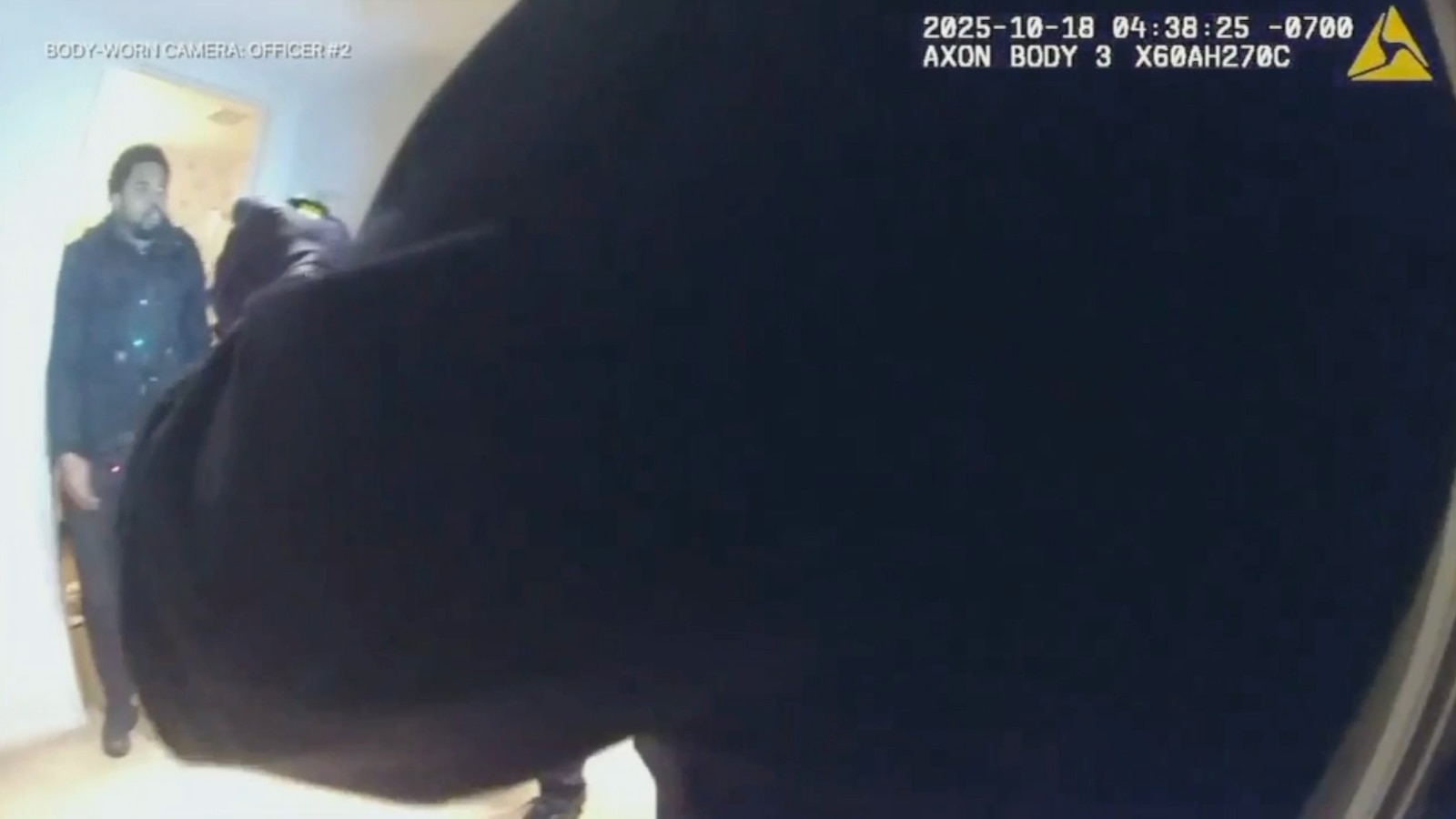
The released footage provides a chilling window into Martin’s final conscious moments. Ring security camera video shows the former athlete in a neighbor’s backyard, clearly distressed and calling out for help. In the recording, Martin can be heard yelling “help me” and stating his own name, as if trying to ground himself in reality or communicate his identity to anyone who might hear. The footage then captures the moment when Martin breaks through a window and enters the home—an act that would appear threatening to any homeowner but was actually a desperate action by someone whose grip on reality had been severely compromised by sleep deprivation and mental health struggles. Oakland police officers soon arrived on scene and are shown entering the property through the same broken window that Martin had used. What follows is a tense confrontation in a confined space. Multiple officers found Martin in a bathroom, and when he emerged, they struggled with him in a workout room. Throughout this encounter, officers can be heard repeatedly telling Martin to “calm down” and “relax” before they successfully handcuff him. Once restrained, an officer attempts to reassure Martin, saying, “Doug, it’s the Oakland Police Department, OK? We’re going to get you help.” This moment captured on body camera shows law enforcement trying to de-escalate the situation, though Martin remained on the ground in handcuffs, awaiting medical assistance.
The Critical Minutes Before Tragedy Struck
After Martin was subdued and handcuffed, the body camera footage reveals a troubling sequence of events with significant gaps in the timeline. The video jumps ahead approximately eight minutes, showing officers discussing the incident among themselves while waiting for paramedics to arrive. During this period, Martin remained handcuffed and lying on the floor, with one officer noting that he seemed tired and appeared to be snoring. This detail would later become crucial in understanding what happened next. The footage jumps forward again, this time about five minutes later, and the situation has become dire. Officers are now carrying Martin’s body out of the house to waiting paramedics, who were unable to bring their gurney inside due to the layout of the home. The scene has transformed from a law enforcement matter to a medical emergency. In the released footage, voices can be heard repeatedly asking the critical question: “Is he breathing?” This urgent inquiry suggests that at some point during those missing minutes, Martin stopped breathing while in police custody. The video ends as officers work to remove the handcuffs from Martin’s wrists so paramedics can begin life-saving measures. Despite their efforts to perform CPR and rush him to a hospital, Martin was later pronounced dead, bringing a tragic end to a life that had once been filled with athletic promise and achievement.
The Hidden Struggles of a Football Star
Doug Martin’s story is a sobering reminder that success and fame do not immunize anyone from mental health challenges. Before that fatal October night, Martin had built an impressive football career that began at Boise State University, where his exceptional talent as a running back caught the attention of NFL scouts. In 2012, his dreams became reality when he was selected as a first-round draft pick by the Tampa Bay Buccaneers, one of the highest honors a college player can receive. During his six seasons with the Buccaneers, Martin demonstrated why he deserved that high selection, making two Pro Bowl appearances—the NFL’s all-star game—and earning All-Pro honors in 2015, recognition as one of the league’s best players at his position. He later briefly played for the Oakland Raiders before his professional career came to an end. According to the statement released by Athletes First, the talent management firm that had represented Martin during his NFL career, the former running back had been “privately battling mental health challenges” that “profoundly impacted his personal and professional life.” This revelation shocked many who had only seen the public persona—a powerful, seemingly invincible athlete who could break tackles and score touchdowns. The statement emphasized that on the day of his death, Martin’s parents had been “actively seeking medical assistance for him and had contacted local authorities for support,” demonstrating their awareness of his crisis and their desperate attempts to get him help before tragedy struck.
Investigating What Went Wrong
In the months since Martin’s death, multiple agencies have been working to piece together exactly what happened and whether anything could have been done differently. The Oakland Police Department, the Alameda County District Attorney’s Office, and the Oakland Community Police Review Agency are all conducting investigations into the incident, examining every aspect of the police response and the circumstances surrounding Martin’s death. The Alameda County Coroner’s Bureau has not yet released an official cause of death, stating that they are still awaiting critical test results that could provide answers about what caused Martin to stop breathing while in custody. These results may reveal whether Martin died from a medical condition, positional asphyxia (a danger when restrained individuals are placed in certain positions that restrict breathing), drug interactions, or other factors related to his extreme sleep deprivation and mental state. The Alameda County District Attorney’s Office has declined to comment on the ongoing investigation, citing its active status. Similarly, John Burris, an attorney representing the Martin family, told ABC’s San Francisco station KGO that he would not be commenting on the released video footage at the family’s request, suggesting they may be pursuing their own evaluation of the evidence before making public statements. The thoroughness and transparency of these investigations will be crucial not only for the Martin family’s quest for answers but also for informing how law enforcement agencies handle similar mental health emergencies in the future.
A Legacy Beyond Football and Lessons for the Future
Doug Martin’s death represents far more than the loss of a talented athlete—it’s a tragedy that highlights the urgent need for better mental health support systems, particularly for individuals transitioning out of high-pressure careers like professional sports. The man who once thrilled fans with his powerful running style and game-breaking ability ultimately needed a different kind of support that wasn’t adequately available when he needed it most. His story has resonated deeply within both the sports community and among mental health advocates, who point to the unique pressures faced by professional athletes, including the physical toll of the sport, the psychological adjustment required when careers end, and the challenge of building new identities after years of being defined by athletic performance. The circumstances of Martin’s final hours also raise critical questions about law enforcement’s capacity to respond to mental health crises. While the released footage shows officers attempting to de-escalate the situation and expressing intent to get Martin help, the fact remains that a man experiencing a medical emergency died while in their custody. This tragedy underscores the growing movement across the United States to reform how police respond to mental health calls, with many jurisdictions now implementing co-responder models that pair officers with mental health professionals or dispatch crisis intervention teams instead of traditional law enforcement to certain calls. As investigations continue into Doug Martin’s death, his family, friends, and fans are left to mourn a life cut tragically short and to wonder what might have been if better interventions had been available. His legacy now includes not just his accomplishments on the football field but also the important conversations his death has sparked about mental health awareness, the responsibility of law enforcement in crisis situations, and the critical need for society to better support those who are struggling, regardless of their past successes or public image.