



Why Gas Prices Are Soaring Despite America’s Oil Production Leadership
The Paradox of Being the World’s Top Oil Producer
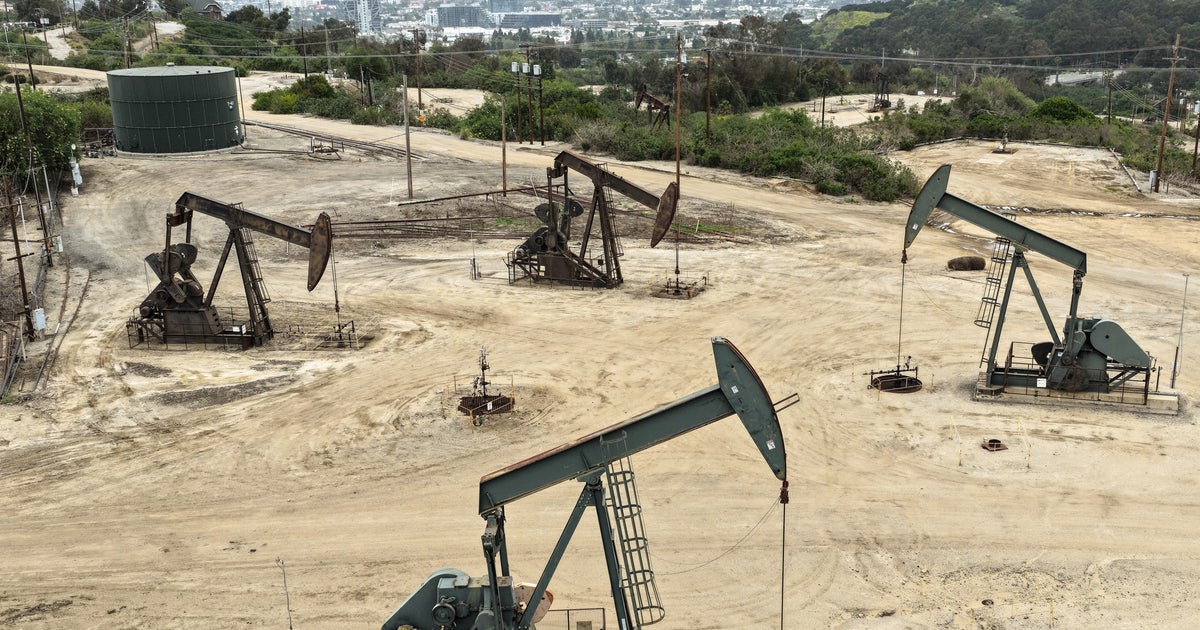
Americans are experiencing a painful reality at the pump these days. Despite the United States holding the title as the world’s largest oil producer, motorists are facing sharply increased fuel costs following the escalation of conflict with Iran. The numbers tell a striking story: according to the Energy Information Administration, the U.S. pumps out an impressive 13 million barrels of crude oil daily as of 2023. This production level significantly outpaces both Russia and Saudi Arabia, the world’s second and third-largest producers, each producing roughly 10 million barrels per day. Yet this production advantage hasn’t shielded American consumers from price shocks. The average national gas price has climbed to $3.79 per gallon, a dramatic increase from just $2.92 a month earlier, according to AAA data. Even more striking, diesel prices have rocketed past the $5 mark, reaching levels not seen since late 2022. This situation raises an obvious question: if America is producing so much oil, why are we paying more at the pump? The answer lies in the complex, interconnected nature of global oil markets and the technical realities of oil refining.
The Global Oil Market Sets the Price
The fundamental explanation for this seeming contradiction is surprisingly straightforward: oil is a global commodity, and its price is determined by worldwide supply and demand, not by individual countries’ production levels. Bernard Yaros, the lead U.S. economist at Oxford Economics, explains it plainly: “The global market sets the price. The provenance of the oil we’re filling our gas tanks with doesn’t matter.” This means that even though American oil fields are pumping out crude at record levels, domestic prices are still subject to the same market forces affecting consumers in Europe, Asia, and elsewhere. The United States operates as both a major exporter and importer in this global marketplace. Current data shows that America exports approximately 11 million barrels of its daily oil production to foreign buyers while simultaneously importing roughly 8 million barrels from other countries. This two-way flow might seem inefficient at first glance, but it reflects the economic realities of oil quality, refining capabilities, and global trade relationships. The U.S. remains the world’s biggest consumer of oil, and our energy needs are met through this complex web of international commerce rather than through a simple model of producing and consuming our own resources.
The Quality Mismatch Problem
A critical technical factor explains why the United States exports so much of what it produces while importing oil from other countries: not all crude oil is created equal, and our refineries aren’t equipped to process the type of oil we produce most abundantly. Much of the oil extracted from American soil is classified as “light” crude—the highest quality oil with the greatest demand on global markets. Light crude is easier to refine and produces more valuable products like gasoline and diesel. However, there’s a significant mismatch between what we produce and what our refineries can handle. Most U.S. refining capacity has been optimized over decades to process “heavy” crude, which is more viscous and requires different refining equipment and processes. Ernest Moniz, who served as U.S. Secretary of Energy under President Obama and now researches energy issues at MIT, explains that American refineries simply cannot be quickly or easily reconfigured to handle lighter, low-sulfur “sweet” grades of oil. Willy Shih, a supply-chain expert and professor at Harvard Business School, puts it in practical terms: “Oil from different places has different characteristics. Refineries in the U.S., along the Gulf Coast in Texas, are geared toward handling a particular type of crude oil from Venezuela.” This technical reality means that when Americans fill up their vehicles, they’re often using gasoline produced from imported oil that was refined at domestic facilities, even as U.S.-produced light crude is being shipped overseas to refineries designed to handle it.
The Ripple Effects Beyond the Gas Pump
The impact of rising oil prices extends far beyond what motorists pay at gas stations, creating a ripple effect throughout the economy that touches virtually every sector. One of the most immediately visible impacts has been on air travel, where jet fuel costs represent a significant portion of airlines’ operating expenses. When crude oil prices surge globally, jet fuel prices follow suit, and airlines have little choice but to pass these increased costs along to passengers through higher ticket prices. A recent analysis by Deutsche Bank provides stark evidence of this phenomenon. Their research into U.S. airline ticket prices found that domestic airfares for travelers booking flights later in March increased between 15% and 124%, depending on the route and timing. The increases have been particularly dramatic on certain routes: average fares for transcontinental flights have jumped over 100%, while prices for flights to popular destinations including the Caribbean, Florida, and transatlantic routes have also risen substantially. But the effects don’t stop with transportation. As Ernest Moniz succinctly observed, “If the price of oil goes up, the price of everything goes up.” Oil is fundamental to the modern economy—it powers trucks that deliver goods, fuels machinery that harvests crops and manufactures products, and serves as a feedstock for countless products from plastics to pharmaceuticals. When oil prices rise, these increased costs cascade through supply chains, eventually appearing as higher prices for groceries, manufactured goods, and services across the board.
The Reality of Energy Independence
The current situation highlights an important lesson about what “energy independence” actually means in practice. For years, politicians and energy analysts have discussed American energy independence as a strategic goal, and by some measures, the U.S. has achieved it. We produce more oil than we consume, making us a net exporter. However, this statistical independence doesn’t translate into insulation from global price shocks, as recent events have demonstrated. The interconnected nature of global oil markets means that significant disruptions anywhere in the world—whether from conflicts in the Middle East, production cuts by OPEC nations, or supply chain disruptions—affect prices everywhere, including in the United States. American oil producers, like producers everywhere, respond to price signals from the global market. When international prices rise, U.S. producers can sell their oil for higher prices, whether to domestic or foreign buyers. There’s no mechanism forcing American oil companies to sell their product domestically at below-market rates, nor would such a policy be practical or desirable in a market economy. Ernest Moniz underscores this reality: “Even though we are a net exporter of oil, that doesn’t change the fact that we are a major importer as well.” This dual role means American consumers remain vulnerable to the same geopolitical tensions and market dynamics that affect consumers worldwide, despite the impressive output of domestic oil fields.
Understanding Our Energy Future
The current situation offers valuable insights as policymakers and consumers consider America’s energy future. The mismatch between the type of oil we produce and our refining capacity represents both a challenge and an opportunity. Upgrading refineries to better handle light sweet crude would be expensive and time-consuming, but it could eventually reduce our dependence on heavy crude imports. However, such infrastructure changes take years to implement and require significant capital investment. Meanwhile, the volatility in oil prices serves as a reminder of the strategic value of diversifying our energy sources. The transition toward electric vehicles, renewable energy, and alternative fuels isn’t just about environmental concerns—it’s also about reducing vulnerability to oil market volatility. As more vehicles run on electricity generated from domestic sources like natural gas, coal, nuclear, wind, and solar, American consumers will become somewhat less exposed to international oil price fluctuations. However, this transition will take decades to substantially reduce oil’s dominance in transportation and industry. In the meantime, Americans must contend with the reality that being the world’s largest oil producer doesn’t shield us from global market forces. The price at the pump reflects complex factors including international tensions, the technical characteristics of different crude oil types, global refining capacity, and worldwide demand patterns. Understanding these factors won’t make filling up any cheaper, but it does explain the paradox of rising prices amid abundant domestic production.