

Trump Administration Intensifies National Campaign Against Medicaid Fraud in Florida
Expanding Federal Oversight to Combat Healthcare Abuse
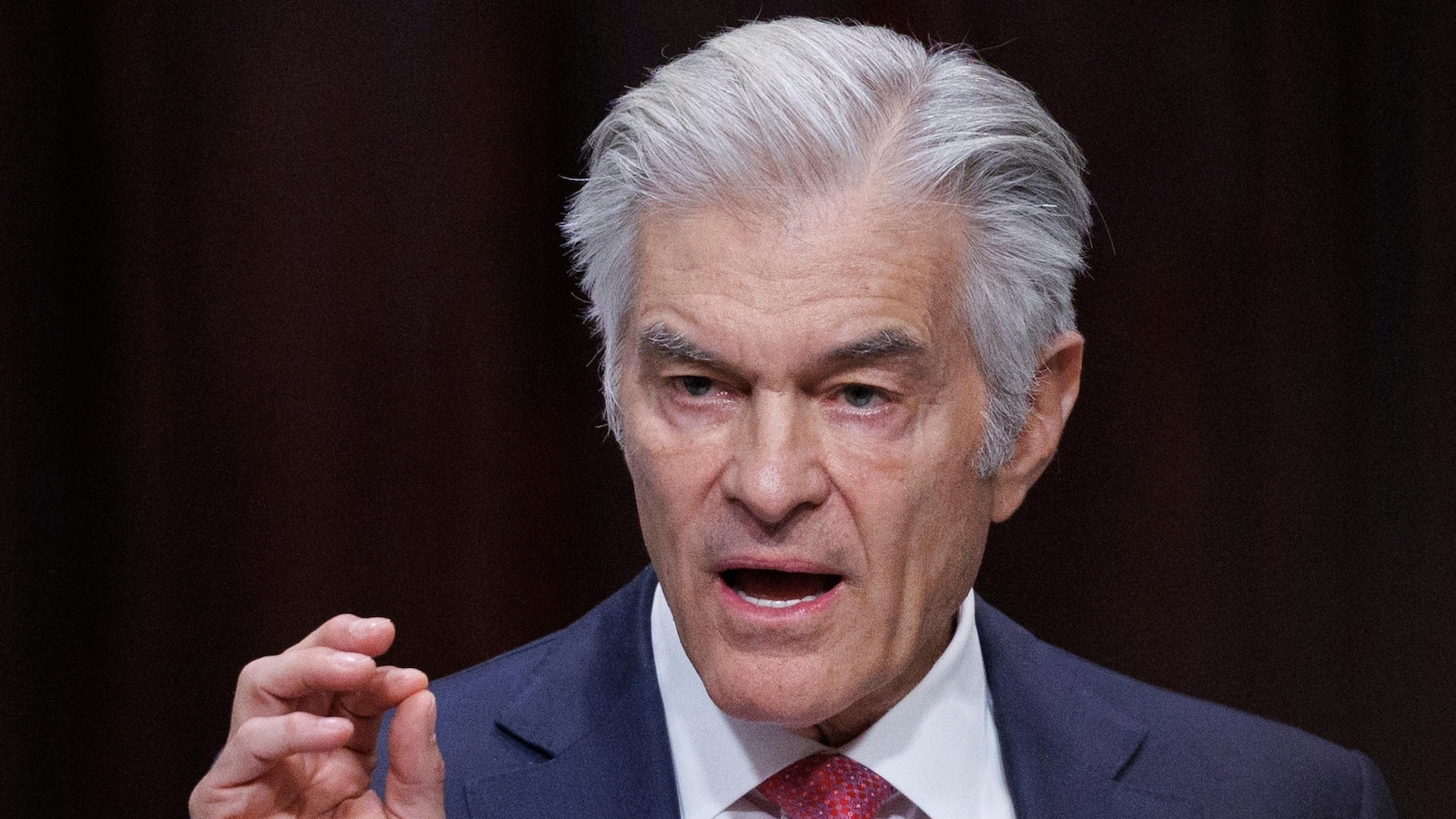
The Trump administration has significantly expanded its nationwide crackdown on Medicaid fraud, with Florida becoming the latest target in an increasingly aggressive campaign to root out healthcare program abuse. On Tuesday, Centers for Medicare and Medicaid Services Administrator Dr. Mehmet Oz dispatched a formal request to Florida officials demanding comprehensive information about how the state identifies, prevents, and addresses fraudulent actors within its Medicaid program. This marks the fifth state to receive such scrutiny this year, following similar requests sent to New York, Minnesota, Maine, and California. What makes Florida’s case particularly notable is that it represents the first time the administration has publicly targeted a Republican-controlled state, signaling that this initiative transcends partisan politics and demonstrates a commitment to holding all states accountable regardless of their political leadership. This strategic move comes at a critical time as President Trump ramps up his administration’s focus on fiscal responsibility and program integrity ahead of the November elections, responding directly to widespread voter concerns about government spending and the affordability of essential services.
Bipartisan Approach to Fighting Healthcare Fraud
The Florida investigation represents a watershed moment in the administration’s anti-fraud efforts because it demonstrates that political considerations won’t shield any state from federal scrutiny. By directing resources toward examining a state led by Governor Ron DeSantis, a prominent Republican figure, the administration is making a clear statement that healthcare fraud will be pursued aggressively without regard to partisan affiliation. Dr. Oz’s public announcement emphasized that Florida “has been a hotspot for health care fraud for years,” citing numerous past examples of elaborate, high-dollar fraud schemes that have plagued both the state’s Medicare and Medicaid programs and ultimately resulted in criminal charges. The administrator’s message was unequivocal: given the widespread scale and nature of these fraudulent operations, federal authorities need detailed information about how Florida oversees its programs and what measures are in place to prevent abuse. Florida Attorney General James Uthmeier responded positively to the federal inquiry, sharing recent examples of Medicaid fraud arrests in the state and acknowledging that “the Medicaid system is overwhelmed with fraud and abuse.” His cooperative response, stating that Florida looks forward to working with Dr. Oz on these critical issues, suggests that state officials recognize the severity of the problem and are willing to collaborate with federal authorities to address it comprehensively.
Presidential Leadership and the New Anti-Fraud Task Force
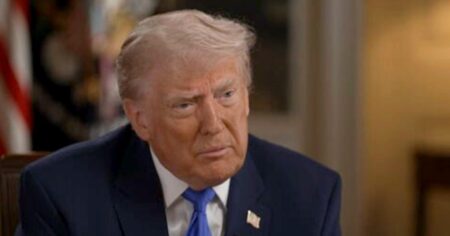
The heightened focus on Medicaid fraud comes directly from the highest levels of government, with President Trump signing an executive order just one day before the Florida announcement to establish a comprehensive anti-fraud task force covering all federal benefit programs. This new entity, which will be led by Vice President JD Vance, represents an unprecedented consolidation of anti-fraud efforts across multiple government agencies and programs. The timing of this initiative is strategically significant as the administration responds to mounting concerns among American voters about government efficiency, wasteful spending, and the overall affordability of healthcare and other essential services. With midterm elections approaching in November, the president has made it clear that tackling fraud, waste, and abuse in federal programs will be a centerpiece of his administration’s domestic policy agenda. This comprehensive approach goes beyond simple political messaging; it represents a fundamental restructuring of how the federal government monitors and enforces compliance in programs that serve millions of Americans and distribute billions of taxpayer dollars annually. By placing Vice President Vance at the helm of this task force, the administration has signaled that anti-fraud efforts will have direct access to the highest levels of decision-making and will be coordinated across traditional agency boundaries.
Florida’s Long History with Healthcare Fraud
Florida’s designation as a focal point for healthcare fraud is not new or surprising to those familiar with the landscape of medical billing abuse in the United States. The state has earned an unfortunate reputation over decades as a magnet for sophisticated fraud schemes that exploit the complexity of Medicare and Medicaid reimbursement systems. Dr. Oz specifically referenced this troubling history in his public statements, pointing to numerous cases where criminal prosecutions have exposed elaborate operations designed to bilk government healthcare programs out of substantial sums of money. These schemes have ranged from fake medical clinics billing for services never provided, to kickback arrangements where doctors receive payments for referring patients to specific facilities, to elaborate networks that manufacture false patient records and submit claims for expensive treatments that never occurred. The cumulative impact of these fraudulent activities extends far beyond the immediate financial losses to government programs; they undermine public trust in the healthcare system, drive up costs for legitimate providers and patients, and divert resources away from people who genuinely need medical care. Dr. Oz’s letter demands that Florida officials provide detailed information within 30 days, including comprehensive answers to specific questions about program oversight, detection methods, prevention strategies, and how the state responds when fraud is discovered.
Aggressive Enforcement Actions and State Responses
The Florida investigation is part of a broader pattern of increasingly aggressive enforcement actions that have already produced dramatic results in other states. Last month, CMS took the extraordinary step of completely halting Medicaid payments to Minnesota over fraud concerns, a decision that sent shockwaves through state government and healthcare provider communities nationwide. Minnesota’s Democratic Governor Tim Walz vehemently denounced this action as a politically motivated attack, but Dr. Oz stood firm, stating that federal funds would only resume flowing after the state implements “a comprehensive corrective action plan” that satisfies federal requirements. This hardline approach demonstrates that the administration is willing to use its most powerful leverage—controlling the flow of federal dollars—to compel state compliance with anti-fraud measures. Beyond state-specific actions, CMS has also implemented broader protective measures, including a six-month freeze on new Medicare enrollments for suppliers of durable medical equipment, prosthetics, orthotics, and other supplies used to treat chronic conditions or assist in injury recovery. This sweeping moratorium was designed to create a cooling-off period that would allow federal authorities to implement stronger verification procedures and address suspected patterns of improper billing that have been identified across multiple states and provider categories.
Looking Forward: Systemic Reform and Political Implications
The Trump administration’s multi-state campaign against Medicaid fraud represents more than just a series of isolated enforcement actions; it signals a fundamental shift in how the federal government approaches oversight of programs that annually distribute hundreds of billions of dollars to healthcare providers across the country. The coordination between Dr. Oz’s targeted state investigations and Vice President Vance’s new cross-agency task force suggests that the administration is building toward comprehensive systemic reforms that could permanently alter the landscape of healthcare program administration. For states like Florida that are now under scrutiny, the 30-day deadline to provide detailed information represents just the beginning of what is likely to be an extended period of heightened federal oversight, increased documentation requirements, and potentially significant changes to how Medicaid programs operate at the state level. The political implications of this campaign are complex and multifaceted: by targeting both Democratic and Republican-led states, the administration can legitimately claim to be pursuing fraud without partisan bias, but the aggressive tactics and public nature of these investigations also serve the administration’s broader messaging about government efficiency and fiscal responsibility. As the November elections approach, voters concerned about healthcare costs, government spending, and program integrity will be watching closely to see whether these high-profile anti-fraud efforts produce meaningful results in terms of recovered funds, criminal prosecutions, and sustainable reforms that protect taxpayer dollars while ensuring that legitimate beneficiaries continue to receive the healthcare services they need.