


The Karen Read Murder Trial: A Second Chance at Justice
The Case That Has Divided Massachusetts
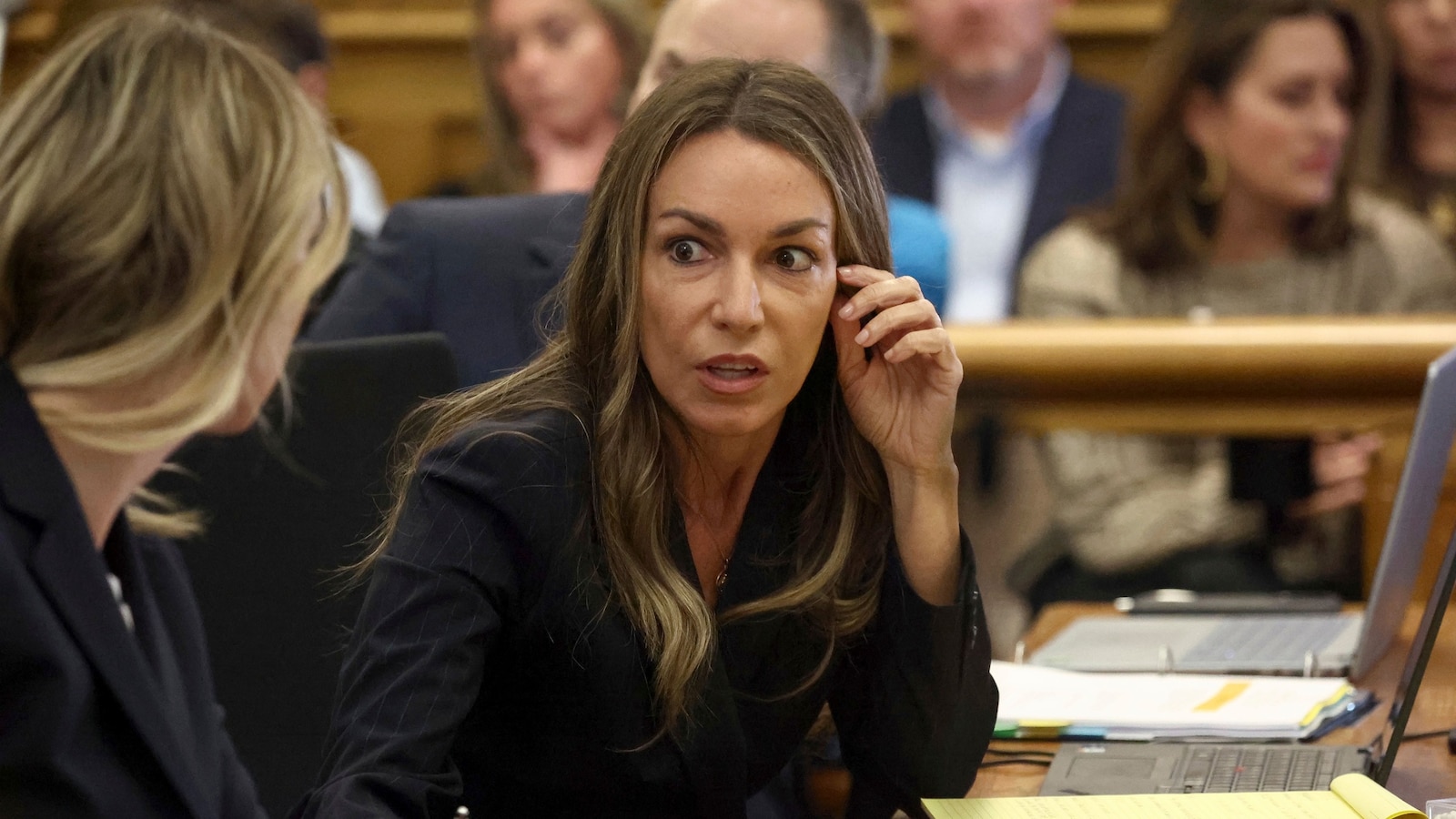
Karen Read finds herself back in a Massachusetts courtroom, facing murder charges for the second time in connection with the death of her boyfriend, Boston Police Officer John O’Keefe. After a jury failed to reach a verdict in her initial trial last year, the prosecution has decided to retry the case, keeping Read in legal limbo as she continues to maintain her innocence. The case, which has captivated public attention and sparked passionate debates about justice and law enforcement accountability, centers on the tragic events of January 2022, when O’Keefe was found dead on a lawn in Canton, Massachusetts, following a night of drinking. According to prosecutors, Read struck O’Keefe with her Lexus SUV outside a private residence and then fled the scene, leaving him to die in the cold from hypothermia and blunt force injuries to the head. However, Read’s defense team has consistently argued that she is the victim of a massive cover-up involving law enforcement officials, and that the real circumstances of O’Keefe’s death have been deliberately obscured. The stakes couldn’t be higher for Read, who faces charges of second-degree murder, vehicular manslaughter while operating under the influence of alcohol, and leaving the scene of a collision causing death.
The Prosecution’s Strategy: Using Read’s Own Words Against Her
Special prosecutor Hank Brennan opened the Commonwealth’s case by focusing heavily on statements Read herself has made to the media since the incident. In his opening statement at Norfolk County Superior Court in Dedham, Brennan announced his intention to present Read’s numerous media interviews as crucial evidence, claiming they contain what he characterizes as damaging “admissions.” He told jurors they would hear from Read’s “own lips” her acknowledgment of being extraordinarily intoxicated that night, her confirmation that she was driving the Lexus, and her admission to being angry at John O’Keefe. One particularly notable clip from an October 2024 interview showed Read saying, “I didn’t think I ‘hit him,’ hit him. But could I have clipped him, could I have tapped him in the knee and incapacitated him?” Brennan suggested these statements demonstrate consciousness of guilt and a gradual acknowledgment of responsibility for O’Keefe’s death.
Beyond Read’s statements, Brennan outlined the physical evidence the prosecution plans to present. He told jurors they would see extensive video footage and DNA evidence, including what prosecutors claim is O’Keefe’s hair recovered from Read’s vehicle bumper. The prosecution also plans to introduce data retrieved from Read’s Lexus that allegedly shows the vehicle reversed at least 70 feet around the time of the alleged murder. Throughout his opening statement, Brennan repeatedly drew attention to the broken taillight on Read’s vehicle, presenting it as perhaps the most damning piece of physical evidence linking her car to O’Keefe’s fatal injuries. The prosecution’s theory is straightforward: after a night of drinking and arguing, Read struck her boyfriend with her SUV in a moment of anger or impaired judgment, then left him lying in the snow where he succumbed to his injuries and the freezing temperatures.
The Defense’s Counter-Narrative: Corruption and Cover-Up
Defense attorney Alan Jackson presented a dramatically different version of events, one that paints Read not as a killer but as a scapegoat for a corrupt investigation. In his opening statement, Jackson flatly and repeatedly declared, “There was no collision with John O’Keefe.” He told jurors that the prosecution’s theory that O’Keefe was struck by Read’s SUV is “contrary to science,” and boldly stated, “John O’Keefe did not die from being hit by a vehicle, period.” Instead, the defense maintains that O’Keefe died under different circumstances entirely, and that law enforcement officials with personal connections to key witnesses have orchestrated a cover-up to protect the real culprits while framing Read for a crime she didn’t commit.
Jackson promised to demonstrate that the police investigation underlying the Commonwealth’s case is “riddled with errors” and compromised by conflicts of interest. He highlighted the personal relationships between investigating officers and witnesses in the case, particularly focusing on Boston Police Officer Brian Albert, who owned the residence where O’Keefe’s body was discovered. Most significantly, Jackson launched a blistering attack on former Massachusetts State Police Trooper Michael Proctor, the lead investigator in the case, whom he described as “a longtime family friend of the Alberts who has been disgraced by his own agency,” referring to Proctor’s dismissal from the state police. Jackson used particularly harsh language when discussing Proctor’s role, stating, “You’ll see from the evidence in this case that this case carries a malignancy, one that is spread through the investigation. It’s spread through the prosecution from the very start, from the jump, a cancer that cannot be cut out, a cancer that cannot be cured, and that cancer has a name. His name is Michael Proctor.”
The defense attorney promised to show jurors personal text messages between Proctor and his high school friends containing vulgar and sexist comments about Read, and alleged that Proctor admitted in these conversations to seizing Read’s cell phone without her permission and searching it for nude photos. This prosecutorial misconduct, Jackson argues, is evidence of a broader corruption that has infected the entire case. Proctor’s family responded forcefully to Jackson’s opening statement, calling it “yet another example of the distasteful, and shameless fabrication of lies that embodies their defense strategy” in a statement to local ABC affiliate WCVB. The family’s statement continued: “Jackson is under no oath to tell the truth; he does not have to speak in truths. The defense team continues to do anything to deflect from facts of the case and continues to use inappropriate analogies like casting someone as a cancer. We wholeheartedly believe the truth will prevail in this case, and justice for Officer John O’Keefe and his family will be achieved.”
Early Testimony Reveals Conflicting Accounts and Memory Issues
The Commonwealth called its first witness, Timothy Nuttall, a Canton firefighter and paramedic who provided medical assistance to O’Keefe at the scene. Nuttall’s testimony appeared to support the prosecution’s case, as he recalled hearing Read repeatedly say, “I hit him,” when he arrived. “She said, ‘I hit him, I hit him, I hit him,'” Nuttall testified. “I remember it very distinctly.” Such statements, if believed by the jury, could be interpreted as spontaneous admissions of guilt made before Read had time to construct a defense narrative.
However, during cross-examination, defense attorney Jackson skillfully highlighted inconsistencies in Nuttall’s recollection that may undermine his credibility. Jackson pointed out a discrepancy between Nuttall’s testimony in Read’s first trial, where he stated that Read said “I hit him” twice, and his current testimony, where he now claims she repeated the statement three times. Jackson pressed the witness on this point: “So your memory is clearer today, now, as you sit here, than it was a year ago, when you testified it was two times?” Nuttall responded affirmatively, saying “Yes, sir,” with a nod. This exchange illustrated the defense strategy of casting doubt on witness testimony by highlighting the malleability of human memory and the ways in which recollections can change or become embellished over time.
The prosecution’s next witness, Kerry Roberts, testified that she observed Read pointing to damage on her SUV’s taillight the morning O’Keefe was found, and recalled seeing a piece missing from it. Roberts was scheduled to continue her testimony on Wednesday, as the trial, expected to last six to eight weeks, was just beginning. The battle over the taillight evidence promises to be central to the case, with the prosecution arguing it proves Read’s vehicle struck O’Keefe, while the defense will likely argue that any damage could have occurred through other means or that the evidence has been manipulated or misinterpreted as part of the alleged cover-up.
Public Interest and Courthouse Tensions
The intense public interest in the Karen Read case was evident even before the trial began on Tuesday. Roughly two dozen protesters supporting Read gathered near the courthouse, demonstrating the passionate following she has developed among those who believe she is innocent and has been wrongfully accused. The case has become something of a cause célèbre, particularly among people skeptical of law enforcement and concerned about potential misconduct in the criminal justice system. Read’s supporters see her as a victim of corrupt police officers protecting their own, while O’Keefe’s family and supporters view her as a killer attempting to evade justice through conspiracy theories and character assassination.
To ensure a fair trial free from outside influence or intimidation, Judge Beverly Cannone ordered a 200-foot no-protest zone around the courthouse. Despite this clear directive, Massachusetts State Police arrested a man from Arlington on Tuesday morning after he was found “lingering and filming” within the restricted buffer zone. According to police, the man ignored multiple requests to leave the area, leading to his arrest on a trespassing charge. He was expected to be arraigned on Tuesday. This incident underscores the challenges of conducting a high-profile trial in the age of social media, where supporters and critics alike seek to document proceedings and influence public opinion. The six-to-eight-week trial ahead promises to be contentious, emotional, and closely watched, as prosecutors seek to convince a jury of Read’s guilt while her defense team works to demonstrate that she is the victim of a miscarriage of justice orchestrated by compromised law enforcement officials. For the family of John O’Keefe, the trial represents another painful chapter in their quest for answers about how and why their loved one died on that cold January night in 2022.