



NASA’s New Mission to Map Our Solar System’s Protective Shield
Understanding the Heliosphere and Its Importance
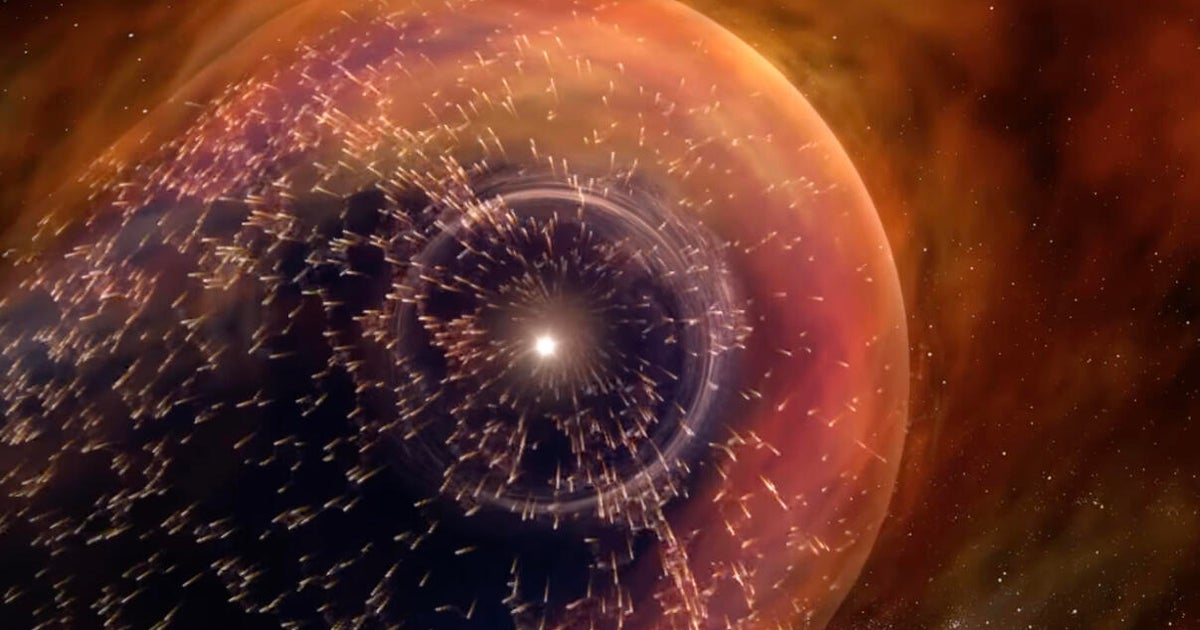
NASA has launched an ambitious new mission that could fundamentally change our understanding of how our solar system interacts with the broader universe. The Interstellar Mapping and Acceleration Probe, known as IMAP, has begun its journey to study and map the heliosphere—a massive protective bubble created by our sun that shields our entire solar system from the harsh conditions of interstellar space. Think of the heliosphere as Earth’s cosmic security blanket, stretching billions of miles in all directions and protecting us from dangerous radiation and particles that drift through the galaxy. This invisible shield has been safeguarding our planet and the entire solar system since the sun first ignited billions of years ago, yet we’re only now beginning to truly understand how it works and what it means for life on Earth.
The IMAP mission represents a significant leap forward in our ability to study this protective barrier. Over the next two years, the probe will use sophisticated scientific instruments to chart the boundaries of the heliosphere and investigate the complex processes occurring within it. The spacecraft is specifically designed to focus on three critical areas: high-energy particles that burst from the sun’s surface, the magnetic fields that form in the vast spaces between planets, and the cosmic dust left behind by stars that exploded long ago in distant parts of our galaxy. By studying these elements, scientists hope to piece together a comprehensive picture of how our solar system operates within the larger cosmic neighborhood and how the heliosphere maintains its protective function against the relentless stream of particles and radiation from interstellar space.
Answering Fundamental Questions About the Universe
This mission isn’t just about mapping—it’s about answering some of the most profound questions humanity has about our place in the universe. According to NASA, the spacecraft is studying the sun’s activity and examining how the boundary of the heliosphere interacts with what lies beyond in the local galactic neighborhood. This interaction zone, where the influence of our sun meets the forces of interstellar space, is one of the most mysterious and scientifically intriguing regions we can study. Scientists believe that understanding this boundary could unlock answers to fundamental questions about how stars influence their surrounding environments and how planetary systems like ours remain stable over billions of years.
The research conducted by IMAP addresses what NASA describes as “two of the most important overarching issues in heliophysics”—the study of the sun and its influence throughout the solar system. The first issue concerns how charged particles from the sun become energized as they travel through space, gaining tremendous speeds and energy that can affect everything from spacecraft electronics to astronaut safety. The second major question involves understanding exactly how the solar wind—the constant stream of particles flowing outward from the sun—interacts with interstellar space at the heliosphere’s boundary. These aren’t just academic questions; they have real-world implications for how we protect our technology and astronauts as we venture further into space and rely more heavily on satellite-based systems here on Earth.
Space Weather and Its Impact on Daily Life
One of the most practical applications of the IMAP mission involves understanding and predicting space weather—the conditions in space that can affect our technology-dependent society. Just as meteorologists track storms and weather patterns on Earth, space weather forecasters monitor solar activity and its effects throughout the solar system. The data from IMAP will provide crucial insights into how solar activity influences space weather patterns and help scientists understand the relationships between various solar phenomena, including solar flares, solar storms, and coronal mass ejections. These events, while occurring 93 million miles away on the sun’s surface, can have significant impacts on our daily lives, affecting everything from GPS navigation to power grids and satellite communications.
NASA has emphasized that tracking space weather and providing near-real-time observations about these conditions can be invaluable for forecasters who issue advanced warnings and alerts about potential adverse effects on spacecraft and astronauts. The National Oceanic and Atmospheric Administration’s Space Weather Prediction Center is already using data from the IMAP mission to provide updates on current space weather conditions. Just recently, in early Tuesday updates, the center warned about a strong solar flare that occurred Monday evening just before 7 p.m. Eastern Time. These solar flares are described by scientists as “eruptions of energy” from the sun’s surface, and when they’re as powerful as this recent event, they can potentially disrupt communications on Earth for several hours. As our society becomes increasingly dependent on satellite technology for everything from banking to emergency services, the ability to predict and prepare for these space weather events becomes more critical than ever.
A New Era of Solar Activity
The timing of the IMAP mission is particularly significant because it comes at a moment when the sun is entering a period of heightened activity after a long period of relative quiet. Shortly before the mission began, researchers identified a steady increase in solar activity following a decades-long lull in solar energy output. A study published in September revealed that the sun has become progressively more active over the past 16 years or so, marking a reversal of previous trends that scientists say could have important implications for both space weather and technology here on Earth. This increase in solar activity means we’re likely to see more frequent and potentially more powerful solar events, making the IMAP mission’s work even more urgent and valuable.
Understanding this shift in solar behavior is crucial for several reasons. First, it helps scientists refine their models of how the sun operates over long time scales, improving our ability to predict future solar cycles and their potential impacts. Second, it provides context for the space weather events we’re experiencing now and can expect in the coming years. Third, it offers insights into how similar stars throughout the universe might behave, expanding our knowledge beyond just our own solar system. The fact that we’re seeing this increase in solar activity after such a long quiet period raises important questions about what drives these cycles and whether we can expect similar patterns in the future. The data collected by IMAP during this active period will be invaluable for answering these questions and helping us prepare for whatever the sun might have in store.
Looking Toward the Future
As the IMAP mission progresses over the next two years, scientists and researchers around the world will be eagerly analyzing the data it sends back. This information will not only enhance our understanding of the heliosphere and solar activity but will also have practical applications that could affect millions of people. From improving the safety of space missions and protecting the health of astronauts to safeguarding the satellite infrastructure that modern society depends upon, the insights gained from this mission could prove invaluable in the years and decades to come. The mission also represents humanity’s growing capability to study and understand the cosmic environment in which we live, pushing the boundaries of our knowledge ever outward from Earth into the vast reaches of space.
The IMAP mission reminds us that space exploration isn’t just about visiting distant planets or searching for life elsewhere in the universe—it’s also about understanding our own cosmic backyard and the invisible forces that make life on Earth possible. The heliosphere, though intangible and largely invisible to us, is as crucial to our survival as Earth’s atmosphere or magnetic field. By mapping this protective bubble and understanding how it works, we’re not only satisfying human curiosity about the universe but also taking practical steps to protect our civilization as it becomes increasingly reliant on technology that can be affected by space weather. As we continue to push further into space, establishing permanent presences on the Moon and eventually Mars, the knowledge gained from missions like IMAP will become even more critical, helping us understand and navigate the cosmic environment that both protects and challenges us as we venture beyond our home planet.