


Paul George Faces 25-Game Suspension: What It Means for the 76ers Star and His Team
A Costly Mistake for the All-Star Forward
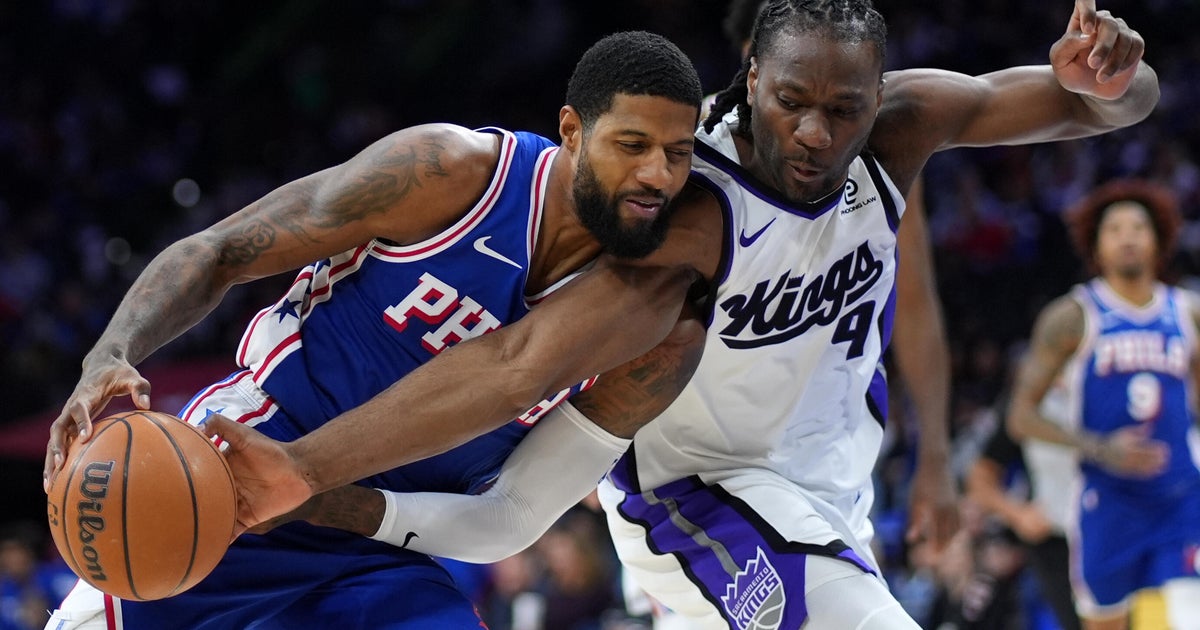
Philadelphia 76ers star Paul George is facing a significant setback in his season after the NBA announced a 25-game suspension for violating the league’s Anti-Drug Program. The news, which broke on Saturday, sent shockwaves through the basketball world, particularly among Sixers fans who were hoping their team could make a deep playoff run this year. While the NBA hasn’t revealed specific details about what substance was involved or the exact nature of the violation, the length of the suspension—25 games—tells us something important: according to the agreement between the NBA and the players’ union, this represents a first-time offense for the nine-time All-Star. For a player of George’s caliber and experience, this unexpected suspension represents not just a professional blow but also a personal disappointment that he’ll have to work through in the coming weeks.
The financial impact of this suspension is staggering. George will lose approximately $11.7 million of his $51.7 million salary, breaking down to roughly $469,691.72 for each game he misses. That’s nearly half a million dollars per game—a number that would make anyone’s head spin. Beyond the money, though, there’s the matter of reputation and team chemistry. George has been an established star in the league for years, known for his scoring ability, defensive prowess, and leadership. This suspension raises questions and creates uncertainty at a crucial point in the season when the Sixers are fighting for playoff positioning in the competitive Eastern Conference. CBS News reached out to George’s management team, the NBA, and the 76ers organization for additional comments, but the story continues to develop as fans and analysts try to understand the full scope of what happened.
George’s Explanation and Apology
In a statement released to ESPN, Paul George attempted to provide some context for what happened, though he remained somewhat vague about the specifics. According to George, he had been “seeking treatment for an issue of my own” when he “made the mistake of taking an improper medication.” This explanation suggests that whatever substance triggered the violation wasn’t taken recreationally or with any intent to gain a competitive advantage, but rather was connected to some personal health matter he was addressing. The statement indicates that George may have been dealing with a private health concern that required medical attention, and in the course of that treatment, he either took something without proper authorization or failed to go through the correct channels to get approval from the league for a medication he needed.
George’s apology was heartfelt and took responsibility for what he called “poor decision making.” He specifically addressed the Sixers organization, the fans who support the team, and his teammates who will now have to navigate a significant portion of the season without one of their key players. The veteran forward emphasized that he plans to use this time away from the court productively, focusing on getting himself in the best physical and mental condition possible so that when he returns, he can make a meaningful contribution to help the team. This kind of accountability is important, especially for a player in a leadership position. Rather than making excuses or deflecting blame, George owned his mistake and committed to making things right. For teammates like Tyrese Maxey and Joel Embiid, who are carrying heavy offensive loads, knowing that George is working hard to return in peak form provides at least some reassurance during a difficult time.
The Timeline and What the Sixers Will Miss
The suspension couldn’t have come at a worse time for Philadelphia. With the team currently sitting at 26-21 and holding the sixth seed in the Eastern Conference, every game matters as they try to improve their playoff positioning. George is scheduled to miss several crucial matchups against top Eastern Conference competitors—exactly the kind of games where having a player of his experience and talent would make the biggest difference. These aren’t just games against bottom-feeders; these are potential playoff preview matchups that could set the tone for postseason series down the road. The absence of George’s scoring, defense, and veteran presence will be felt acutely during this stretch.
If the timeline holds, George should be eligible to return on March 25, when the Sixers host the Chicago Bulls at home. By that point, the regular season will be in its final stretch, with only 10 games remaining before the playoffs begin. This creates a challenging situation for both George and the team. He’ll need to quickly reintegrate into the lineup, shake off any rust from missing nearly two months of action, and rediscover his rhythm and chemistry with his teammates—all while the team is making its final push for playoff seeding. The Sixers’ coaching staff will face difficult decisions about how to manage his minutes and role upon return. Do they bring him back slowly to ensure he’s ready for the playoffs, or do they need him at full strength immediately to secure a better seed? These are the kinds of questions that can define a season.
The Impact on Team Performance
Looking at the numbers, Paul George’s importance to the 76ers becomes crystal clear. The team’s record when he plays versus when he doesn’t tells a compelling story: Philadelphia is 16-11 in games where George takes the court, but just 10-10 when he’s absent. That’s a significant difference that translates to a much better winning percentage with him in the lineup. While the sample size of games without him isn’t enormous, it’s enough to show that the Sixers are a measurably better team when their veteran forward is available. Now, they’ll have to navigate 25 games—a substantial portion of the remaining schedule—without him, hoping that other players can step up and fill the void he leaves behind.
This season, George has been averaging 16 points per game across 27 appearances, making him the third-leading scorer on the team behind 2026 All-Star Game starter Tyrese Maxey, who’s putting up an impressive 29.4 points per game, and Joel Embiid, who’s averaging 25.7. While 16 points might not sound like superstar numbers compared to his backcourt and frontcourt partners, George’s contribution goes well beyond scoring. He provides crucial spacing with his three-point shooting, offers veteran playmaking and decision-making, and brings high-level perimeter defense that’s increasingly valuable in today’s NBA. Just earlier this week, he reminded everyone of what he’s capable of with a spectacular 32-point performance against Milwaukee, hitting nine three-pointers in a dominant display. That game showed that even in his mid-thirties, George can still take over when needed—making his absence even more painful for Philadelphia fans to swallow.
What This Means for the 76ers’ Championship Aspirations
The Philadelphia 76ers entered this season with championship aspirations, assembling a roster featuring multiple All-Stars and hoping that the combination of Embiid’s dominance inside, Maxey’s explosive scoring and playmaking, and George’s two-way versatility would be enough to compete with the best teams in the league. Now, those hopes face a significant test. Can the Sixers maintain their playoff positioning and continue developing chemistry without one of their big three for such an extended period? The Eastern Conference is brutally competitive this year, with several teams capable of making deep playoff runs. Every game matters when it comes to seeding, and the difference between having home-court advantage and playing on the road can be the difference between advancing and going home early.
The silver lining, if there is one, is that this adversity might force other players to step up and expand their roles, which could pay dividends later in the season. Young players might get opportunities they wouldn’t have otherwise received. Role players might discover they’re capable of more than anyone realized. Team chemistry might deepen as players band together in the face of this challenge. However, these are optimistic scenarios, and the reality is that losing a player of George’s caliber for 25 games is a massive blow that could derail a season. The coaching staff will need to adjust rotations, game plans, and defensive schemes. Maxey and Embiid will likely see their usage rates increase even further, which could lead to fatigue as the season grinds on. The margin for error becomes much smaller, and the Sixers will need everything to go right just to maintain their current position in the standings, let alone improve it. When March 25 arrives and George is eligible to return, the team he comes back to might look quite different from the one he left, and the road ahead to the playoffs will be that much steeper because of the ground they may have lost during his absence.