


America’s Bold Move to Break Free from Chinese Mineral Dominance
Understanding Project Vault: A Strategic Mineral Reserve
In a significant shift in America’s approach to national security and economic independence, President Trump has announced the creation of Project Vault, an ambitious $12 billion initiative designed to stockpile critical and rare earth minerals. This groundbreaking program represents one of the most substantial efforts in recent history to reduce American dependence on foreign mineral supplies, particularly from China. The project will be financed through a combination of a $10 billion loan from the U.S. Export-Import Bank and over $1 billion in private sector investment, creating a public-private partnership aimed at securing America’s technological and industrial future.
The minerals collected through Project Vault won’t simply sit in warehouses gathering dust. Instead, they’ll serve as a strategic reserve available to crucial American industries including automakers, defense contractors, technology companies, and various manufacturers who depend on these materials for their production processes. Think of it as a national safety net for the building blocks of modern technology – ensuring that American companies will have access to the materials they need even if international supply chains are disrupted or foreign suppliers decide to limit exports. This initiative reflects a growing recognition in Washington that control over these minerals represents not just an economic issue, but a matter of national security and technological sovereignty.
The Critical Mineral Crisis: America’s Dependency Problem
The numbers paint a sobering picture of America’s vulnerability when it comes to mineral supplies. According to White House data from 2024, the United States was completely dependent on imports for 12 critical minerals, with no domestic production whatsoever. Even more concerning, America imported at least half of its supply for 29 additional minerals. This means that for dozens of materials essential to modern manufacturing and technology, the United States lacks the ability to be self-sufficient and must rely on the goodwill and stability of foreign suppliers.
This dependency creates multiple risks for American economic and national security. If a major supplier decides to restrict exports – whether for political leverage, economic advantage, or due to domestic priorities – American industries could face severe shortages that would ripple through the economy. Manufacturing could slow or stop, defense projects could be delayed, and the production of everything from smartphones to fighter jets could be compromised. China, which dominates the global rare earth mineral market, has demonstrated a willingness to use this leverage in geopolitical disputes, making the current situation particularly precarious for the United States and its allies.
What Makes These Minerals So Critical?
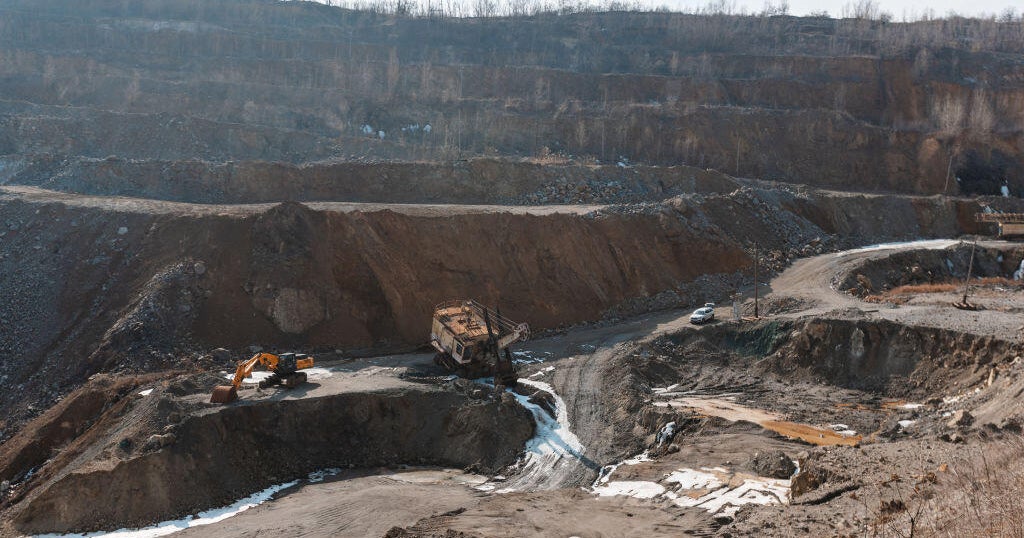
The minerals targeted by Project Vault include cobalt, graphite, silicon, copper, nickel, titanium, and lithium – names that might not mean much to the average person but are absolutely essential to modern life. These materials form the backbone of contemporary technology and industry, appearing in products and applications that define our era. Lithium and cobalt, for instance, are crucial components in the rechargeable batteries that power electric vehicles, laptops, and smartphones. Without adequate supplies of these minerals, the transition to electric transportation that many governments and companies are pursuing would grind to a halt.
Silicon serves as the foundation for semiconductors, the tiny chips that act as the brains of computers, phones, cars, appliances, and countless other devices. The recent global semiconductor shortage demonstrated just how vulnerable modern economies are when these supply chains are disrupted. Copper remains essential for electrical wiring and motors, while nickel plays a vital role in stainless steel production and battery technology. Titanium, prized for its strength-to-weight ratio, is critical in aerospace applications and military equipment. Graphite is used in everything from batteries to lubricants to advanced manufacturing processes. Together, these minerals represent the raw materials that make modern technology possible, and securing access to them is essential for maintaining industrial capability and technological advancement.
Trump’s Mineral Diplomacy: Negotiating for Resources
President Trump has demonstrated an intense and sustained focus on securing access to critical minerals, incorporating this issue into diplomatic negotiations with multiple countries and making it a cornerstone of his approach to economic security. The administration has engaged in discussions with Ukraine and Australia, both mineral-rich nations, specifically addressing access to critical minerals as part of broader bilateral relationships. These negotiations reflect a strategic understanding that trade agreements and diplomatic partnerships in the 21st century must account for the materials that power modern economies, not just traditional commodities.
Perhaps most notably, Trump has repeatedly expressed interest in Greenland, the autonomous Danish territory that sits atop vast reserves of rare earth minerals and other valuable resources. While the idea of acquiring Greenland has been treated skeptically or even mockingly by some observers, it reflects a clear-eyed assessment of where strategic value lies in the modern world. Greenland’s mineral wealth, largely untapped due to harsh conditions and environmental concerns, represents a potential game-changer for whichever nation can access it. By raising the possibility of American involvement in Greenland, whether through outright acquisition, partnership agreements, or development deals, Trump has signaled that securing mineral supplies isn’t just a commercial consideration but a matter worthy of high-level diplomatic attention and creative thinking about what America’s strategic interests require.
The China Factor: Navigating a Complex Rivalry
The creation of Project Vault cannot be understood without considering the broader context of U.S.-China relations and Beijing’s dominant position in the global critical minerals market. China has systematically built a commanding position in the mining, processing, and refining of rare earth elements and other critical minerals over the past several decades. This wasn’t accidental – it represented a deliberate strategy by Chinese leadership to control the resources that would be essential to 21st-century technology. Today, China controls the vast majority of global rare earth processing capacity, giving Beijing significant leverage over countries and industries that depend on these materials.
This dominance has repeatedly become a factor in geopolitical tensions. China has previously restricted rare earth exports to Japan during a diplomatic dispute, demonstrating a willingness to weaponize its mineral advantage. As trade tensions between Washington and Beijing have intensified, the vulnerability created by American dependence on Chinese minerals has become increasingly apparent to policymakers. Project Vault represents an effort to reduce this leverage and ensure that Chinese control over mineral supplies cannot be used to pressure American companies or limit U.S. foreign policy options. By creating a domestic stockpile and presumably encouraging development of alternative supply chains, the initiative aims to give the United States greater freedom of action in its ongoing economic and strategic competition with China. As both nations continue to navigate complex trade waters, with tariffs, technology restrictions, and investment limitations creating friction, having secure access to critical minerals becomes not just economically important but essential to maintaining negotiating leverage and national autonomy.
Looking Forward: The Long-term Impact of Mineral Independence
Project Vault represents more than just a stockpile of rocks and metals – it’s a statement about how America views economic security in an increasingly competitive and sometimes hostile global environment. The initiative acknowledges that true sovereignty requires not just military strength or diplomatic skill, but control over the fundamental materials that enable industrial production and technological innovation. By investing billions in securing these materials, the Trump administration is betting that the future will belong to nations that can guarantee their industries access to critical inputs regardless of international political winds.
The success of this initiative will depend on numerous factors including effective procurement strategies, proper storage and management of the materials, fair distribution systems to ensure strategic industries have access when needed, and continued political will to fund and maintain the program across multiple administrations. If successful, Project Vault could serve as a model for other nations seeking to reduce their own dependencies and could potentially reshape global mineral markets by creating a major new buyer with different priorities than purely commercial purchasers. For American workers and companies, the program promises greater stability and security, ensuring that production won’t be held hostage to foreign political decisions. For the broader economy, it represents an insurance policy against supply disruptions that could otherwise cascade through multiple industries. As technology continues to advance and new applications for these minerals emerge, having a strategic reserve could prove to be one of the most far-sighted policy decisions of this era, positioning America to lead in the industries that will define the coming decades.