
DHS Secretary Noem Faces Congressional Scrutiny Amid Ongoing Shutdown
Department Remains Partially Closed as Political Standoff Continues
The Department of Homeland Security finds itself in an unprecedented crisis as the partial government shutdown stretches into its third week, with no clear resolution in sight. What began on February 14th as a political disagreement over immigration reform has evolved into a full-blown standoff between Democrats and Republicans, leaving thousands of federal workers without paychecks and critical government functions operating under strain. While Secretary Kristi Noem appeared before congressional committees this week to defend the administration’s policies, the human cost of the shutdown continues to mount. Workers at agencies including Immigration and Customs Enforcement (ICE), Customs and Border Protection (CBP), the Federal Emergency Management Agency (FEMA), the Transportation Security Administration (TSA), and the Coast Guard are being asked to perform their duties without compensation, creating financial hardship for families across the country who depend on these paychecks to pay mortgages, buy groceries, and maintain their standard of living.
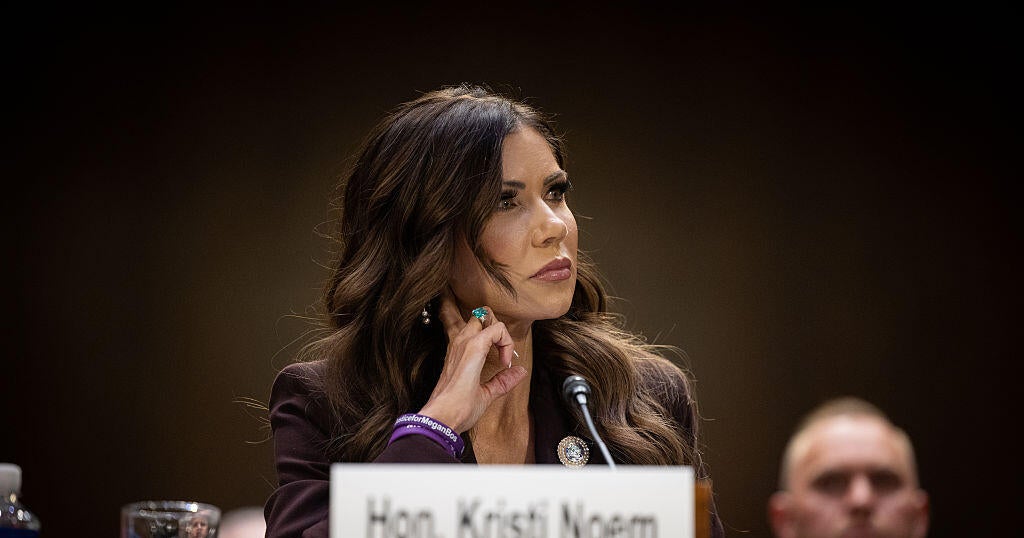
During her Tuesday testimony before the Senate Judiciary Committee, Secretary Noem didn’t mince words in assigning blame for the shutdown, calling Democrats’ refusal to support DHS funding legislation both “reckless” and “unnecessary.” She emphasized the very real human impact of the political impasse, stating that the funding lapse “harms the men and women who work at DHS and their families.” Despite weeks of proposals being exchanged between Democrats and the White House regarding immigration reform, both sides remain entrenched in their positions, with neither showing signs of willingness to compromise. The House has scheduled a vote later this week on a measure to fund the department, representing yet another attempt by GOP leaders to apply pressure on their Democratic colleagues. However, early indications suggest Democrats have little intention of changing their stance, especially after a similar effort failed to gain traction in the Senate just last week. Interestingly, despite the broader shutdown affecting DHS operations, the Trump administration’s immigration enforcement initiatives have continued uninterrupted, thanks to funding ICE and CBP received through the One Big Beautiful Bill Act passed last year.
Bipartisan Criticism Emerges During Senate Testimony
What should have been a routine oversight hearing instead became a grueling examination of Secretary Noem’s leadership and decision-making, with criticism coming not just from the expected Democratic opponents but also from within her own party. The Tuesday Senate Judiciary Committee hearing revealed deeper fractures in Republican support for the administration’s approach to immigration enforcement than previously visible to the public. While the majority of Republican senators voiced their backing for the administration’s overall immigration policies, two prominent GOP members—Senator John Kennedy of Louisiana and Senator Thom Tillis of North Carolina—broke ranks to deliver pointed criticisms of the Secretary’s performance and judgment.
Senator Kennedy focused his questioning on what he characterized as questionable spending priorities and inflammatory rhetoric. He challenged Secretary Noem to explain the decision to allocate millions of taxpayer dollars to produce television advertisements that prominently feature her, raising questions about whether these expenditures serve a legitimate government purpose or merely function as taxpayer-funded self-promotion. He also pressed her on controversial statements she made linking two individuals, Alex Pretti and Renee Good, to domestic terrorism—comments that would become a central point of contention throughout both days of testimony. However, it was Senator Tillis who delivered the most devastating critique of the DHS secretary. Rather than using his allotted time for traditional questioning, Tillis conducted what he explicitly termed a “performance evaluation” of Noem’s tenure. His assessment was unsparing: “What we’ve seen is a disaster under your leadership,” he stated flatly. The North Carolina senator went beyond mere criticism, issuing a concrete threat to obstruct the Trump administration’s agenda by blocking nominees and grinding Senate business to a halt until Noem provides satisfactory answers to his questions and addresses what he characterized as stonewalling of congressional investigations.
Minnesota Crackdown and Fatal Shootings Dominate Democratic Questioning
Democratic senators concentrated their questioning almost exclusively on the controversial immigration enforcement operation in Minneapolis and the tragic deaths of Alex Pretti and Renee Good during that crackdown. The fatal shootings have become symbolic of broader concerns about the administration’s approach to immigration enforcement, with critics arguing that aggressive tactics and militarized responses create dangerous situations for both immigrants and bystanders. Throughout the hearing, Democratic members gave Secretary Noem multiple opportunities to apologize for or walk back her initial characterization of the deceased individuals as connected to domestic terrorism—a claim made shortly after their deaths that many viewed as insensitive at best and potentially defamatory at worst.
Each time the opportunity was presented, Secretary Noem declined to offer an apology or acknowledge that her comments might have been inappropriate or premature. Instead, she offered measured expressions of sympathy, stating that she offered her condolences to the families of those who died. Her defense of her actions focused on her commitment to transparency and accuracy, as she pledged to “continue everyday to get up and to work hard to give everybody factual information.” This response, however, seemed to satisfy neither her Democratic critics nor some of her Republican colleagues, who viewed it as insufficiently contrite given the circumstances. The controversy surrounding the Minnesota operation has highlighted fundamental disagreements about how immigration enforcement should be conducted, with Democrats arguing for more measured, community-based approaches and the administration defending its more aggressive tactics as necessary to fulfill its mandate to enforce immigration laws.
Parallel Hearings Create Split-Screen Drama on Capitol Hill
Adding another layer of complexity to Wednesday’s proceedings, Congress orchestrated what amounted to a split-screen political drama, with Secretary Noem testifying before the House Judiciary Committee at the same time Minnesota Governor Tim Walz and Minnesota Attorney General Keith Ellison appeared before the House Oversight Committee. This simultaneous scheduling created a striking contrast, with federal officials defending the Minneapolis immigration crackdown in one hearing room while state officials from Minnesota testified about what they characterize as federal overreach and mismanagement in another. The Oversight Committee hearing, scheduled for 9 a.m., focused nominally on Minnesota fraud issues, but given the current political climate and the prominent role Minnesota has played in recent immigration enforcement controversies, observers expected the questioning to touch on broader issues of federal-state cooperation and conflict.
This wasn’t Attorney General Ellison’s first appearance before Congress regarding these matters. He previously testified at a Senate hearing last month alongside the leaders of ICE, CBP, and U.S. Citizenship and Immigration Services. That earlier hearing, which focused specifically on the surge of federal immigration agents into Minnesota, devolved into a finger-pointing exercise, with federal officials blaming state and local authorities for failing to cooperate with immigration enforcement efforts, while state officials accused the federal government of conducting the operation without adequate coordination, planning, or regard for public safety. The decision to hold these parallel hearings reflects the deep political divisions over immigration policy and enforcement, with each side seeking to use congressional oversight as a platform to advance their competing narratives about what went wrong in Minneapolis and who bears responsibility for the tragic outcomes.
Political Implications and the Path Forward
The contentious hearings and ongoing shutdown reveal a government deeply divided not just along partisan lines but increasingly within parties as well. The willingness of Republican senators like Kennedy and Tillis to publicly criticize a cabinet secretary from their own party’s administration signals potential erosion of the unified support the Trump administration has typically enjoyed from GOP lawmakers on immigration issues. This fracturing could have significant implications for the administration’s ability to advance its legislative agenda and maintain control over the narrative surrounding its signature policy initiatives. Senator Tillis’s threat to obstruct nominees and Senate business is particularly significant, as it demonstrates that at least some Republicans view Secretary Noem’s performance as sufficiently problematic to justify extraordinary procedural measures typically associated with minority-party obstruction.
For the thousands of DHS employees working without pay, the political maneuvering and heated rhetoric offer little comfort. As the shutdown enters its third week with no breakthrough apparent, these workers face mounting financial pressure and growing uncertainty about when they might receive the paychecks they’ve earned. The irony that immigration enforcement continues well-funded while other critical DHS functions—including disaster response through FEMA, transportation security through TSA, and maritime safety through the Coast Guard—operate in crisis mode has not been lost on critics of the administration’s priorities. As both chambers of Congress continue their oversight activities and attempt to find a path toward funding the department, the American people are left watching a government that appears more focused on assigning blame than solving problems, more invested in political theater than in the practical work of governance. Whether the intensity of this week’s hearings will finally catalyze movement toward a compromise or simply harden existing positions remains to be seen.