
Trump’s Iran Strikes Create Deep Divisions Within MAGA Movement
A Growing Rift Among Trump’s Most Loyal Supporters
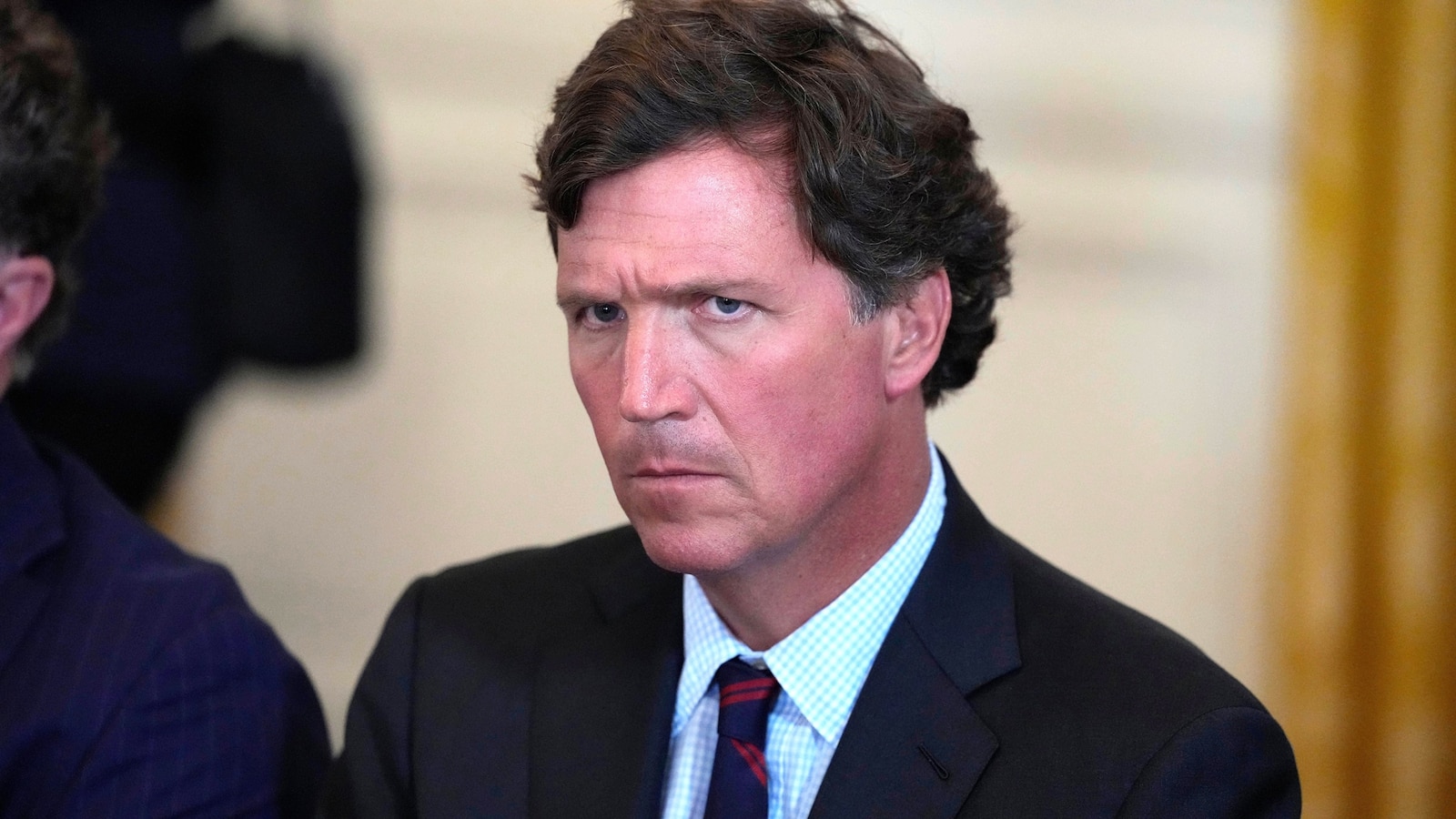
President Donald Trump’s recent military strikes against Iran have opened up unexpected fault lines within his most devoted base of supporters. What began as unified enthusiasm for his 2024 campaign has transformed into a surprisingly public debate among influential MAGA voices about the direction of American foreign policy. High-profile supporters like longtime adviser Steve Bannon, conservative media personalities Tucker Carlson, and Megyn Kelly have openly criticized the administration’s approach to Iran, marking a rare moment of dissent within a movement typically known for its unwavering loyalty to Trump. These critics represent some of the most powerful megaphones in conservative media—voices that helped propel Trump back to the White House by championing his promises to avoid foreign intervention and endless Middle Eastern conflicts.
The concern among these critics centers on several troubling patterns they’ve observed since the strikes began. First, there’s the issue of constantly shifting justifications from the administration about why the strikes are happening and what they’re meant to achieve. Second, Trump officials have provided no clear endgame or definition of what victory would look like. Third, there’s the haunting specter of another “forever war” in the Middle East, reminiscent of the conflicts that defined the George W. Bush era. Finally, many supporters are questioning why American resources are being spent overseas when they believe those resources should be addressing problems at home—a cornerstone promise of Trump’s “America First” agenda. According to Natalie Winters, the White House correspondent for Bannon’s War Room program, Trump has “a maximum of a month” before his base starts viewing this as just another dragged-out conflict that contradicts everything he promised on the campaign trail.
The Timeline That Keeps Moving
The shifting timeline for military operations in Iran has become particularly troublesome for Trump’s supporters who backed him specifically because of his anti-interventionist stance. Initially, President Trump suggested the operation was “ahead of schedule” and would wrap up in “four weeks—or less,” painting a picture of a swift, decisive action that would quickly resolve the situation without becoming entangled in prolonged conflict. However, as days have passed, administration officials have begun signaling that Americans should prepare for something much longer and more complex. Secretary of Defense Pete Hegseth made waves when he declared that the operation had “only just begun,” telling reporters that “Iran is hoping that we cannot sustain this, which is a really bad miscalculation.” By Wednesday, Hegseth was floating the possibility of an eight-week conflict or even longer, representing the most extended timeline the Trump administration has offered thus far.
For a political base filled with influential and exceptionally vocal personalities who supported Trump largely because of his explicit promise to avoid not just foreign intervention but specifically “forever wars,” this evolving timeline has become a troubling countdown clock. Every extension, every hedged statement, every vague reference to an undefined endpoint reinforces their worst fears—that despite all the campaign promises, despite all the rhetoric about putting America first, they’re watching the early stages of exactly the kind of open-ended military commitment they thought they had voted against. The confusion is compounded by contradictory messaging from administration officials. As Winters points out, “They tell us it’s regime change, but not regime change. It’s a war, but it’s not a war. But we can’t rule out boots on the ground. And if we want it to be a forever war, it can be a forever war, but it’s not a forever war.” This lack of clarity has left even sympathetic supporters struggling to defend the administration’s position.
Generational and Ideological Fault Lines
The opposition to Trump’s Iran policy isn’t uniform across his coalition—instead, it reveals fascinating generational and ideological divisions within the MAGA movement itself. Jack Posobiec, a popular MAGA commentator and Turning Point Action official, explained to ABC News that Trump’s 2024 victory was built on two distinct voter groups: the traditional Republican base that has supported the party for decades, and a newer wave of younger, low-propensity voters who had never seriously engaged in politics before. This second group includes the podcast listeners, sports fans, and digital natives that the Trump campaign specifically targeted and successfully brought into the political fold ahead of the November election. According to Posobiec, it’s precisely this second, younger demographic where the Iran strikes are causing the most significant problems.
“For the younger end of the spectrum inside MAGA, foreign intervention is just off the radar. It’s not something they want to see because they see it as prioritizing foreign interests over populist interests,” Posobiec explained. These younger supporters want to see economic relief as the number one priority. They’re interested in accountability on issues like the Epstein files, arrests of corrupt officials, deportations, and other domestic concerns—but anything involving foreign military intervention simply doesn’t align with their political priorities or worldview. Posobiec noted that around age 40 or 45, you begin to see the split moving in the other direction, with older MAGA supporters showing more support for the president’s aggressive foreign policy actions. This generational divide reflects deeper differences in political formation and memory. Younger MAGA supporters, even those who weren’t politically conscious during the Iraq War, have grown up in the shadow of what they perceive as the catastrophic foreign policy failures of the Bush administration. “There’s this huge shadow cast over anything to do with military intervention because of the Bush years. People just have massive indigestion over that,” Posobiec said, though he added that as a veteran himself, he understands those concerns while also believing that “Donald Trump is not George W. Bush. JD Vance is not Dick Cheney. You got to give them some credit for that.”
The Counter-Offensive: Defending Trump at All Costs
The growing criticism hasn’t gone unanswered within MAGA world. A fierce counter-offensive has emerged, led by voices determined to defend Trump’s Iran policy and attack those questioning it. Perhaps no one has taken on this role more aggressively than Laura Loomer, the far-right activist who, despite her own history of occasionally criticizing the administration, has positioned herself as the movement’s most visible defender against internal dissent. Loomer has been relentless in her support for the Iran operation, lavishing praise on Trump’s decisions while launching pointed attacks against MAGA personalities who have expressed concerns. “A lot of these people are not even Trump supporters. They build up audiences lying to people, pretending like they’re conservative,” Loomer claimed, dismissing critics as opportunists rather than genuine believers.
Loomer’s influence was dramatically demonstrated when President Trump personally called her to discuss the Iran situation. According to Loomer, Trump had spent the day on the phone with world leaders and military generals but wanted to reach out specifically to thank her for her public support. During their conversation, Loomer says Trump asked her how the strikes were being received among his supporters, telling her, “What are people saying about it? I believe there’s overwhelming support for this.” While Loomer agreed there was substantial support, she also informed Trump about criticism from figures like Tucker Carlson, who had called the strikes “absolutely disgusting and evil” in an interview with ABC News’ Jonathan Karl. Remarkably, Loomer claims Trump wasn’t aware of Carlson’s harsh criticism at that point, and she sent him information about what both Carlson and Megyn Kelly had been saying. Shortly afterward, Trump began publicly dismissing these critics, telling an interviewer that “MAGA’s not the other two,” referring to Carlson and Kelly, and later stating that “Tucker has lost his way” and “is not MAGA.” Loomer triumphantly posted “Loomered” on social media, taking credit for the subsequent blowback against Carlson.
Political Calculations and Midterm Concerns
Beyond the ideological debates, there are hard political calculations at play. Curt Mills, executive director of The American Conservative, warned that the longer the Iran operation continues, the more it will damage Trump’s standing not just with his core supporters but with the broader coalition that brought Republicans to power. “It all depends on how long the war goes,” Mills said. “I think you are going to see this start eating into Trump’s approval rating, beyond his core MAGA supporters.” The potential political damage extends directly to upcoming Senate midterm races, where enthusiasm and turnout among Trump’s coalition could determine whether Republicans maintain or expand their majority. Mills specifically pointed to the Texas Senate race, where the Republican primary between Senator John Cornyn and Texas Attorney General Ken Paxton is headed for a runoff, as an example of how war fatigue could shift electoral outcomes.
Several MAGA influencers have tried to dismiss the entire controversy as manufactured by liberal media or as the complaints of a tiny, unrepresentative minority. Podcaster and former FBI deputy director Dan Bongino told his audience, “This is all bullshit, doomer, black pilled, liberal media bullshit designed to fracture you before an election, to drive down approval ratings and voter enthusiasm, so Republicans lose and Donald Trump can get impeached.” Some defenders argue that pointing to a handful of critical podcasters doesn’t represent meaningful opposition within the movement. But Mills and others reject this characterization entirely. “I think it’s nonsense,” Mills said. “Say what you will, if you even took the extreme cynical view of Carlson, Bannon, Kelly—they’re businessmen. And they wouldn’t be doing this if there wasn’t a large audience for the message.” Mills argues that the real danger isn’t massive defection but “demoralization at the margins”—the 50,000 voters who simply don’t show up in a critical swing state, which could be enough to flip an election. “You lose 50,000 people who just don’t show up—you lose Georgia,” he warned.
Foundational Principles at Stake
What makes this internal MAGA conflict particularly significant is that it touches on principles many supporters consider foundational to the movement’s identity. When Natalie Winters appeared on Bannon’s War Room to offer what she considered measured criticism—saying “I’m as MAGA as it gets. We love Trump, but it’s fair to ask for clarity” and “If this turns into another dragged out kinetic conflict, that’s not what we voted for”—she was shocked by the immediate and harsh backlash she received online. The response revealed just how raw these tensions have become, with supporters accused of disloyalty for asking basic questions about military strategy and objectives. Winters noted the irony that “the debate over the Epstein files created more political blowback on the administration than what they’re doing in Iran, standing on the brink of a potential forever war.” The fact that the base hasn’t been more outraged about potential military escalation, she suggests, is remarkable given that opposition to endless foreign wars is “a tenant that’s foundational to MAGA.”
This moment represents a genuine test of what MAGA really means and whether the movement’s principles can withstand collision with the complex realities of governing. For years, Trump and his supporters defined themselves in opposition to the foreign policy establishment, criticizing both Republican and Democratic administrations for squandering American lives and resources in Middle Eastern conflicts that seemed to have no end and no clear purpose. The promise was simple: America First meant focusing on problems at home, not abroad. Now, with Trump back in power and military operations expanding in Iran, his most loyal supporters are grappling with an uncomfortable question—does their allegiance belong to the man or to the principles he claimed to represent? The answer to that question, and how this internal debate resolves, may well determine not just the success of Trump’s current term but the future direction of the American conservative movement itself.