


The Battle Over Tokenized Stocks: Why Synthetic Versions Are Raising Red Flags
Major Financial Players Sound the Alarm on Unregulated Stock Tokens
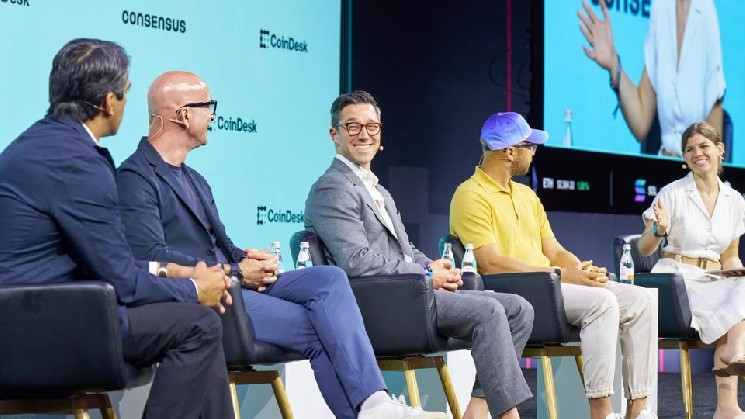
The world of tokenized securities is at a crossroads, and some of the biggest names in traditional and digital finance are speaking out about the risks they see ahead. During a recent panel discussion at Consensus Miami, executives from Intercontinental Exchange (ICE)—the company that owns the venerable New York Stock Exchange—alongside representatives from cryptocurrency exchange OKX and blockchain securities platform Securitize, issued a stark warning about the proliferation of synthetic tokenized stocks. These digital representations of company shares, they argue, are creating significant dangers for both the broader market and everyday retail investors who may not fully understand what they’re buying.
The concern centers on a fundamental question: when you buy a tokenized version of a stock, what exactly are you getting? According to these industry leaders, many of the tokenized stock products currently available—particularly those operating from offshore jurisdictions—don’t actually represent real ownership in the underlying companies. Instead, they’re essentially derivatives or wrappers that claim to track stock prices without the backing, approval, or even awareness of the companies whose names they bear. This disconnect between what investors think they’re buying and what they’re actually getting could set the stage for serious problems down the line, especially when corporate events like stock splits, dividends, or mergers occur.
The NYSE’s Approach: Playing It Safe With a Regulated Foundation
In contrast to these questionable offshore products, ICE is taking a decidedly more cautious and regulated approach as it moves forward with its own platform for tokenized U.S. equities. Michael Blaugrund, who leads strategic initiatives at ICE, acknowledged during the panel that the NYSE’s initial offering might not be the most exciting or feature-rich product on the market. The first version of their platform will start with what he called a pre-funded model—essentially, tokenized versions of actual stocks that will trade against stablecoins (cryptocurrencies designed to maintain a stable value, typically pegged to the U.S. dollar).
Blaugrund admitted this approach isn’t “the sexiest way” to build a market for tokenized securities, but there’s method behind the conservatism. By starting with a straightforward, fully-backed model, ICE is giving all the key stakeholders—the companies issuing stocks, the investors buying them, and the regulators overseeing the markets—a clear structure they can examine and evaluate before introducing more complex features. Down the road, the platform might incorporate elements like leverage (allowing investors to borrow to amplify their positions) or self-custody (where investors directly control their digital assets), but those bells and whistles will only come after the foundation is solid and proven.
This measured rollout reflects ICE’s position as an established player in traditional finance, with a reputation to protect and existing relationships with regulators. The company announced in January that it was developing a platform that would allow for round-the-clock trading—24 hours a day, seven days a week—and blockchain-based settlement of tokenized versions of U.S.-listed stocks and exchange-traded funds. If approved by regulators, this platform would support fractional trading (buying pieces of expensive shares), immediate settlement (no more waiting days for trades to finalize), and orders placed in dollar amounts rather than share quantities. It’s an ambitious vision that could fundamentally change how Americans interact with the stock market, but ICE is clearly committed to doing it by the book.
The Wild West of Offshore Tokenized Stocks
The contrast with offshore tokenized stock products couldn’t be more stark. Carlos Domingo, founder and CEO of Securitize (the company NYSE has partnered with to build its tokenized stock platform), painted a troubling picture of the current landscape. According to Domingo, some offshore platforms are creating tokenized products using the names of public companies without getting approval from those companies and without actually holding the underlying shares. In effect, these are synthetic products that merely promise to track stock prices rather than representing genuine ownership stakes.
The situation has become so fragmented and chaotic that for some popular stocks, there are now multiple competing tokenized versions floating around in the crypto ecosystem. Domingo cited Coinbase—the well-known cryptocurrency exchange that is itself a publicly traded company—as a prime example. According to him, there are approximately five different tokenized versions of Coinbase stock circulating in various markets, and significantly, none of them actually represent real equity in Coinbase. They’re essentially just financial products that claim to mirror Coinbase’s stock price, created by third parties without the company’s involvement or blessing.
This proliferation of unauthorized, synthetic stock tokens creates confusion for investors and introduces substantial risks. The most glaring problems emerge during corporate actions—events like stock splits, dividend payments, mergers, or spin-offs that affect share values and ownership structures. Domingo recounted observing one tokenized stock wrapper that, following a stock split, ended up trading at prices that differed by a factor of five across different markets. Imagine thinking you own something worth $100, only to discover that in another market, the identical product is trading for $20 or $500. Such wild discrepancies reveal the fragility and unreliability of these synthetic products when real-world corporate events occur.
Why Regulated Players Are Sitting Out the Synthetic Game
The concerns raised by ICE and Securitize are shared by major players in the cryptocurrency world who are choosing to stay on the sidelines until proper regulatory frameworks are in place. Haider Rafique, serving as OKX’s global managing partner officer, made it clear that his exchange—one of the world’s largest cryptocurrency trading platforms—has deliberately chosen not to launch synthetic tokenized securities and has no plans to do so until there’s a regulated supply of genuine tokenized stocks available.
Rafique’s explanation cuts to the heart of the issue: “We’re not selling a promissory note,” he said. “We’re actually selling the underlying asset.” This distinction is crucial. A promissory note is essentially an IOU—a promise to pay or deliver something in the future. Many of the synthetic tokenized stocks currently available are closer to this model than to actual ownership. In contrast, what OKX and other regulated platforms want to offer is genuine, tokenized ownership of real securities, backed by actual shares held in proper custody and approved by the issuing companies. This stance has led to a strategic partnership between ICE and OKX, which would give OKX’s customers access to ICE futures products and NYSE’s tokenized equities once they launch (pending regulatory approval, of course).
This cautious approach reflects a broader maturation in the cryptocurrency industry, where major exchanges are increasingly recognizing that long-term success requires working within regulatory frameworks rather than trying to operate in gray areas or offshore havens. The reputational and legal risks of offering questionable synthetic products simply aren’t worth it for established players with global operations and diverse business interests.
Regulatory Arbitrage and the Challenge of Enforcement
The persistence of problematic synthetic tokenized stocks despite these warnings points to a phenomenon that Carlos Domingo identified as regulatory arbitrage—the practice of structuring financial products to take advantage of differences in regulations across jurisdictions. Offshore issuers of synthetic tokenized stocks can set up operations in countries or territories with permissive regulatory environments, then claim they’re not specifically targeting investors in the United States or Europe, where regulations are stricter and enforcement more rigorous.
The problem, as Domingo explained, is that permissionless tokens—digital assets that can be freely transferred without centralized control—don’t respect geographical boundaries. Even if an offshore issuer claims not to be marketing to American investors, there’s nothing stopping those tokens from flowing back into U.S. markets through secondary trading, crypto exchanges, or peer-to-peer transfers. An American investor can easily end up holding a synthetic tokenized stock that was created in a jurisdiction with minimal oversight, leaving them with little recourse if something goes wrong.
This challenge hasn’t escaped the attention of U.S. regulators. The Securities and Exchange Commission has sharpened its focus on distinguishing between genuine tokenized ownership and synthetic exposure, making it clear that issuer approval is required for products claiming to represent true tokenized stock ownership. This regulatory scrutiny intensified following incidents like the controversy around Robinhood’s offering of what it called OpenAI stock tokens. OpenAI, the company behind ChatGPT, stated publicly that these tokens did not actually represent equity in OpenAI and were not approved by the company. Robinhood later clarified that the tokens were backed by a special purpose vehicle—a separate legal entity created to hold assets—but the episode highlighted the confusion and potential for misleading products in this emerging space.
The Inevitable Future of Tokenized Securities
Despite the current challenges and risks, there’s a strong consensus among these industry leaders that tokenized securities represent the future of financial markets. Michael Blaugrund from ICE put it succinctly when he said, “It’s now ‘when,’ not ‘if.'” The question is no longer whether stocks and other securities will be tokenized and traded on blockchain-based systems, but rather when this transition will happen and how it will be structured.
Blaugrund compared the coming shift to tokenized securities with the historic transition from floor trading—where traders physically gathered on exchange floors to shout orders and make deals—to electronic markets, where trades happen in milliseconds through computer systems. That earlier transition faced skepticism and resistance but ultimately proved inevitable, driven by improvements in efficiency, accessibility, and cost. The move to tokenized securities promises similar benefits: the ability to trade 24/7 rather than only during market hours, settlement in minutes rather than days, fractional ownership of expensive shares, and potentially lower costs through reduced intermediation.
The key difference between the vision that ICE, OKX, and Securitize are working toward and the synthetic products they’re warning against lies in legitimacy and proper structure. A well-regulated ecosystem for tokenized securities would involve actual companies approving and participating in the tokenization of their shares, proper custody arrangements to ensure the underlying assets are securely held, clear regulatory oversight to protect investors, and transparent mechanisms for handling corporate actions and other events that affect share values. This is the future these executives believe in—not a chaotic proliferation of unauthorized synthetic products that create more confusion than innovation. As ICE moves forward with building its platform, in partnership with firms like Securitize and OKX, they’re betting that investors and regulators will ultimately favor this legitimate, transparent approach over the risky alternatives currently operating in less regulated corners of the market.