

Barack Obama Speaks Out: A Frank Discussion on Democracy and Presidential Power
The Breaking of Political Silence
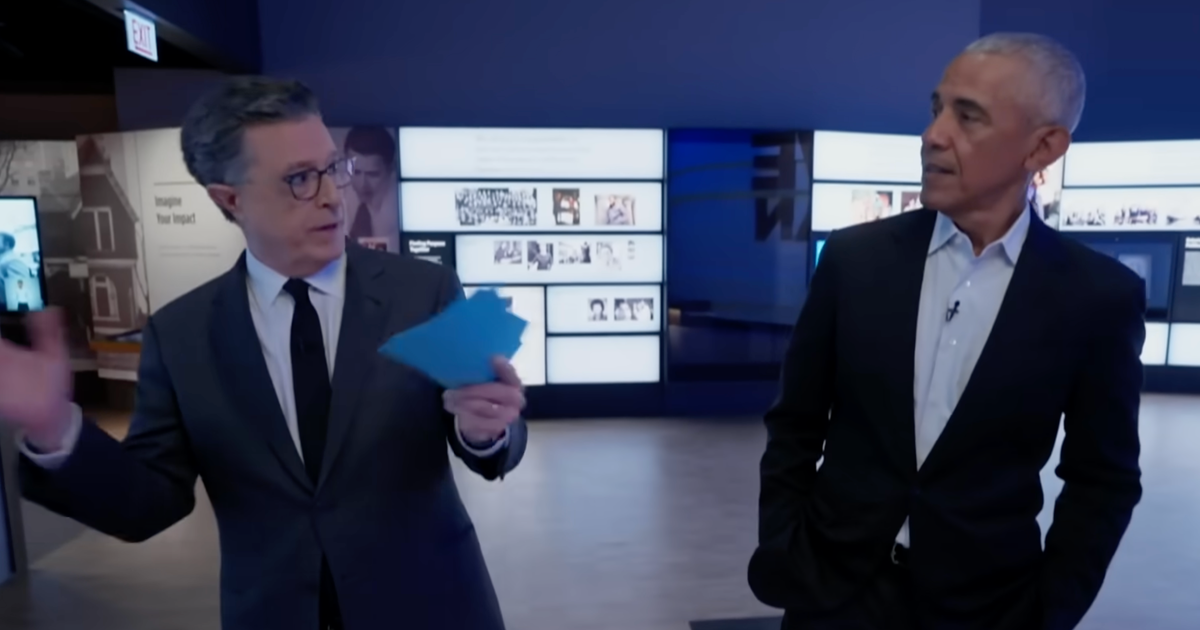
In a wide-ranging interview that aired Tuesday night on “The Late Show with Stephen Colbert,” former President Barack Obama stepped beyond the traditional boundaries of presidential decorum to address what he views as fundamental threats to American democracy. While Obama carefully avoided naming President Trump directly, his concerns were unmistakable as he discussed the current state of governance and the erosion of long-standing democratic norms. The interview, which ran nearly 25 minutes, marked a significant moment in which a former president felt compelled to speak openly about practices he believes undermine the foundations of American government. Obama’s willingness to break the customary silence that former presidents typically maintain regarding their successors reflects the gravity of his concerns about the direction of the country. Throughout the conversation, he emphasized that while America has weathered many storms throughout its history—including controversial policies and contested elections—certain fundamental principles cannot be compromised without threatening the very fabric of democracy itself.
The Independence of Justice: A Sacred Principle Under Threat
Perhaps Obama’s most pointed concerns centered on what he described as the dangerous politicization of the Justice Department. Speaking with evident passion, the former president emphasized that the nation “can’t overcome the politicization of our justice system, the awesome power of the state.” He elaborated on this theme by explaining that one of the most critical safeguards in American democracy is preventing whoever holds power from weaponizing government institutions against political enemies or to reward allies. Obama was particularly emphatic about the relationship between the White House and the Department of Justice, stating unequivocally that “the White House shouldn’t be able to direct the attorney general to go around prosecuting whoever the president wants to prosecute.” This principle, he explained, isn’t merely a political preference but a fundamental protection that keeps America from sliding toward authoritarianism.
The former president drew a clear distinction between the proper role of the attorney general and how that position has been misused. “The norm is — the idea is that the attorney general is the people’s lawyer. It’s not the president’s consiglieri,” Obama explained, using language that deliberately evoked images of corrupt power structures where legal counsel serves a single person rather than the public interest. His comments come in the context of the current administration’s Justice Department attempting to prosecute several of Trump’s perceived adversaries, including former FBI Director James Comey and New York Attorney General Letitia James. Obama stressed that the Justice Department must remain “independent in making judgments about specific cases and prosecutions,” acknowledging that while he followed these norms during his presidency, the time has come to move beyond informal expectations and actually codify these protections into law so they cannot be easily dismissed or ignored by future administrations.
Presidential Powers: Where Lines Must Be Drawn
When Colbert pressed Obama about limiting executive powers and what authorities a president should not possess, the former president acknowledged the complexity of the issue while advocating for concrete reforms. He noted that during his own time in office, he respected certain boundaries “even though they weren’t law,” but recognized that America can no longer rely on the good faith and respect for tradition that previous presidents maintained. The current political climate has made it clear that unwritten rules and gentleman’s agreements are insufficient protections when someone occupies the Oval Office who is willing to ignore them entirely. Obama suggested that the nation needs to engage in “some basic work to return to this basic norm, and now we probably have to codify it,” transforming what were once understood principles into legally binding restrictions.
Beyond the Justice Department, Obama expressed concern about the abuse of presidential pardon power. While acknowledging that this authority is explicitly granted by the Constitution, he suggested common-sense limitations that should guide its use. With a touch of irony, he noted that presidents should “maybe don’t pardon people who’ve given you a bunch of campaign contributions,” highlighting how even constitutionally granted powers can be corrupted when used to reward political and financial supporters rather than to serve justice. Perhaps most alarmingly, Obama raised concerns about the politicization of the military, an institution that has remained steadfastly non-partisan throughout American history. He explained that “there had been a whole series of norms that were in place to ensure that you weren’t trying to make the military loyal to you, as opposed to the Constitution, and the people of the United States.” The former president emphasized that “we’re going to have to find mechanisms to restore that,” suggesting that the damage done to civil-military relations may require structural reforms to repair. Additionally, Obama advocated for what he called a “pretty obvious principle”—that presidents should not maintain business interests that foreign entities or companies can invest in, addressing the unprecedented conflicts of interest that have characterized the Trump presidency.
The Obama Presidential Center and America’s Journey
The timing of Obama’s interview wasn’t coincidental—he spoke with Colbert in advance of the opening of the Obama Presidential Center in Chicago, scheduled to welcome the public on Juneteenth. This symbolic opening date connects Obama’s presidency to the broader arc of American history and the ongoing struggle for racial justice and equality. Obama expressed his hope that the center would encourage visitors to reflect on “this extraordinary journey this country took to get to” his presidency, framing his historic election not as a conclusion but as a chapter in America’s continuing story. He articulated the fundamental tension that has defined American history from its founding: “It’s this struggle between the idea that ‘we the people’ includes everybody—that’s it’s just some, it’s not just some select few.” This statement captured the essence of Obama’s view of American progress as an ongoing expansion of who is considered fully part of the American project, and his presidential center aims to inspire continued work toward that more inclusive vision.
Breaking Presidential Protocol: Why Obama Felt Compelled to Speak
Historically, former presidents have adhered to an unwritten rule of not publicly criticizing their successors, understanding that such restraint serves the dignity of the office and the stability of democratic transitions. However, the relationship between Obama and Trump has shattered this tradition from both sides. Trump has repeatedly and harshly criticized Obama, attacking his policies, questioning his legitimacy, and attempting to dismantle much of his predecessor’s legacy. In response, Obama has increasingly felt compelled to speak out, particularly on the campaign trail and in interviews like this one with Colbert. In a separate interview with The New Yorker released earlier the same week, Obama acknowledged that Trump’s actions have prompted him to be involved “more than I would have preferred.” He explained his measured approach, noting that if he criticized everything, it would diminish the impact of his voice when addressing truly critical issues. This strategic restraint makes his decision to speak so directly with Colbert all the more significant—it signals that Obama views the current threats to democratic norms as rising to a level that justifies breaking traditional presidential protocol.
A Moment of Levity and a Sobering Reality
The interview wasn’t entirely somber. In a lighter moment, Colbert—who is embarking on a farewell tour before his final “Late Show” episode on May 21—jokingly asked Obama if he should run for president. Obama initially responded with characteristic humor, saying “I think it’s a stupid idea,” before adding with a knowing smile, “the bar has changed.” He then offered what might be interpreted as either a compliment to Colbert or a damning assessment of recent presidential performance: “I put it this way: I think that you could perform significantly better than some folks that we’ve seen.” The quip drew laughs but also underscored a serious point—that the presidency has been occupied by someone Obama clearly believes has been fundamentally unfit for the office. This blend of humor and serious commentary characterized the interview, allowing Obama to address grave concerns about American democracy while maintaining the engaging, accessible communication style that defined his presidency. As America continues to grapple with questions about executive power, democratic norms, and the future of its institutions, Obama’s interview serves as both a warning about dangerous precedents and a call to action for codifying the protections that preserve democracy for future generations.