
The Obama Presidential Center Opens Its Doors: A New Chapter for Chicago’s South Side
A Long-Awaited Celebration Nearly Five Years in the Making
After almost five years of construction and anticipation since breaking ground in Chicago, the Obama Presidential Center is finally ready to welcome the world. The Obama Foundation has announced that grand opening celebrations will kick off in June, marking a significant milestone not just for the city of Chicago, but for presidential history. The center, which serves as both a museum and a vibrant public gathering space honoring former President Barack Obama and former First Lady Michelle Obama, will be officially dedicated on Thursday, June 18. The very next day, on June 19, the campus will swing open its doors to the public, inviting visitors from near and far to explore this historic venue. This momentous occasion represents years of planning, community engagement, and construction, bringing to life a vision that the Obamas have held dear since leaving the White House.
The celebrations won’t be just a single-day affair but rather an extended weekend of activities running through June 21. According to the foundation’s press release, these events have been thoughtfully designed to bring together an incredible cross-section of people who have been integral to the Obama story. The festivities will welcome changemakers who have worked to improve their communities, local community members who have supported the project from its inception, dedicated volunteers who have given their time and energy, and supporters who believed in the Obama presidency and its message. The foundation emphasizes that these celebrations will welcome all visitors to join in celebrating “the power of hope and change”—those defining themes of Obama’s political career that resonated with millions of Americans and continue to inspire people worldwide.
A Message of Hope in Challenging Times
In a video posted to social media announcing the opening, President Obama delivered a characteristically thoughtful message that acknowledged the difficulties facing the nation while remaining steadfast in optimism. “It is easy to look around right now and feel like the challenges we face are simply too big,” Obama said, speaking to a sentiment many Americans feel amid ongoing political divisions, economic uncertainties, and social challenges. But true to his political brand, Obama refused to let pessimism have the final word. “But hope is not about ignoring the hard stuff,” he continued, offering a nuanced definition of hope that goes beyond naive optimism. “It is that thing inside us that insists something better awaits if we are willing to work for it.” With these words, Obama reframed hope not as wishful thinking but as active determination—a commitment to putting in the effort required to create positive change.
The former president’s connection to Chicago’s South Side runs deep, making the center’s location particularly meaningful. “Here on the South Side of Chicago, hope is getting a permanent home,” Obama declared, linking his message of optimism directly to the neighborhood that helped shape him. For Obama, who worked as a community organizer in these very streets before his political career began, the presidential center represents a homecoming of sorts—a way to give back to the community that gave him his start. By establishing this permanent institution in the South Side rather than in a more traditional location like Washington D.C. or even a more affluent Chicago neighborhood, the Obamas made a deliberate statement about whose voices and stories matter in American history. The center stands as a physical manifestation of Obama’s belief that hope and change don’t come from the top down but are built from communities up.
Controversy and Community Concerns Along the Way
The path to opening day hasn’t been without significant bumps and detours. The presidential center sparked considerable controversy among different groups, each with legitimate concerns about the project’s impact. Community organizers in the historic Jackson Park neighborhood raised important questions about what development of this scale might mean for long-time residents of Chicago’s South Side. Their primary concern centered around gentrification—that age-old pattern where investment and development in historically underserved neighborhoods leads to rising property values and rents that ultimately price out the very people who have called these areas home for generations. These organizers worried that while the center might bring prestige and economic activity to the area, the benefits might not reach existing residents who could find themselves displaced by the very project meant to honor a president who came from their community.
Meanwhile, park preservationists took their concerns all the way to court, challenging the construction on environmental grounds. Jackson Park, designed by the legendary landscape architect Frederick Law Olmsted, holds historical significance of its own, and preservationists argued that the construction would damage this treasured green space. Their legal challenges cited environmental concerns, questioning whether proper assessments had been conducted and whether the project would harm the park’s ecosystem. These dual streams of opposition—one focused on social justice and community preservation, the other on environmental and historical conservation—created a complex web of challenges that the Obama Foundation had to navigate. The tensions highlighted an important question that arises with many major development projects: How do you balance progress and commemoration with preservation and community protection?
Presidential Assurance and Community Commitment
Facing these concerns head-on, President Obama addressed the controversy directly in a 2021 interview with “Good Morning America’s” Robin Roberts, conducted ahead of the groundbreaking ceremony. In that conversation, Obama expressed unwavering confidence in the center’s positive impact, telling Roberts that he’s “absolutely confident” the center will benefit the local community. This wasn’t just political spin or empty reassurance; the Obama Foundation has made specific commitments aimed at ensuring community benefits. The foundation has worked to establish agreements designed to protect against displacement, create job opportunities for local residents, and ensure that the economic benefits of the center flow to South Side businesses and families. The September 28, 2021 groundbreaking ceremony, attended by Illinois Governor J.B. Pritzker alongside Barack and Michelle Obama, represented not just the start of construction but a public commitment to these community promises.
The Foundation’s approach has included ongoing community engagement, job training programs, and partnerships with local organizations. They’ve worked to ensure that construction jobs go to local workers and that the center’s eventual operations will employ people from the surrounding neighborhoods. Beyond employment, the foundation has committed to programming that serves local youth and families, making the center not just a tourist destination but a genuine community resource. Whether these efforts will be sufficient to prevent gentrification and ensure equitable benefits remains to be seen, but they represent a more thoughtful approach to development than many similar projects have taken. The true test will come in the months and years after opening, as the community and observers watch to see whether the promises made translate into lasting benefits for long-time South Side residents.
A Presidential Center Unlike Any Other
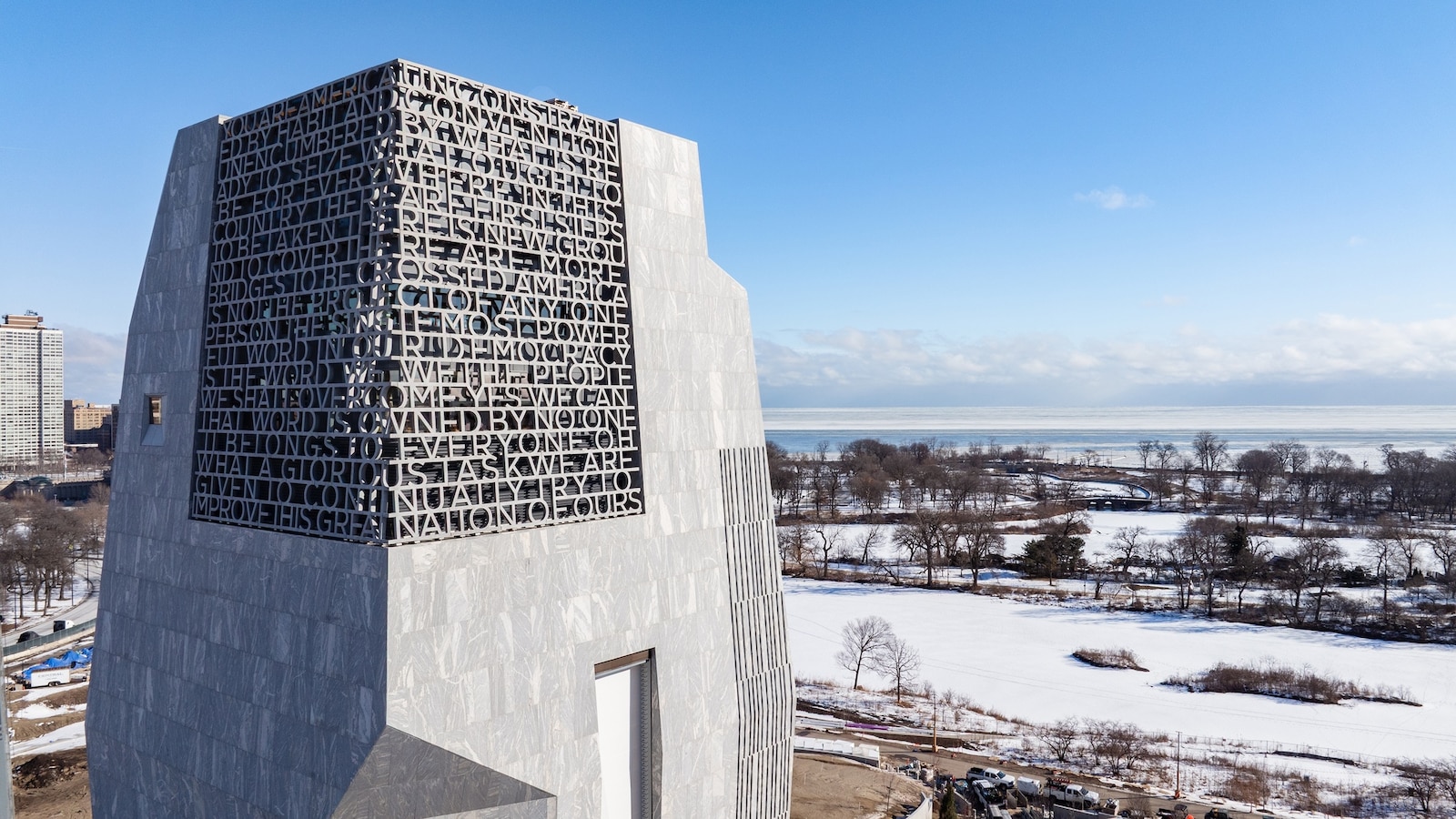
What visitors will find when they arrive at the Obama Presidential Center is something genuinely different from traditional presidential libraries. While it will include museum exhibits showcasing the Obama presidency—including artifacts, documents, and interactive displays that tell the story of those eight years in the White House—the center is designed to be much more than a backward-looking memorial. The campus is envisioned as a living, active space that continues the work Obama began rather than simply commemorating it. This includes spaces for community gatherings, areas for youth programming, and facilities designed to inspire and equip the next generation of leaders and changemakers. The exhibits themselves, as glimpsed in preview images released by the Obama Foundation, appear to blend traditional historical displays with interactive elements that invite visitors not just to observe history but to consider their own role in shaping the future.
The architectural design of the center reflects this forward-looking vision, with modern structures that honor the historic Jackson Park setting while creating distinct spaces for different purposes. The campus layout encourages interaction and community use, with outdoor spaces designed for gatherings and events. As visitors walk through exhibits chronicling everything from Obama’s community organizing days to his time in the Oval Office, they’ll also encounter programming and spaces that ask them to think about their own capacity to create change. This dual focus—honoring the past while actively working toward the future—makes the Obama Presidential Center a unique addition to the network of presidential libraries and museums across the country. It represents the Obamas’ belief that commemoration should inspire action, and that looking back at what was accomplished should fuel determination to accomplish what comes next.