
Ocado Announces Major Job Cuts as Part of Company Restructuring
Understanding the Scale of Redundancies
Ocado, the technology-driven grocery company known for its automated warehouses and online delivery service, has announced plans to eliminate approximately 1,000 positions from its workforce as part of a significant cost-cutting initiative. This difficult decision affects employees across the organization, with about two-thirds of these job losses—roughly 667 positions—occurring within the United Kingdom. The majority of those facing redundancy work at the company’s main headquarters located in Hatfield, which serves as the central hub for Ocado’s operations and technological development. However, there’s a silver lining for some employees: those working directly in retail operations, including the staff involved in the day-to-day running of Ocado’s grocery delivery service through its partnership with Marks & Spencer, will not be affected by these cuts. This distinction is important because it shows the company is protecting its customer-facing operations while streamlining its corporate and technological divisions. The announcement affects a substantial portion of Ocado’s global workforce of 20,000 employees, representing about 5% of total staff, a significant restructuring by any measure.
Leadership Response and Support for Affected Employees
Tim Steiner, Ocado’s chief executive officer, addressed the painful reality of the restructuring with a message acknowledging both the necessity of the changes and the human cost involved. In his statement to investors, Steiner expressed genuine regret about the situation, saying, “Regrettably, this means a significant number of roles will no longer be required.” His comments went beyond the typical corporate language often used in such announcements, showing appreciation for those who would be losing their positions. He specifically thanked the affected colleagues, recognizing that “their talent and hard work have made a lasting contribution to Ocado.” This acknowledgment is meaningful because it validates the efforts of departing employees who helped build the company into what it is today. Steiner also committed to providing support for those impacted throughout the redundancy process, though specific details about severance packages, career transition assistance, or other support measures weren’t elaborated upon in the initial announcement. The tone of his message attempted to balance business necessity with human compassion, a challenging tightrope to walk when delivering such difficult news to dedicated employees who may have spent years helping to develop Ocado’s innovative technology and business model.
The Broader Cost-Cutting Strategy
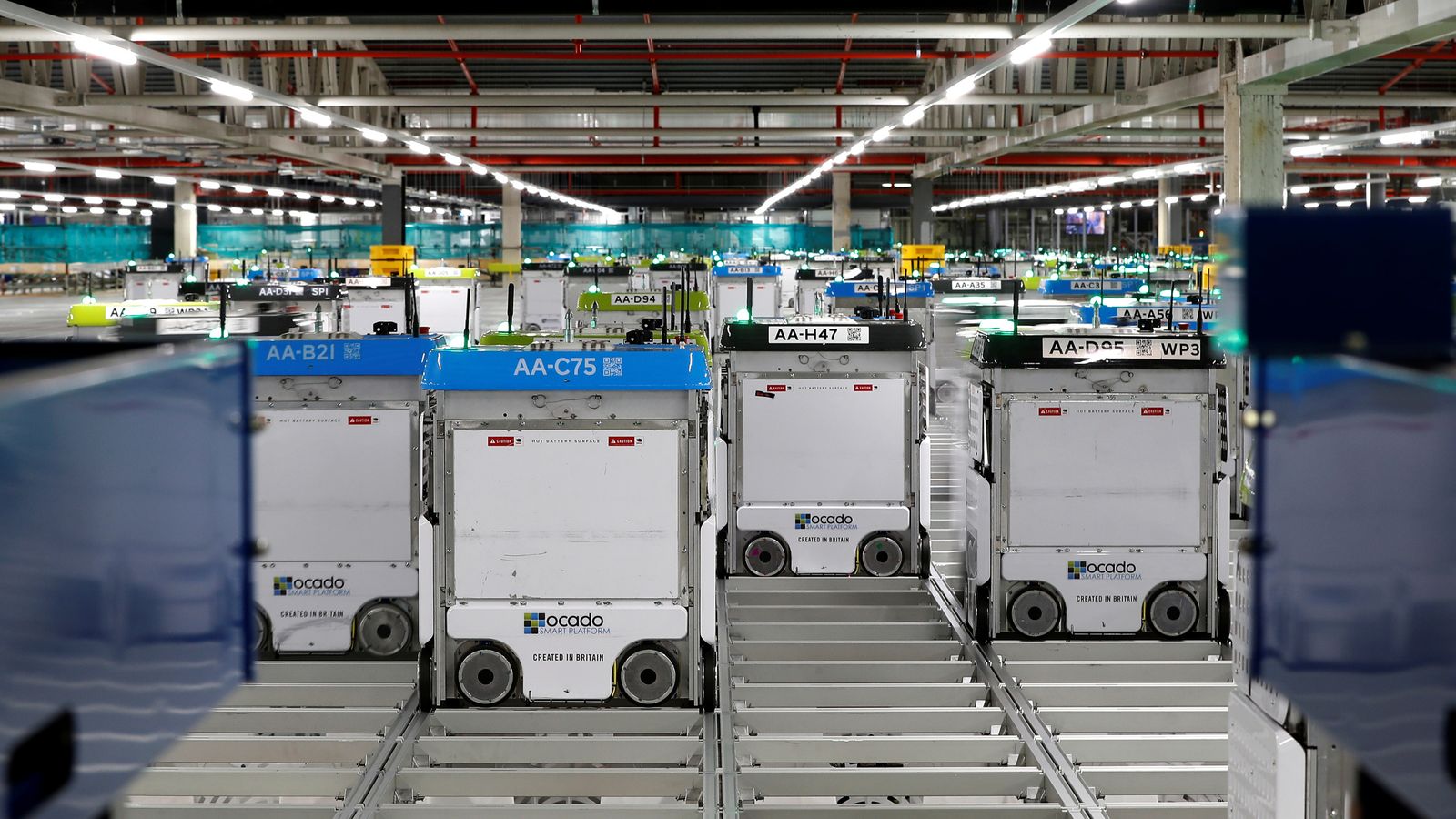
The job cuts represent just one element of a much larger financial restructuring plan designed to save Ocado approximately £150 million in operational expenses. This ambitious savings target reflects the company’s recognition that it needs to operate more efficiently in an increasingly challenging market environment. Beyond reducing headcount, Ocado plans to significantly scale back its spending on research and development, an area where the company has invested heavily over many years to create its pioneering automated warehouse technology and robotic systems. This reduction in R&D spending marks a notable shift for a company that has built its reputation on technological innovation and cutting-edge automation. The company is also undertaking a major organizational restructuring by merging two of its key divisions: Ocado Solutions, which licenses the company’s warehouse automation technology to grocery retailers worldwide, and Ocado Intelligent Automation, which focuses on developing and selling robotic and AI-powered systems. By combining these divisions, Ocado hopes to eliminate redundancies, streamline operations, and create a more focused and efficient organizational structure. This consolidation suggests the company believes there’s too much overlap between these units and that a unified approach will better serve both internal efficiency and customer needs while reducing administrative overhead and simplifying decision-making processes.
Financial Performance Versus Market Concerns
The restructuring announcement came alongside the release of Ocado’s annual financial results, which on the surface appeared quite positive. The company reported a substantial 59% increase in its core underlying profit measure, reaching £178 million for the year. This significant profit growth, along with improvements in the company’s bottom-line performance, would typically be cause for celebration and might be expected to boost investor confidence. However, the market reaction told a very different story, revealing deep-seated concerns about Ocado’s long-term business model and growth prospects. Rather than celebrating the improved financial results, investors responded by selling shares, with the stock price plummeting almost 11% in early trading following the announcements. This sharp decline added to an already troubling trend, with Ocado’s shares having lost 27% of their value over the previous twelve months. This negative market response demonstrates that investors are looking beyond current profitability figures and instead focusing on worrying signs about the company’s future. The disconnect between improved current performance and declining share price illustrates a fundamental concern: investors doubt whether Ocado’s business model—selling expensive automated warehouse technology to grocery retailers—remains viable in the current retail environment where many companies are finding cheaper alternatives for fulfilling online orders.
Challenges in the North American Market
Much of the investor pessimism can be traced to disappointing developments in North America, a market that Ocado had hoped would drive significant growth. Two of Ocado’s major partners in that region, prominent grocery retailers Kroger and Sobeys, have made the difficult decision to close a total of four robotic Customer Fulfillment Centres (CFCs)—the automated warehouses that use Ocado’s proprietary technology to process online grocery orders. These closures weren’t due to technical problems with Ocado’s systems but rather reflected weak consumer demand for online grocery delivery in those locations. The shutdowns raise serious questions about the fundamental economics of Ocado’s business model. Industry analysts have observed a significant trend: many grocery retailers are increasingly choosing to fulfill online orders directly from their existing stores rather than investing in expensive, dedicated automated warehouses. This approach, known as “ship from store,” requires less capital investment, provides more flexibility, and allows retailers to leverage their existing real estate and inventory. For Ocado, this trend is particularly worrying because the company’s entire value proposition is built around convincing retailers to invest hundreds of millions in building CFCs equipped with Ocado’s technology. If retailers can adequately serve online customers using their existing stores, the market for Ocado’s expensive automated solutions could be far smaller than the company had anticipated, potentially limiting its growth prospects significantly.
Expert Analysis and Future Outlook
Financial analysts are divided on what these developments mean for Ocado’s long-term prospects. Verushka Shetty, an equity research analyst at Morningstar, provided a balanced assessment of the situation. She acknowledged that Ocado delivered “a decent consensus beat” in its financial results, meaning the company performed better than analysts had expected. However, she also noted that “subsequent announcements from Kroger and Sobeys about site closures have weakened investor confidence,” explaining the negative market reaction despite positive earnings. Looking forward, Shetty identified several potential positive developments, including Ocado’s strategy of offering more capital-light solutions that require less upfront investment from retail partners, expansion of its intelligent automation products that can be used in various industries beyond grocery, and the company’s decision to move away from exclusive agreements that previously limited it to working with just one retailer per geographic market. These changes could open up new revenue streams and make Ocado’s offerings more attractive to potential partners. However, Shetty also articulated a significant concern about what she called a “negative flywheel effect”—a self-reinforcing downward cycle where news of CFC shutdowns and slower deployment of new facilities makes potential retail partners hesitant to sign agreements with Ocado, while existing partners become reluctant to build additional facilities. This creates a vicious circle where bad news generates more bad news, making it increasingly difficult for Ocado to rebuild momentum and convince the market that its technology-driven approach to grocery fulfillment represents the future of the industry rather than an expensive solution to a problem retailers are solving more cheaply in other ways.