



The Bizarre World of Prediction Markets: When Betting on the Second Coming Outperforms Bitcoin
A Strange New Investment Frontier
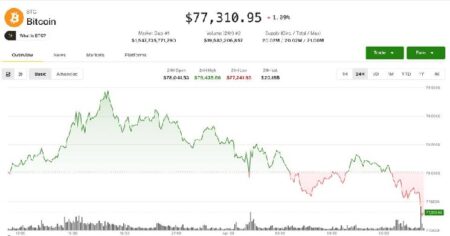
In the ever-evolving landscape of cryptocurrency and blockchain-based platforms, we’ve witnessed some truly unusual developments over the years. But few would have predicted that betting on the Second Coming of Jesus Christ would become a better investment than Bitcoin in early 2025. Yet this is precisely what’s happened on Polymarket, a decentralized prediction market platform that allows users to wager on virtually any future event. The market asking “Will Jesus return in 2026?” has seen its implied probability double from roughly 2% to 4% in just over a month, translating to returns exceeding 120% for those who placed early bets on “Yes.” Meanwhile, Bitcoin—the cryptocurrency that has captivated investors and skeptics alike for over a decade—has tumbled 18% during the same period, creating an almost surreal contrast between traditional crypto assets and what many consider to be one of the most speculative and unusual prediction markets ever created.
This development speaks volumes about where we are in the evolution of digital markets. Polymarket has carved out a unique niche by allowing people to essentially gamble on nearly anything imaginable, from presidential elections and celebrity relationships to technological breakthroughs and, apparently, biblical prophecies. The platform operates on a simple premise: users buy shares in either “Yes” or “No” outcomes for specific events, with each share priced according to the collective wisdom (or whimsy) of the crowd. When an event that trades at 4 cents actually happens, those shares become worth $1 each, creating a potential 25-fold return. Conversely, if you’re certain something won’t happen, you can buy “No” shares at 96 cents and collect your dollar when your prediction proves correct, netting a modest but seemingly safe 4% gain. This binary structure makes the markets easy to understand, even if the events being predicted range from the plausible to the fantastical.
How Prediction Markets Actually Work
To understand why the “Jesus trade” has become such an unlikely winner, it helps to grasp the mechanics behind Polymarket and similar platforms. These aren’t traditional betting sites or stock exchanges, but rather decentralized markets built on blockchain technology that allow peer-to-peer wagering on future events. When you purchase a “Yes” share for 4 cents, you’re not buying it from Polymarket itself but from another user willing to sell at that price. The platform simply facilitates the transaction and will ultimately determine the outcome based on predetermined criteria. In the case of the Second Coming market, the contract stipulates that it resolves to “Yes” if Jesus Christ returns by December 31, 2026, at 11:59 p.m. Eastern Time, and to “No” otherwise. The platform has stated that resolution will be based on “a consensus of credible sources”—a clause that understandably raises eyebrows and highlights why most traders view this particular market as entertainment rather than serious forecasting.
The appeal of these markets lies in their simplicity and the thrill of potentially outsmarting the crowd. If you believe an event is more likely than the current price suggests, you can profit from your superior insight or information. In theory, prediction markets aggregate the collective knowledge and intuition of all participants, creating probabilities that should reflect reality better than any individual expert. This principle works reasonably well for political elections, sports outcomes, or even corporate announcements—events with defined parameters and observable results. But when applied to religious prophecies or other unfalsifiable claims, the markets become something else entirely: a kind of digital circus where the spectacle matters as much as the substance, and where small amounts of capital can create disproportionate price movements that generate headlines and social media buzz.
Why Bitcoin Has Been Struggling
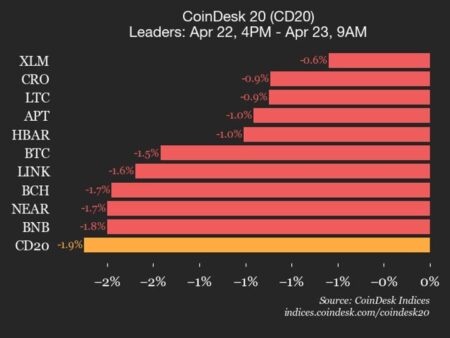
The contrast with Bitcoin’s recent performance makes the “Jesus trade” story even more remarkable. Bitcoin, which began 2025 with hopes of breaking through to new all-time highs, has instead faced a barrage of challenges that have sent it sliding lower. Concerns about quantum computing’s potential to crack the cryptographic algorithms that secure Bitcoin have resurfaced, even though most experts believe we’re still years away from quantum computers powerful enough to pose a genuine threat. Additionally, rumors of hedge fund collapses and forced selling have circulated through crypto circles, reminiscent of the contagion that followed the FTX implosion in late 2022. Beyond crypto-specific issues, broader macroeconomic headwinds have pushed investors toward safer assets, draining liquidity from riskier corners of the market. Bitcoin, despite its maturation and growing institutional adoption, still behaves like a risk asset during periods of uncertainty, declining alongside stocks and other volatile investments.
For long-time Bitcoin advocates, the current downturn is frustrating but not entirely unfamiliar. The cryptocurrency has experienced multiple boom-and-bust cycles throughout its fifteen-year history, often losing 50% to 80% of its value before eventually recovering to new highs. What makes this particular moment interesting is the backdrop against which it’s occurring. Bitcoin was supposed to be a hedge against inflation, a digital gold that would protect wealth during times of economic instability. Yet when actual uncertainty arrives, capital often flows back to traditional safe havens like U.S. Treasury bonds or even physical gold. Meanwhile, speculative prediction markets on topics like the Second Coming can see price spikes simply because the dollar amounts involved are so small that even modest interest creates dramatic percentage moves. It’s a reminder that in the short term, markets of all kinds are driven more by sentiment, liquidity, and momentum than by fundamental value or rational probability assessment.
The Psychology and Mechanics of Micro-Cap Prediction Markets
What makes the “Jesus trade” particularly fascinating from a market psychology perspective is how it illustrates the behavior of low-liquidity, high-novelty assets. The total amount of money in this particular Polymarket contract is likely quite small—perhaps a few thousand dollars or even less. When markets are this thin, conventional price discovery breaks down. A single enthusiastic trader putting in a few hundred dollars can push the probability from 2% to 4%, creating what looks like a massive gain for anyone who bought in earlier, even though no fundamental change has occurred in the actual likelihood of the event. This is essentially the same dynamic that drives microcap cryptocurrency tokens, where small retail investor armies can pump obscure coins to eye-watering gains before they inevitably crash back to earth. The percentage changes look impressive, but they’re largely artifacts of low liquidity rather than genuine value creation.
There’s also an element of irony and internet culture at play. Many people participating in these unusual Polymarket contracts aren’t doing so because they’ve carefully calculated the theological probability of Christ’s return or consulted biblical scholars about end-times prophecies. They’re placing small bets because it’s entertaining, because they can share screenshots on social media, or because they want to be part of a quirky story. Polymarket has effectively become a real-time barometer for internet attention, where anything that generates curiosity or controversy can become a tradeable asset. In this sense, the platform functions less like a traditional prediction market and more like a social network where engagement is measured in dollars rather than likes. The contracts that generate the most discussion and debate—regardless of how absurd or unmeasurable they might be—tend to see the most action, creating a feedback loop between social media buzz and price movement.
The Broader Implications for Crypto and Prediction Markets
The success of novelty contracts like the Second Coming market raises important questions about the future of prediction markets and their place in the broader crypto ecosystem. On one hand, these platforms demonstrate the incredible flexibility of blockchain technology and smart contracts to create markets for virtually anything imaginable. They’ve proven valuable for forecasting elections, with Polymarket’s 2024 U.S. presidential election markets drawing billions in volume and generally outperforming traditional polls. This suggests that when applied to well-defined, observable events, prediction markets can generate genuinely useful information and serve as powerful tools for aggregating distributed knowledge. The wisdom of crowds, when properly harnessed, can produce remarkably accurate forecasts, particularly for binary outcomes with clear resolution criteria.
On the other hand, markets like “Will Jesus return in 2026?” highlight the limitations and potential absurdities of applying prediction market logic to every conceivable question. How exactly would Polymarket verify the Second Coming? What would constitute “credible sources” for such an event? These unresolved questions point to a fundamental challenge: prediction markets only work when there’s a shared understanding of what would constitute evidence for the predicted event and a reliable mechanism for determining outcomes. When those conditions aren’t met, the markets devolve into something closer to entertainment or gambling rather than serious forecasting tools. This doesn’t make them worthless—entertainment and gambling both have legitimate markets—but it does suggest we should be cautious about treating all prediction market prices as meaningful probability estimates. Some are genuine forecasts; others are simply games people play with small amounts of money for amusement.
Conclusion: The Weird Corners of Crypto Continue to Surprise
As we move further into 2025, the story of how betting on the Second Coming outperformed Bitcoin serves as a perfect encapsulation of where cryptocurrency and blockchain technology find themselves today. These technologies have matured considerably since Bitcoin’s early days, with institutional adoption, regulatory frameworks, and real-world applications expanding steadily. Yet the space retains a frontier quality, where the bizarre and experimental coexist with the increasingly mainstream. Polymarket’s religious prophecy markets exist on the same blockchain infrastructure that powers serious financial applications, just as meme coins trade on the same exchanges as Bitcoin and Ethereum. This combination of the serious and the absurd, the transformative and the trivial, is part of what makes crypto simultaneously frustrating and fascinating.
For most observers, the “Jesus trade” will remain exactly what it appears to be: a curiosity, a novelty, and perhaps a cautionary tale about the limits of turning everything into a market. The odds of it actually paying out are, realistically, vanishingly small, regardless of what the Polymarket price might suggest. But in a year where even Bitcoin—the flagship cryptocurrency that has survived countless predictions of its demise—is struggling to find its footing, there’s something almost poetic about the fact that one of the market’s best performers is a bet on an event that would fundamentally upend everything we know about reality. It reminds us that in the short term, markets of all kinds can behave in unexpected ways, that liquidity and attention matter more than fundamentals, and that sometimes the weirdest corners of crypto are the only ones going up. Whether that’s a feature or a bug of decentralized markets remains an open question, one that will likely be debated as long as people continue finding new and creative ways to gamble on the future.