


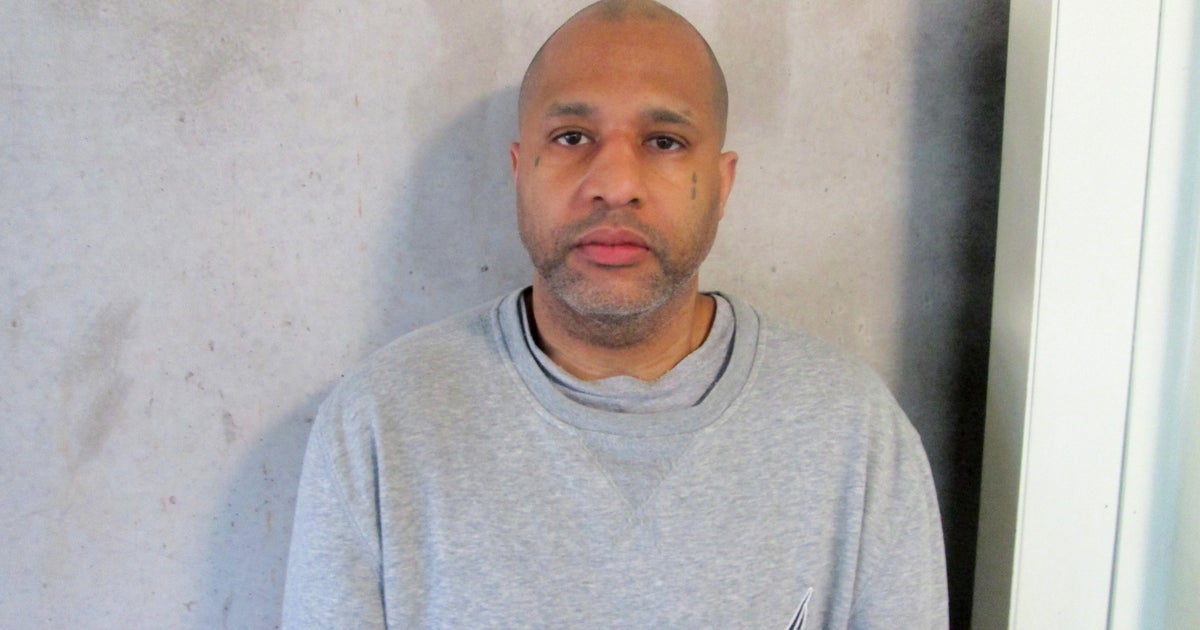

The Execution of Kendrick Simpson: A Story of Violence, Remorse, and the Cycle of Trauma
A Life Ended: The Execution Details
On a Thursday morning in Oklahoma, Kendrick Simpson’s life came to an end at the Oklahoma State Penitentiary in McAlester. The 45-year-old man was pronounced dead at 10:19 a.m. Central Time, following the administration of a three-drug lethal injection protocol that has become standard in many states still practicing capital punishment. Simpson’s execution marked Oklahoma’s first for the year, representing another chapter in America’s ongoing and deeply controversial relationship with the death penalty. The execution proceeded using a combination of midazolam as a sedative, vecuronium bromide to stop breathing, and potassium chloride to halt the heart—a method that has been the subject of considerable ethical and medical debate in recent years. Simpson’s death was carried out for the murders of two young men, Anthony Jones, 19, and Glen Palmer, 20, in a drive-by shooting that took place nearly two decades earlier in 2006.
The Crime: A Tragic Night in Oklahoma City
The events that led to Simpson’s execution began on a violent night in January 2006 in northwest Oklahoma City. According to prosecutors, Simpson had deliberately placed an assault rifle in the trunk of a car before he and his friends drove to a local nightclub. During the evening, an altercation broke out at the club between Simpson and Glen Palmer, one of his eventual victims. What might have ended as a simple argument escalated into something far more deadly. When Palmer and Jones left the club and stopped at a nearby gas station, Simpson and his companions followed them. In what prosecutors described as a calculated act of violence, Simpson allegedly pointed the assault rifle out of the car window and fired approximately 20 rounds into the victims’ vehicle. Both young men were struck multiple times by the barrage of bullets. The shooting also endangered a third person who was in the car with Jones and Palmer but survived the attack. This senseless act of violence would forever change multiple families and ultimately cost Simpson his own life nearly two decades later.
A Man Shaped by Trauma: Simpson’s Background and Path to Oklahoma
To understand the full scope of this tragedy, it’s important to know Kendrick Simpson’s background and the circumstances that brought him to Oklahoma City. Simpson had fled to Oklahoma in 2005 from his hometown of New Orleans in the aftermath of Hurricane Katrina, one of the most devastating natural disasters in American history. He grew up in a New Orleans housing project, an environment that his legal team described as one of chronic trauma and hardship. His attorneys argued that Simpson suffered from post-traumatic stress disorder stemming from his difficult childhood years in this challenging environment. Those who worked with Simpson during his years on death row painted a complex picture of the man—someone who was intelligent, personable, funny, and kind. Randy Bauman of the American Civil Liberties Union in Oklahoma went so far as to write that “it’s been a privilege to get to know Kendrick,” describing positive attributes that seemed at odds with the violent crime that brought Simpson to death row. His legal team insisted that “the death penalty is supposed to be reserved for the worst of the worst offenses and offenders. Kendrick and his case represent neither.” They argued that Simpson had spent his years in prison working to better himself and help others, becoming a changed man from the person who committed those murders in 2006.
Remorse, Apology, and the Denial of Clemency
During a clemency hearing held just a month before his execution, Simpson did something that many death row inmates never do—he fully admitted to the killings and offered an unqualified apology to the victims’ families. Looking directly at those who had lost loved ones, Simpson said, “I apologize for murdering your sons. I don’t make any excuses. I don’t blame others, and they didn’t deserve what happened to them.” He also apologized to the third man who had been in the vehicle during the shooting and survived. Despite this apparent remorse and acceptance of responsibility, Oklahoma’s five-member Pardon and Parole Board voted narrowly to deny Simpson clemency, meaning his execution would proceed as scheduled. The decision came after Oklahoma Attorney General Gentner Drummond, a vocal supporter of capital punishment, urged the board to reject Simpson’s clemency petition. In his formal request to the board, Drummond argued that Simpson had failed to demonstrate genuine remorse or take proper accountability for his crimes, despite Simpson’s direct apology. Drummond’s office described Simpson as someone who continued “to embody the violent behavior that led a jury to unanimously impose the death penalty,” characterizing him as a “ruthless and violent killer who hunted his victims without remorse.” On Wednesday afternoon, the day before the execution, the U.S. Supreme Court rejected a last-minute appeal to block the execution without comment, sealing Simpson’s fate.
The Victims’ Families Speak: Divided Perspectives on Justice
The families of the victims found themselves in the painful position of determining what justice should look like for the loss of their loved ones. Some family members made it clear they supported Simpson’s execution, viewing it as appropriate accountability for the lives he had taken. Crystal Allison, the sister of victim Glen Palmer, wrote a powerful letter to the clemency board expressing her support for the death penalty in this case. “Do I believe this man should live and be able to breathe and take out the rest of his life behind a cell?” she wrote. “He made the choice for him so I stand here today to make the choice for my family. Yes, we would like to see him executed for what he did—he executed my brother.” Her words reflected the deep pain and desire for ultimate justice that many families of murder victims experience. After the execution was carried out, Attorney General Drummond released a statement saying that justice “has been served for Glen Palmer and Anthony Jones,” framing Simpson’s death as a necessary conclusion to a long legal process. However, not everyone agreed with this characterization of justice, including Simpson’s legal team and those who had come to know him during his years on death row.
The Broader Context: America’s Death Penalty and the Cycle of Trauma
Simpson’s execution occurred within the broader context of America’s continued use of capital punishment, even as many states and countries around the world have moved away from the practice. His death was only the second execution in the United States in the early part of the year, following the execution of Ronald Palmer Heath in Florida just days earlier for a 1989 murder conviction. Florida had conducted a record 19 executions in 2025, leading the nation in capital punishment under Republican Governor Ron DeSantis, who signed numerous death warrants. The previous year saw 47 people executed across the United States, with Florida, Alabama, South Carolina, and Texas leading the way. Emma Rolls, one of Simpson’s attorneys, released a statement after the execution that challenged the notion that his death represented justice. “In the name of ‘justice,’ the State chose to extend the cycle of trauma rather than end it, taking the life of a man who had spent years learning how to make other lives better,” Rolls said, describing Simpson as “a loving son, brother, father, grandfather, and friend.” This statement highlighted the fundamental philosophical divide over capital punishment—whether executing someone who has committed terrible crimes represents justice and closure, or simply perpetuates cycles of violence and trauma that affect families, communities, and society at large. The question of whether Kendrick Simpson’s execution brought true peace to the families affected, or simply added another death to an already tragic situation, remains one that each person must answer according to their own values and beliefs about justice, redemption, and the value of human life.